

If you've been grinding through speed ladder drills and wondering why you're not getting faster, you're not alone. Speed ladders are everywhere in training facilities, from youth sports to professional teams, but here's the thing – most people are using them wrong.
Don't get me wrong, speed ladders aren't useless. But they're probably not doing what you think they're doing. After working with countless athletes who've hit plateaus with their ladder training, I've identified the seven biggest mistakes that are holding you back from real speed gains.
Ready to fix your approach? Let's dive in.
Mistake #1: Treating Every Drill Like a Constant-Speed Dance
What you're doing wrong: You're running through predetermined footwork patterns at the same steady pace, over and over. There's no real acceleration, deceleration, or explosive change of direction – just fancy footwork that looks impressive but doesn't translate to game speed.
Why this hurts your progress: Real sports don't happen at constant speeds. You need to explode from a standstill, hit top speed, then brake hard to change direction. When you're just tapping through ladder squares at a steady rhythm, you're missing the most important aspects of athletic movement.
The fix:
- Replace half your ladder work with actual acceleration drills
- Practice 10-20 meter sprints from different starting positions (lying down, sitting, three-point stance)
- Include deceleration training with shuttle runs and 5-10-5 drills
- Focus on explosive starts and emergency stops rather than pretty footwork
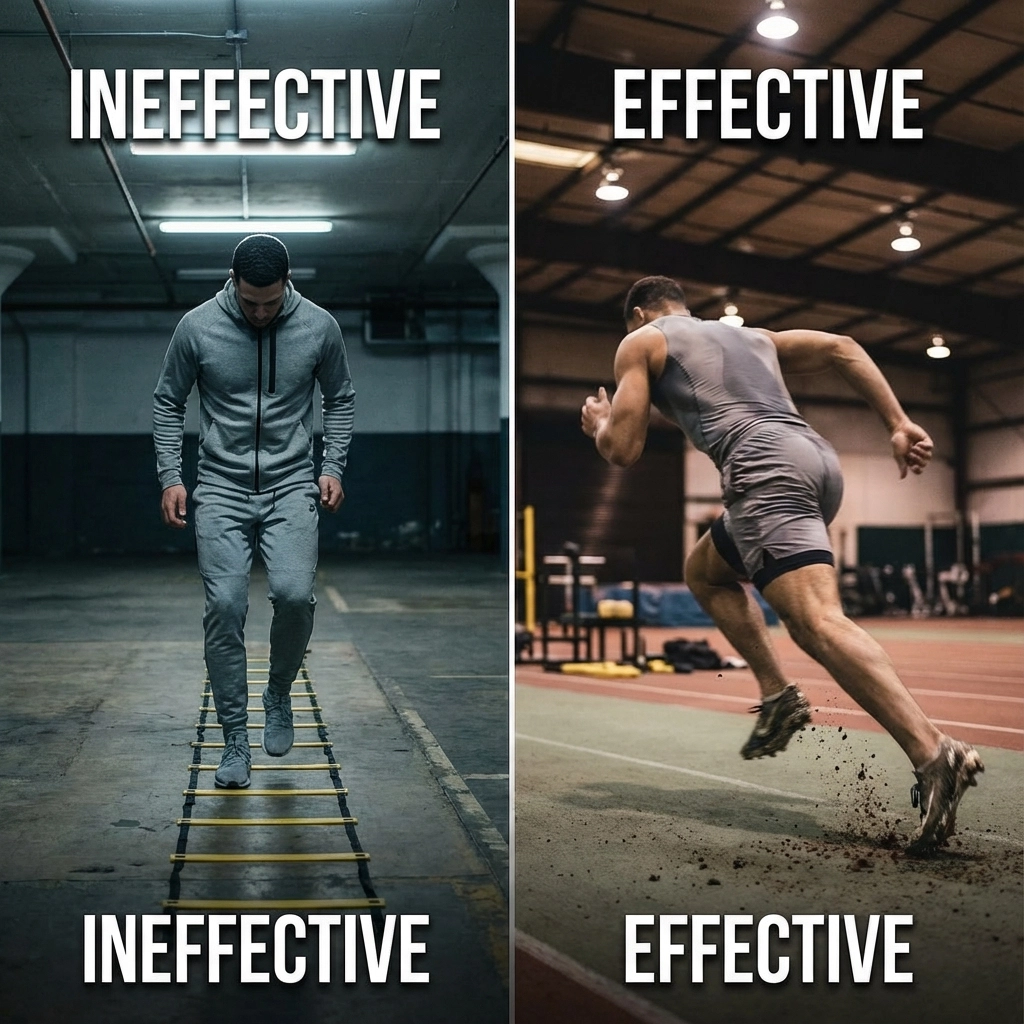
Mistake #2: Thinking Fast Feet Equal Fast Athletes
What you're doing wrong: You're prioritizing how quickly you can move your feet through the ladder instead of developing actual speed through space. It's easy to fall into this trap because rapid foot movement feels like you're working on speed.
Why this doesn't work: Moving your feet quickly in a confined space is coordination, not speed. True speed is about covering ground fast, generating power, and maintaining that power over distance.
The fix:
- Limit ladder work to 10-15% of your speed training
- Spend the majority of your time on high-velocity sprinting
- Focus on powerful leg drive and full hip extension during runs
- Measure your progress by actual sprint times, not ladder completion speed
Mistake #3: Training with Your Eyes Glued to the Ground
What you're doing wrong: You're staring down at the ladder, watching every foot placement, completely focused on not missing a square. In a real game, you'd never look down at your feet while trying to beat an opponent.
Why this kills your game performance: Athletic vision and spatial awareness are crucial skills. When you train with your head down, you're not developing the ability to move efficiently while processing what's happening around you.
The fix:
- Keep your eyes up and forward during all ladder drills
- Add a visual component – have a coach hold up numbers or colors for you to call out
- Practice ladder drills while tracking a moving ball or object
- Use your peripheral vision to guide foot placement instead of direct visual monitoring
Mistake #4: Turning Speed Work into Cardio
What you're doing wrong: You're doing set after set of ladder drills without proper recovery, turning what should be power training into an exhausting cardio session. If you're breathing hard from the previous rep, you're not training speed anymore.
Why this backfires: Speed development requires your nervous system to fire at maximum capacity. When you're fatigued, you can't generate the power needed for speed improvements. You end up training endurance instead of explosiveness.
The fix:
- Take 90 seconds to 2 minutes of complete rest between speed-focused reps
- Limit speed ladder sessions to 15-20 minutes maximum
- If you want conditioning, do it separately from your speed work
- Quality over quantity – 5 perfect reps beat 50 sloppy ones every time
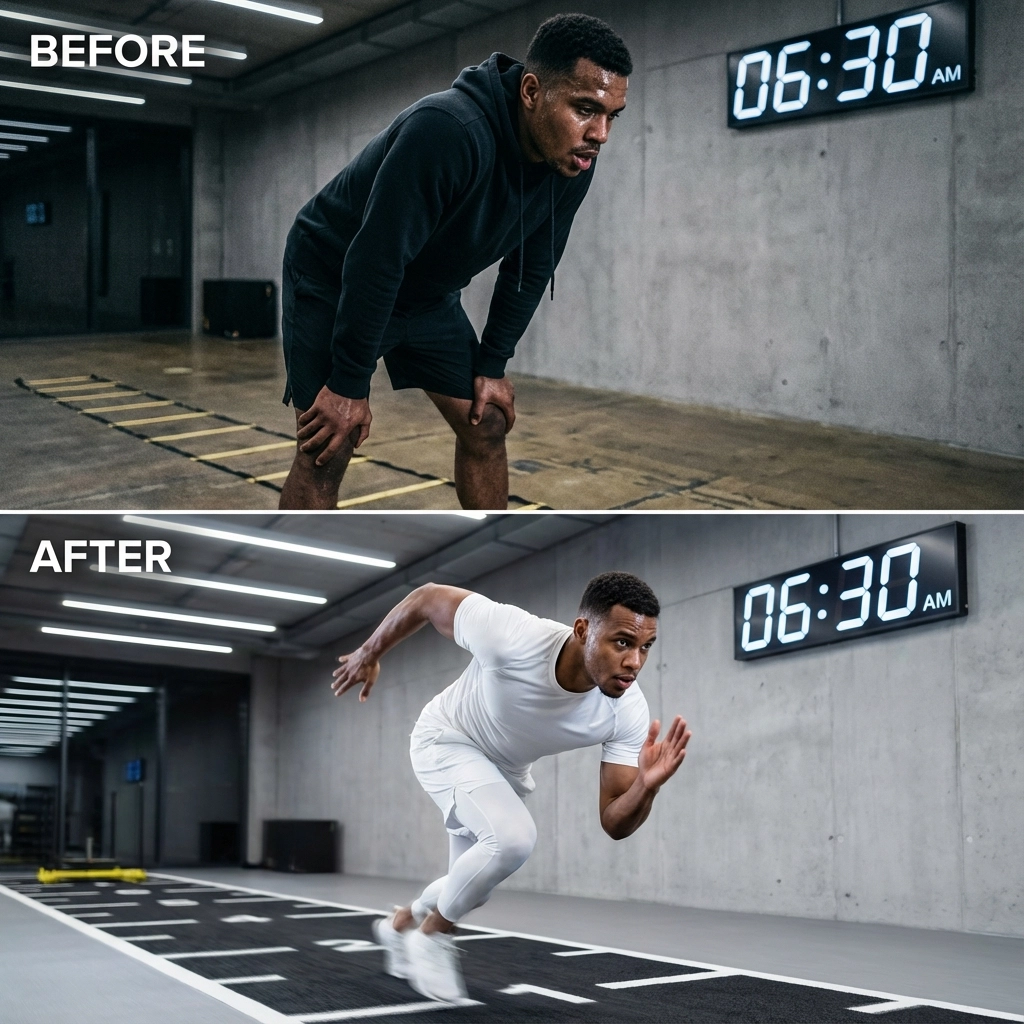
Mistake #5: Rehearsing Moves That Don't Exist in Your Sport
What you're doing wrong: You're mastering complex footwork patterns that look cool but have zero carryover to actual sports situations. Real games are unpredictable – you can't choreograph your way past a defender.
Why predetermined patterns fail: Sports require reactive movement and split-second decision making. When you only practice set sequences, you're not developing the adaptability needed for competition.
The fix:
- Replace ladder patterns with agility hurdles for reactive footwork
- Use cone drills with random directional cues
- Practice sport-specific movements (cutting, juking, shuffling)
- Train decision-making under pressure with reaction-based drills
Mistake #6: Skipping the Foundation That Actually Creates Speed
What you're doing wrong: You're spending all your time on fancy footwork while ignoring the strength and power development that actually makes athletes fast. Ladder drills can't build the force production you need for explosive movement.
Why weak athletes stay slow: Speed comes from the ability to generate massive force quickly. Without strength as your foundation, all the footwork drills in the world won't make you faster.
The fix:
- Prioritize heavy squats, deadlifts, and Olympic lift variations
- Aim for a squat that's at least 1.5x your body weight
- Include plyometric training with box jumps and depth jumps
- Dedicate 60-70% of your training time to strength and power development
- Use resistance training equipment like resistance bands for power development
Consider investing in a complete speed and agility training set that includes various tools beyond just ladders.
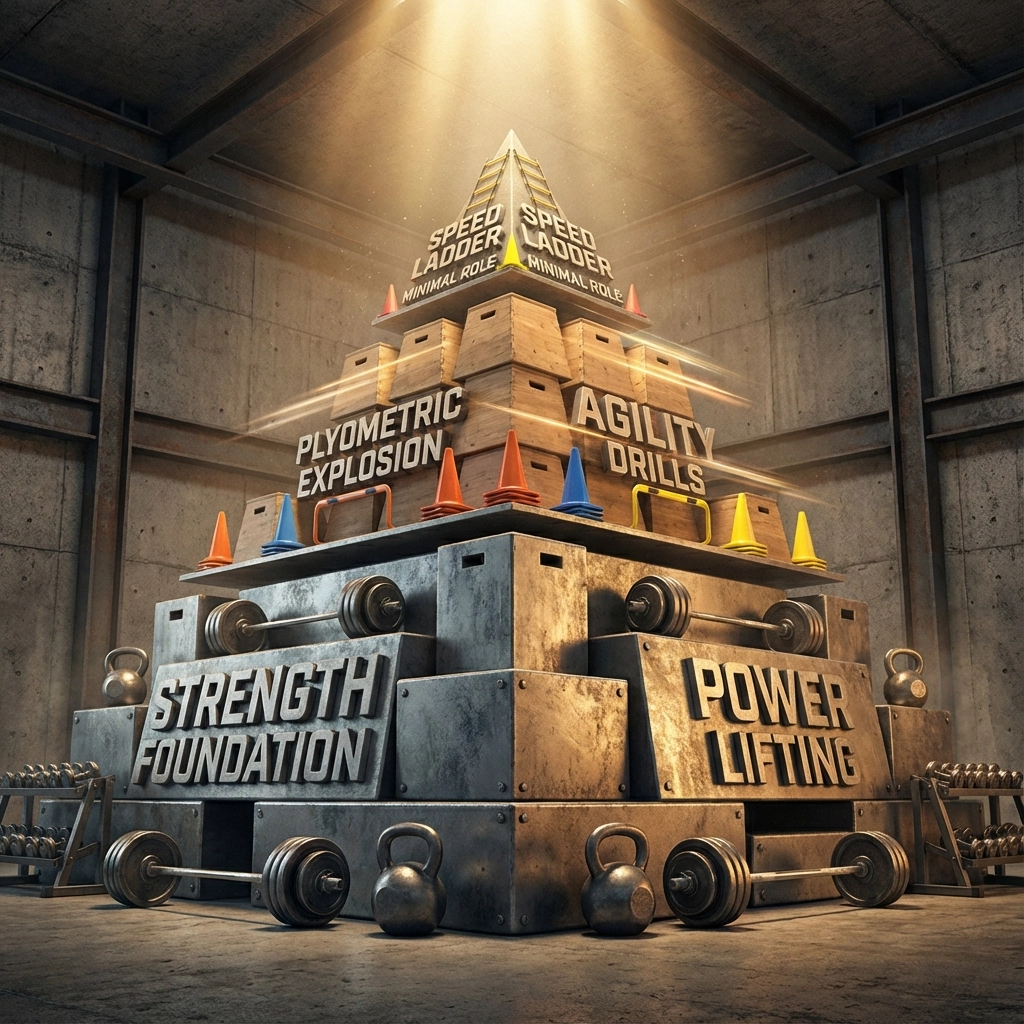
Mistake #7: Expecting Speed Gains from a Coordination Tool
What you're doing wrong: You're using speed ladders as your primary tool for getting faster, when they're actually designed for coordination development. It's like trying to build muscle by doing yoga – not the right tool for the job.
Why this approach fails: Speed ladders develop foot coordination and proprioception, especially in young athletes. They don't improve your ability to generate power, reach top speed, or accelerate quickly.
The fix:
- Use ladders specifically for coordination and warm-up purposes
- Recognize any improvements as coordination gains, not speed gains
- Invest your speed-building time in sprinting, plyometrics, and strength training
- For young athletes (under 14), ladders can help develop movement patterns
- Focus on proper speed training techniques that actually build speed
The Bottom Line: What Actually Works
Here's the truth about getting faster: it requires a comprehensive approach that addresses strength, power, technique, and sport-specific movement patterns. Speed ladders can play a small role in coordination development, but they shouldn't be the centerpiece of your training.
Your new speed development hierarchy should look like this:
- Strength training (40%) - Heavy squats, deadlifts, Olympic lifts
- Sprint technique work (25%) - High-velocity running with proper mechanics
- Plyometrics (20%) - Explosive jumping and bounding exercises
- Sport-specific agility (10%) - Reactive movement drills
- Coordination work (5%) - This is where ladders fit in
Quick action steps to fix your training today:
- Cut your ladder time in half and add sprint work
- Film yourself sprinting to check your technique
- Test your squat strength and work on improving it
- Practice acceleration from sport-specific starting positions
- Add reaction-based agility drills to your routine
Remember, getting faster takes time and the right approach. Don't let flashy ladder footwork fool you into thinking you're building speed. Focus on the fundamentals that actually create fast athletes, and you'll see real improvements in your game performance.
For more comprehensive training guidance, check out our complete speed training resources to build a program that actually works.
The goal isn't to look fast in training – it's to be fast when it counts. Make these changes, stay consistent, and watch your real-world speed improve dramatically.


