

If you're looking to boost your speed and agility but working with limited space, you're not alone. Whether you're training in a small apartment, garage, or even your living room, the right equipment can transform any cramped area into an effective training zone. The key is choosing gear that packs maximum training punch while taking up minimal floor space.
Let's dive into the best compact speed training equipment options and help you build a setup that fits your space and goals perfectly.
1. Speed Ladders: The Ultimate Space-Saving Champion 🏃♂️
Why they're perfect for small spaces:
- Fold flat for storage under a bed or in a closet
- Require only 15-20 feet of length when in use
- Can be used both indoors and outdoors
- Incredibly versatile for footwork drills
Key benefits: • Improve foot speed and coordination in just 10-15 minutes • Work on lateral movement, acceleration, and deceleration • Perfect for athletes in any sport requiring quick feet • Affordable entry point for speed training
Storage tip: Most quality speed ladders fold down to about 2 feet long and weigh less than 2 pounds. You can literally hang one on a wall hook or toss it in a gym bag.
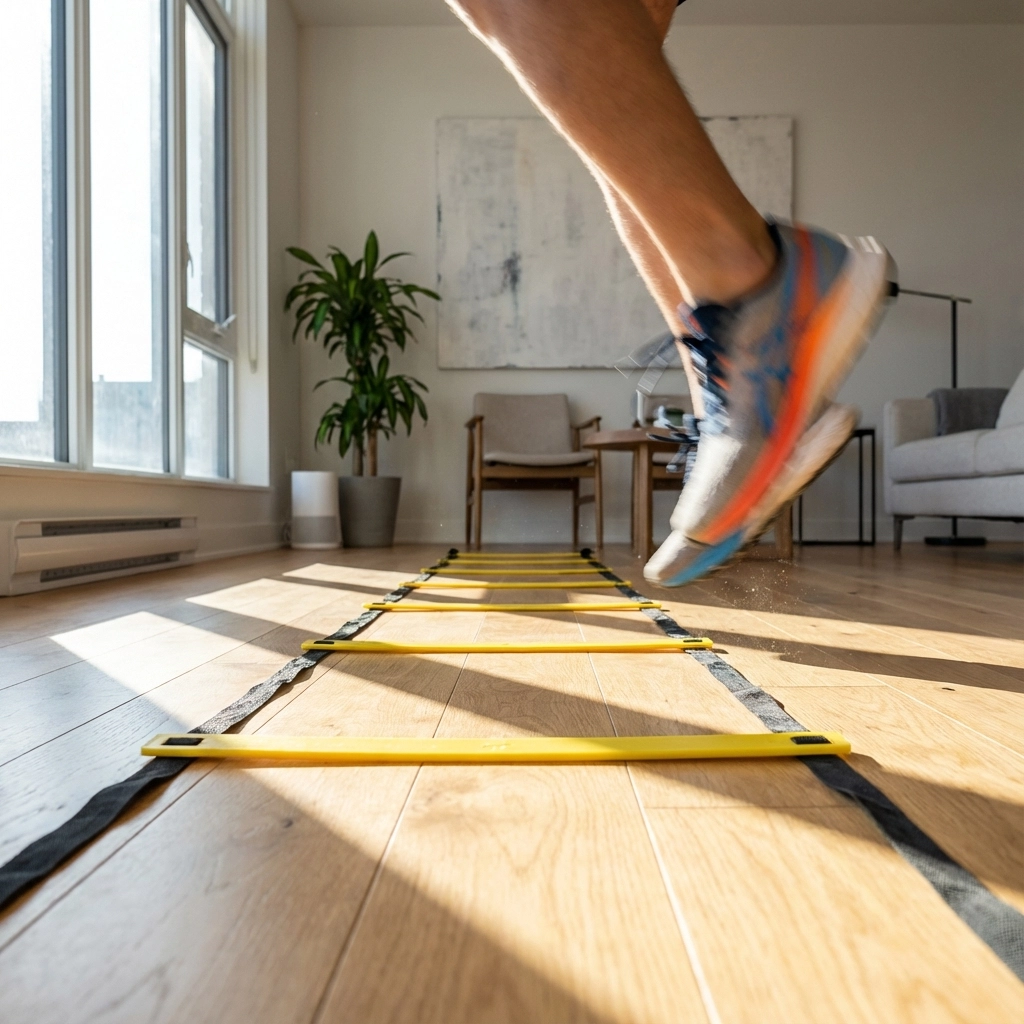
Pro tip: Look for ladders with flat rungs rather than round ones - they're more comfortable to step on and create less noise in apartments.
2. Agility Cones and Markers: Compact Versatility Kings
Space requirements: Just 6-10 square feet for most drills
What makes them space-friendly:
- Stack perfectly for storage (take up about 1 cubic foot)
- Create endless drill variations in minimal space
- Lightweight and completely portable
- Work for both indoor and outdoor training
Training possibilities: • Set up T-drills in a 10x10 foot area • Practice cutting and direction changes • Work on reaction time with partner drills • Create custom agility courses
Smart storage hack: Use a mesh bag or small bucket to keep cones organized and easily transportable.
3. Resistance Bands: The Multi-Tool of Speed Training
Why they're space game-changers:
- Entire set fits in a drawer or small bag
- Provide variable resistance for speed-specific strength
- Can anchor to doors, posts, or even furniture
- Replace bulky weight equipment
Speed training applications: • Resisted sprints for power development • Lateral movement patterns for agility • Acceleration training with sprint harnesses • Recovery and mobility work
Space needed: As little as 6-8 feet of length, depending on the exercise
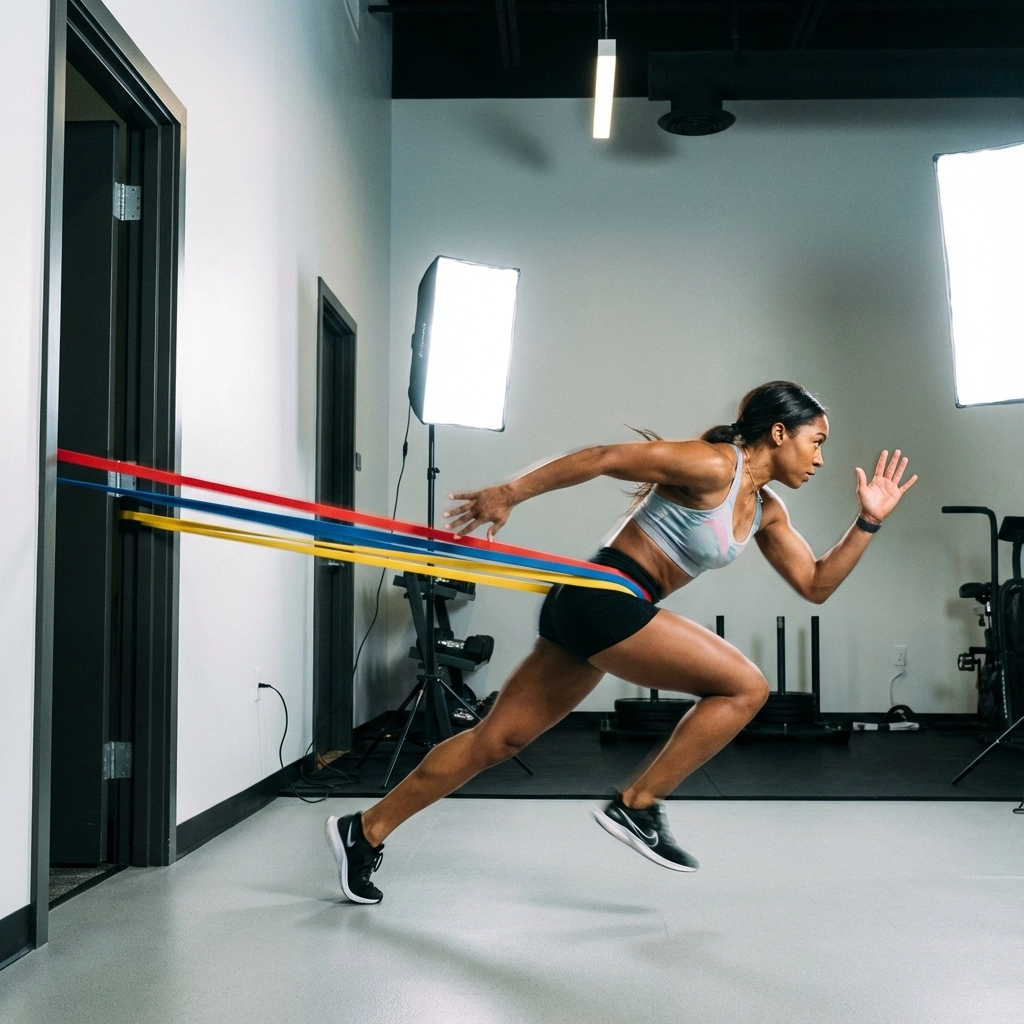
The FH Heavy Exercise Band is perfect for athletes who want to build speed-specific strength without dedicating a whole room to weights.
4. Mini Hurdles: Compact Power Developers
Footprint: Each hurdle is about 12 inches wide and stackable
Space-saving features:
- Stack up to 10 hurdles in under 2 feet of height
- Lightweight (usually under 1 pound each)
- Adjust to different heights for varied training
- Work for both speed and agility drills
Training benefits: • Improve stride frequency and length • Develop proper sprint mechanics • Enhance explosive power • Practice acceleration patterns
Apartment-friendly tip: Many mini hurdles have soft, non-marking bases that won't damage floors or create noise complaints.
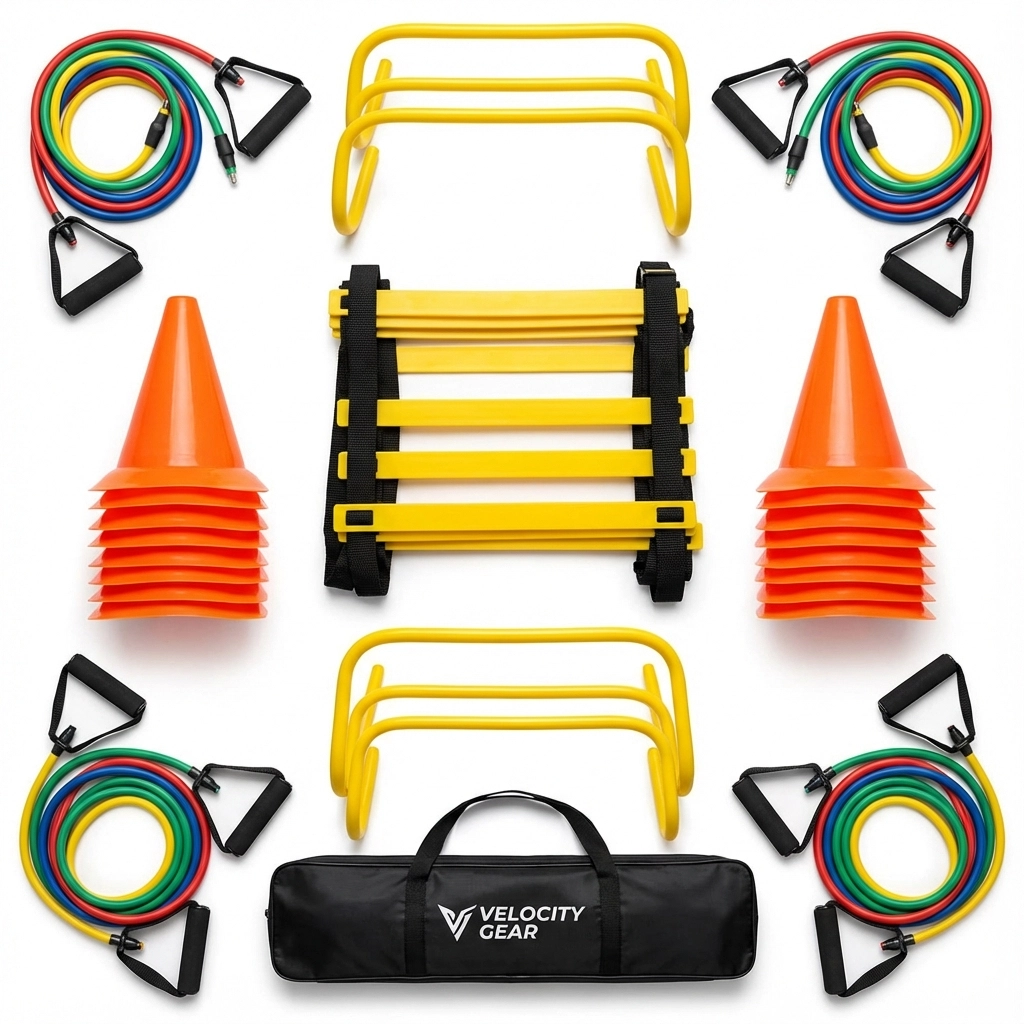
5. Speed Training Sets: All-in-One Solutions
For those who want everything in one package, complete training sets offer the best value for small spaces.
What's typically included:
- Speed ladder (15-20 feet)
- 4-6 agility cones
- 6-8 mini hurdles
- Resistance bands or parachute
- Carrying bag
Space comparison:
| Equipment Type | Storage Space | Training Area Needed | Setup Time |
|---|---|---|---|
| Speed Ladder Only | 2 x 1 x 0.5 feet | 20 x 3 feet | 30 seconds |
| Cone Set (8 pieces) | 1 x 1 x 1 feet | 15 x 15 feet | 1 minute |
| Complete Training Set | 2 x 1.5 x 1 feet | 20 x 15 feet | 2-3 minutes |
The FH Speed Agility Training Sets are designed specifically for home use and small training areas.
6. Smart Space-Saving Tips for Any Setup 💡
Vertical storage solutions: • Wall-mounted hooks for ladders and bands • Over-door organizers for small equipment • Stackable bins for cones and markers
Multi-use your space:
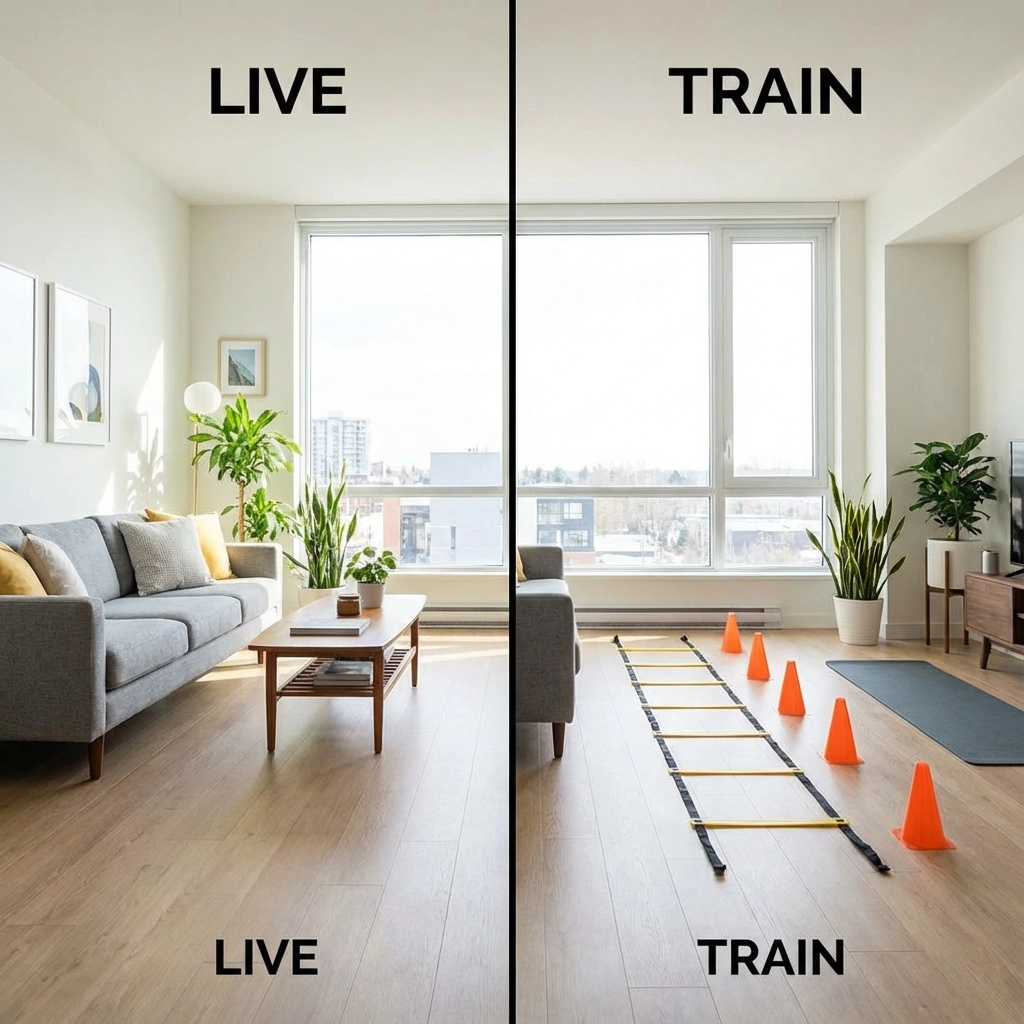
- Living room becomes a speed zone (move the coffee table)
- Hallways are perfect for ladder drills
- Driveways work great for outdoor sessions
- Garage spaces offer year-round training
Equipment rotation strategy: Don't feel like you need everything at once. Start with one or two pieces and rotate equipment every few weeks to keep training fresh and prevent boredom.
7. Choosing Based on Your Training Goals
For pure speed development:
- Primary: Speed ladder + resistance bands
- Space needed: 20 x 4 feet
- Best for: Sprinters, track athletes, football players
For agility and change of direction:
- Primary: Agility cones + mini hurdles
- Space needed: 15 x 15 feet
- Best for: Soccer, basketball, tennis players
For general athleticism:
- Primary: Complete training set
- Space needed: 20 x 15 feet
- Best for: Multi-sport athletes, fitness enthusiasts
For strength-speed combo:
- Primary: Resistance bands + speed ladder
- Space needed: 15 x 6 feet
- Best for: Athletes wanting power development
8. Common Small-Space Training Mistakes to Avoid ⚠️
Don't make these errors: • Buying equipment that doesn't fold or stack properly • Choosing gear that's too long for your available space • Forgetting about ceiling height (important for resistance band exercises) • Ignoring noise considerations in apartments • Overcrowding your space with too much equipment at once
Red flags when shopping:
- Equipment that doesn't specify folded dimensions
- Cones or markers that don't stack cleanly
- Bands without proper door anchors for apartment use
- Heavy or bulky items without carrying cases
9. Budget-Friendly Space Solutions
Starter setup (under $50):
- Basic speed ladder
- Set of 6 cones
- Door anchor resistance band
Intermediate setup ($50-100):
- Quality speed ladder with carry bag
- Adjustable mini hurdles (6-piece set)
- Resistance band set with multiple tensions
Complete setup ($100-150):
- Professional training set with everything included
- Multiple resistance levels
- Durable carrying case
- Training guide or app access
10. Maximizing Your Small Training Space
Layout strategies:
• Create a designated "quick setup" area that can be cleared in under 60 seconds
• Use removable floor markers to quickly set up consistent drill patterns
• Keep equipment in the same storage spot for easy access
• Consider foldable equipment stands or hooks for instant organization
Training efficiency tips:
- Plan 15-20 minute focused sessions rather than long workouts
- Combine multiple equipment types in circuit-style training
- Use wall space for resistance band anchor points
- Set up equipment the night before for morning sessions
Safety in small spaces: • Ensure adequate clearance around equipment (3 feet minimum) • Remove any potential tripping hazards • Use non-slip mats if training on smooth floors • Keep a clear path to exits during intense drills
Your Next Steps to Speed Success 🚀
Ready to transform your small space into a speed training powerhouse? Here's your action plan:
Week 1: Start with a basic speed ladder. Practice fundamental footwork drills 3 times for 10 minutes each session.
Week 2-3: Add agility cones. Combine ladder work with basic cutting drills.
Week 4: Introduce resistance bands or mini hurdles to increase training variety.
Month 2: Consider upgrading to a complete training set for maximum versatility.
Remember, the best speed equipment for small spaces is the equipment you'll actually use consistently. Start simple, focus on proper form, and gradually build your arsenal as your space and skills allow.
Your compact training area might be small, but your speed gains don't have to be. With the right equipment choices and smart space management, you'll be amazed at how much faster and more agile you can become - no matter how tight your training quarters might be.


