
The Beginner's Guide to Agility Training: Do This First Before Buying Any Equipment
by Paul Harwood
·
You're probably here because you've seen those lightning-fast athletes weaving through cones, jumping over hurdles, and making sharp cuts that look almost superhuman. Maybe you want to get faster for your sport, improve your coordination, or just add some fun variety to your workouts.
Here's the thing: most beginners make the same expensive mistake. They rush out, buy a bunch of agility equipment, set it up in their backyard, and wonder why they're not seeing results (or worse, why they're getting injured).
The truth? The magic happens before you buy a single piece of equipment. Let's walk through exactly what you need to do first.
1. Assess Your Current Movement Quality
Before you even think about weaving through cones, you need an honest assessment of how you move right now. This isn't about being perfect – it's about being smart.
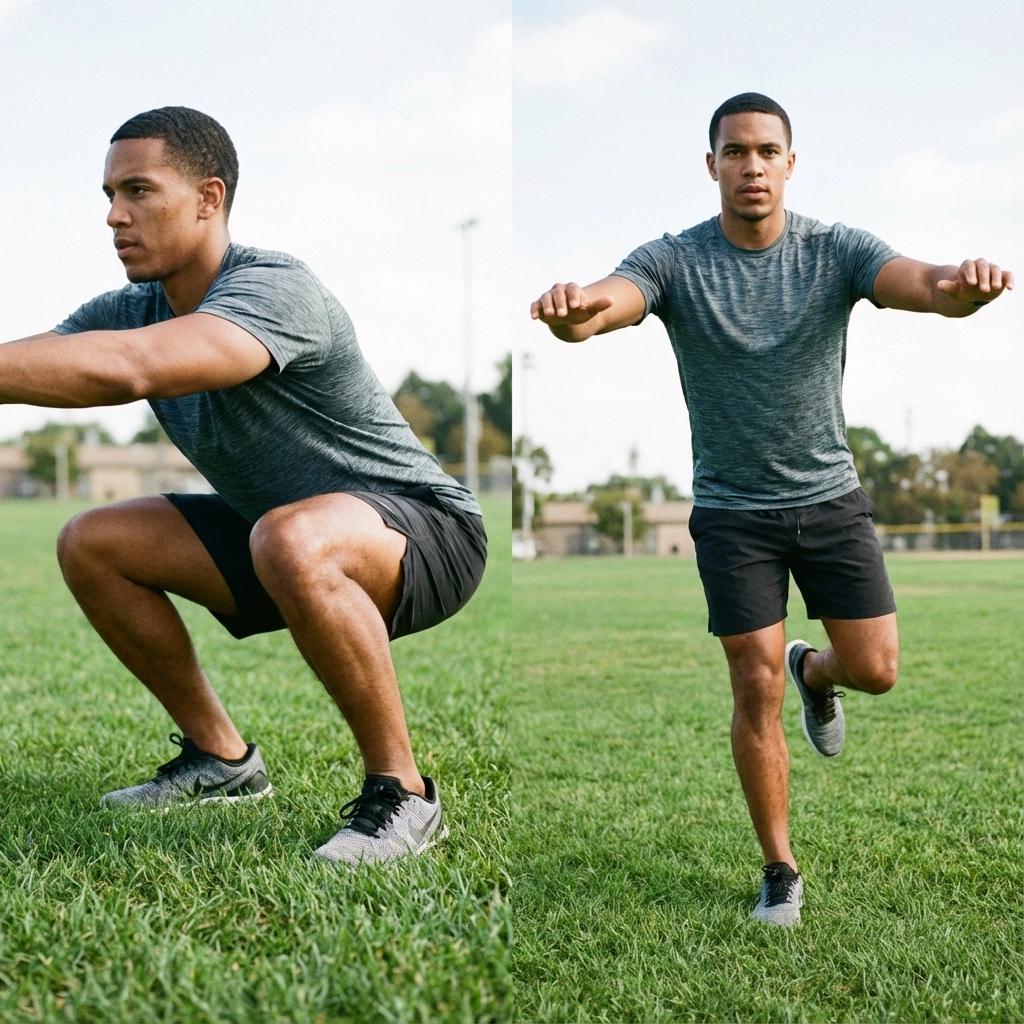
Test these basic movements: • Can you squat down with your heels on the ground? • Can you balance on one foot for 30 seconds? • Can you do 10 bodyweight squats with good form? • Can you touch your toes without rounding your back? • Can you step sideways smoothly in both directions?
If any of these feel challenging or uncomfortable, that's your starting point. Agility training demands good basic movement patterns, and jumping into complex drills with poor fundamentals is like trying to run before you can walk.
2. Master the Fundamentals of Athletic Movement
Agility isn't just about speed – it's about controlled speed with precision. Before you need any equipment, focus on these foundational movement patterns:
Linear movements: • Forward and backward running with proper posture • Acceleration from a standing start • Deceleration and controlled stopping
Lateral movements: • Side shuffles maintaining low athletic stance • Crossover steps in both directions • Lateral bounds (jumping side to side)
Multi-directional movements: • 45-degree angle cuts • 90-degree direction changes • 180-degree pivots
Practice these in your living room, backyard, or any open space. Focus on staying low, keeping your center of gravity over your feet, and making each movement deliberate and controlled.
3. Build Your Foundation Strength and Mobility
Agility training is demanding on your joints, muscles, and nervous system. If you're not prepared physically, you're setting yourself up for frustration or injury.
Strength priorities: • Single-leg stability (try pistol squat progressions) • Hip and glute strength (clamshells, bridges, lateral walks) • Core stability (planks, dead bugs, bird dogs) • Calf and ankle strength (calf raises, ankle circles)
Mobility essentials: • Hip flexor stretches • Ankle mobility exercises • Thoracic spine rotation • Dynamic warm-up movements
Spend 2-3 weeks building this foundation. Your future agility training will be more effective, safer, and way more enjoyable.
4. Practice with Household Items First
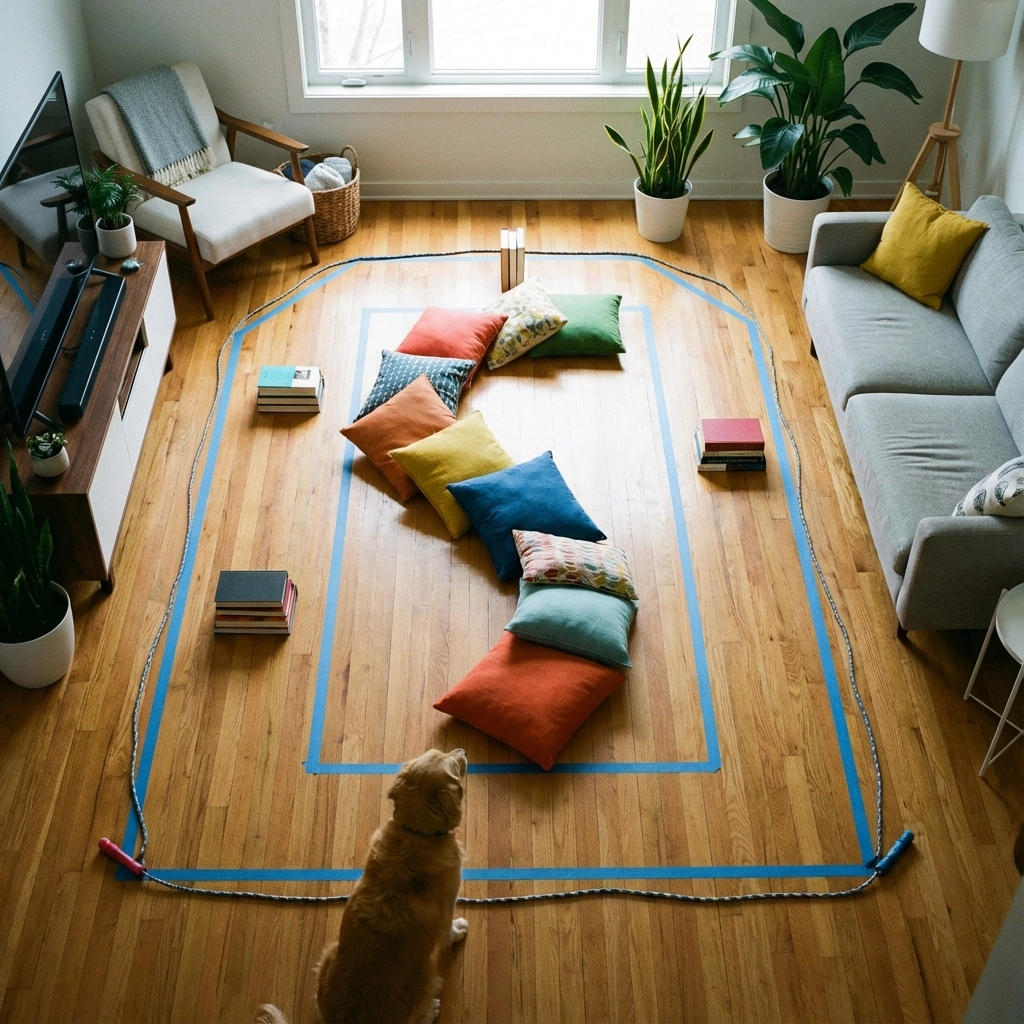
You don't need expensive equipment to start developing agility skills. Get creative with what you already have:
Use these everyday items: • Pillows or cushions – Practice jumping over or stepping around them • Books or boxes – Create obstacles to step over or around • Tape or rope – Mark lines on the ground for lateral movements • Stairs – Practice quick feet drills going up and down • Imaginary cones – Practice cutting and changing direction around invisible markers
This approach helps you understand what types of movements you enjoy and what challenges your body most. It's also a great way to figure out your learning style before investing money.
5. Understand the Science Behind Agility
Agility training improves three key systems in your body:
Neuromuscular coordination: Your brain gets better at sending quick, precise signals to your muscles. This is why agility training helps with sports performance, balance, and even everyday activities.
Reactive strength: Your muscles learn to quickly switch from lengthening to shortening, which is crucial for explosive movements and injury prevention.
Spatial awareness: You develop a better sense of where your body is in space and how to control it, which translates to better movement quality in all activities.
Understanding these benefits helps you stay motivated during the less exciting foundational work. You're not just learning drills – you're rewiring your nervous system to move better.
6. Set Up Your Training Environment
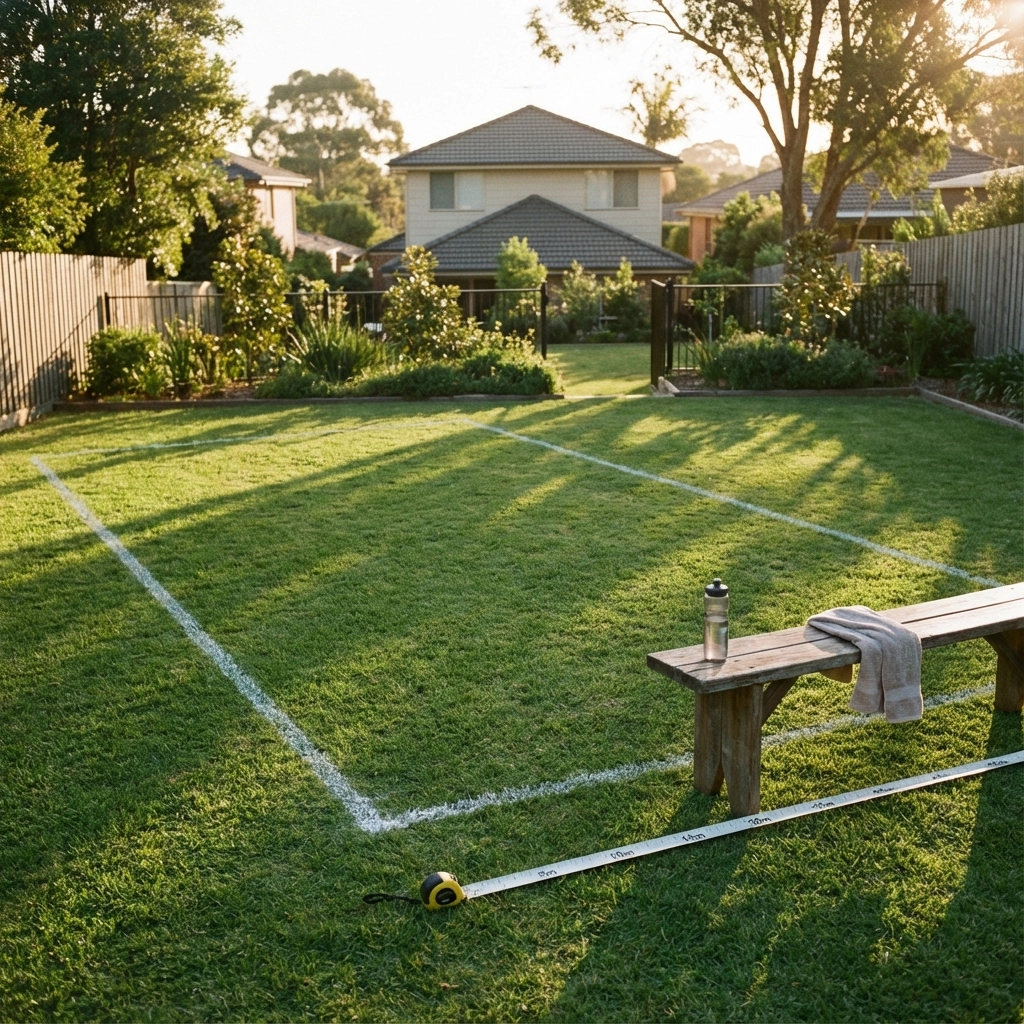
Before buying equipment, optimize your training space. This is more important than you might think.
Space requirements: • Minimum area: 10x20 feet of flat, clear space • Surface: Grass, turf, or rubber flooring (avoid concrete initially) • Safety: No obstacles, holes, or hazards nearby • Visibility: Good lighting and clear sight lines
Environmental considerations: • Train when you won't be interrupted • Remove distractions (put your phone away) • Have water nearby • Consider weather conditions if training outdoors
A well-set-up training environment makes every session more productive and safer. It also builds the habit of taking your training seriously.
7. Start a Training Log
From day one, track your progress. This isn't just motivational – it's strategic.
Record these details: • Date and duration of each session • Specific exercises or drills practiced • Energy level and mood before/after • Any discomfort or challenges • Improvements or breakthroughs noticed
After a few weeks, you'll start seeing patterns. Maybe you perform better in the morning, or certain movements challenge you more than others. This data becomes invaluable when you're ready to invest in specific equipment.
8. Learn to Read Your Body's Signals
Agility training is intense, and your body will give you feedback. Learn to listen:
Green light signals (keep training): • Feeling energized and coordinated • Movements feeling smoother each session • Looking forward to training • No lingering soreness or pain
Yellow light signals (proceed with caution): • Feeling sluggish or uncoordinated • Movements feeling harder than usual • Minor aches or stiffness • Motivation starting to drop
Red light signals (take a break): • Sharp pain during or after movements • Persistent fatigue despite rest • Dreading training sessions • Decreased performance despite effort
Learning these signals now prevents bigger problems later and helps you train smart, not just hard.
9. Practice Visualization and Mental Preparation
Elite athletes use visualization techniques, and you can start right away. Before you even have equipment, spend 5-10 minutes visualizing yourself moving smoothly through agility patterns.
Mental training exercises: • Imagine yourself cutting sharply to the right, then left • Visualize maintaining perfect balance during quick direction changes • Picture yourself accelerating smoothly from a standstill • See yourself staying calm and focused during challenging drills
This mental rehearsal actually improves your physical performance when you start training. Your brain begins building the neural pathways before your body even moves.
10. When You're Finally Ready to Invest
After 3-4 weeks of foundational work, you'll have a clear picture of what equipment makes sense for your goals and space. You'll know:
• Which movement patterns challenge you most
• What training frequency works best for your schedule
• Which types of drills you find most engaging
• What your space and surface limitations are
When you do invest in equipment, start simple. A basic agility training set with cones, a speed ladder, and a few hurdles covers most training needs for beginners.
Your first equipment priorities:
- Cones or markers – for direction changes and spatial awareness
- Agility ladder – for footwork and coordination
- Low hurdles – for jumping mechanics and rhythm
- Resistance bands – for strength and activation work
Remember, expensive equipment doesn't guarantee better results. Consistent, progressive training with basic tools beats sporadic training with fancy gear every time.
The Bottom Line
Skipping these foundational steps is like trying to sprint before you can jog. Sure, you might make some progress, but you'll hit plateaus quickly and increase your injury risk.
Take the time to build your foundation properly. Your future self – the one effortlessly gliding through complex agility patterns – will thank you for being patient and smart about your approach.
Ready to start building that foundation? Your living room is calling, and your agility journey begins with the first purposeful step.
