

Let's be real: scrolling through coaching forums can make you feel like you need a second mortgage just to track your athletes' speed. GPS vests at £300 per player? Laser timing gates that cost thousands? AI-powered apps with monthly subscriptions? It's enough to make any youth coach's wallet weep.
Here's the truth: expensive tech tools aren't dead, but they're definitely not necessary. Smart coaches have been tracking meaningful speed improvements with nothing more than a stopwatch and some cones for decades. And in 2026, while professional teams are drowning in data, you're probably getting better results by keeping it simple.
If you're coaching youth athletes and wondering whether you should be saving up for fancy equipment, breathe easy. You're about to learn exactly how to track speed improvements like a pro: without spending a fortune.
Why Basic Coaching Equipment Still Wins
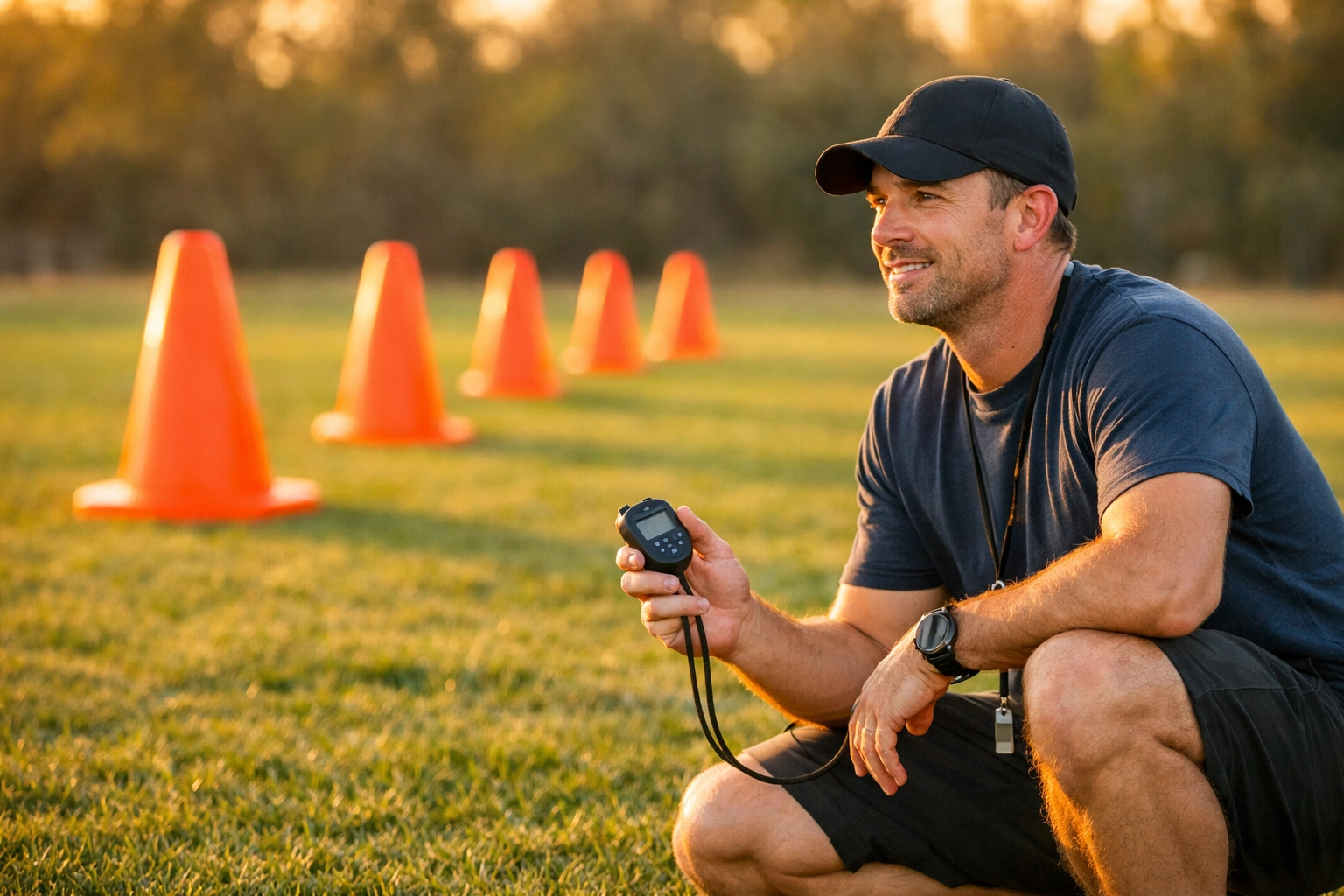
Before you feel guilty about not having the latest tech, understand this: the best coaches sports equipment is the kind you'll actually use consistently. That £2,000 timing system gathering dust in your garage isn't as valuable as a £15 stopwatch you use at every single session.
Youth athletes don't need NASA-level data. They need:
- Consistent measurements they can understand
- Quick feedback that motivates them
- Simple benchmarks that show real progress
- Coaches who actually watch them instead of staring at screens
Think of it this way: you're not training Olympic sprinters (yet). You're building fundamental speed, coordination, and confidence. For that mission, top-rated coaching equipment means gear that's reliable, affordable, and actually improves your training: not your tech collection.
The Smart Coach's Speed Tracking Kit (Under £50)
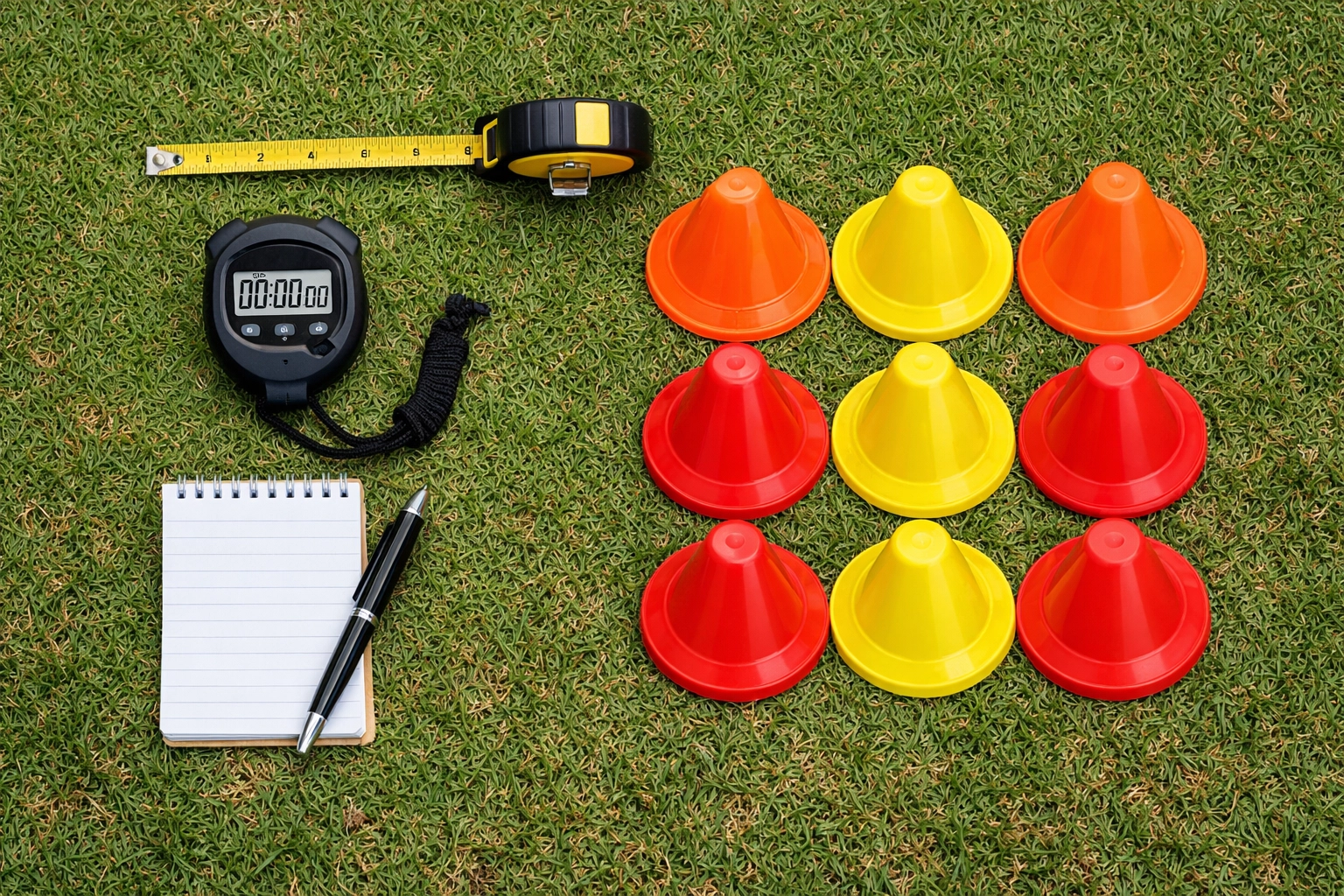
Here's everything you need to track speed improvements professionally:
Essential gear:
- One reliable stopwatch (£10-20)
- 10-12 training cones in bright colors (£15-25)
- A measuring tape or pre-measured field markings
- A notebook or simple spreadsheet
- Optional: resistance bands for drill variations (£10-15)
That's it. Seriously.
With these basics from any team training collection, you can run every speed assessment test that actually matters for youth development.
5 Speed Tests You Can Run With Just a Stopwatch & Cones
1. The 10-Meter Sprint Test
What it measures: Acceleration and explosive power
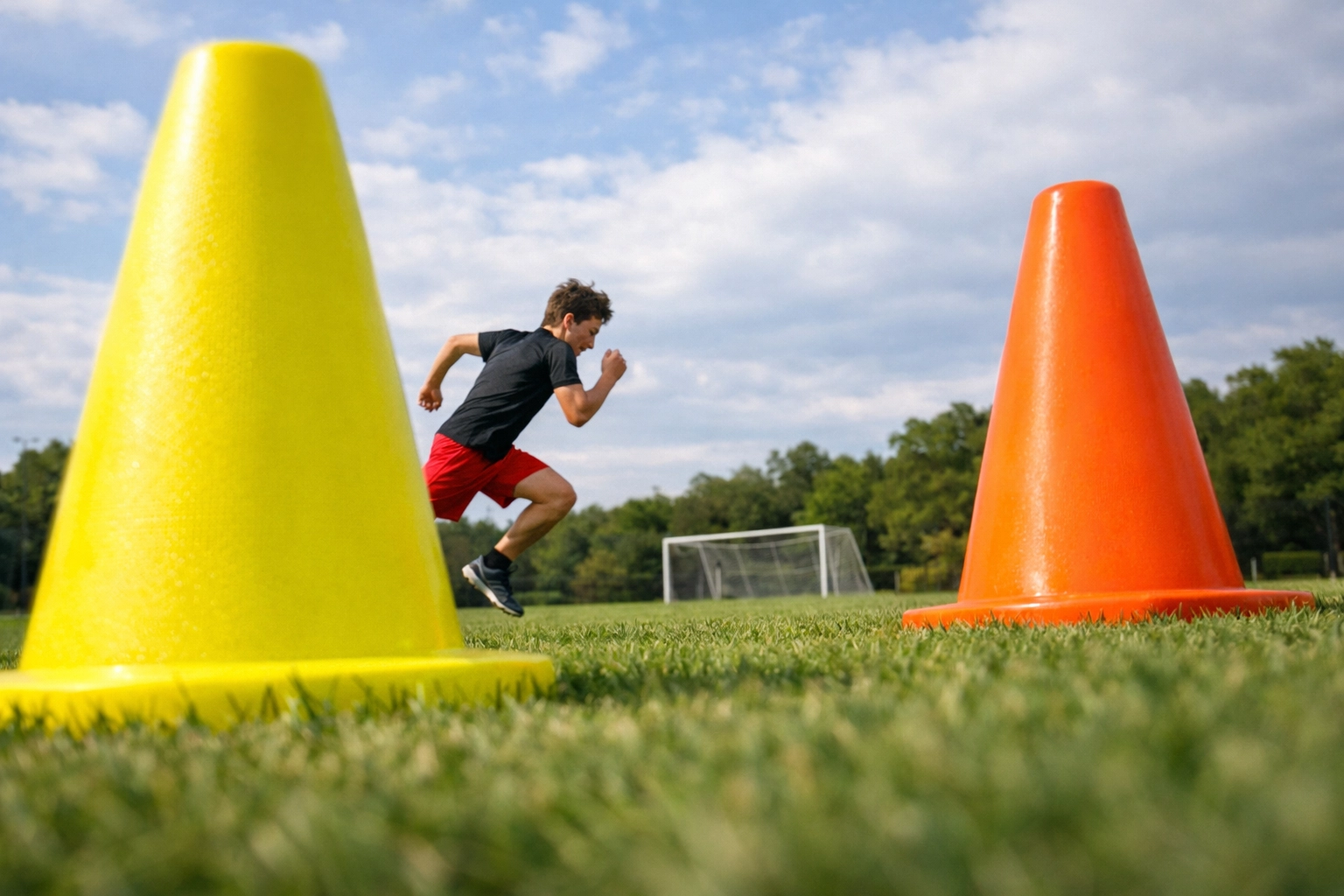
Set up two cones exactly 10 meters apart. Have your athlete start from a standing position, sprint through the second cone, and you time them. Simple, repeatable, and incredibly revealing.
Baseline targets:
- Ages 10-12: 2.0-2.5 seconds
- Ages 13-15: 1.8-2.2 seconds
- Ages 16+: 1.6-2.0 seconds
Run this test at the start and end of every training block. Even shaving 0.2 seconds is massive progress for youth athletes.
2. The 20-Meter Flying Sprint
What it measures: Top-end speed
Set up a 30-meter straight line with cones. The first 10 meters is the acceleration zone (not timed), then you time the next 20 meters when they're at full speed.
This test isolates pure speed without the acceleration phase. It's gold for tracking improvements in running mechanics and stride efficiency.
3. The Pro Agility Drill (5-10-5)
What it measures: Change of direction speed
Place three cones in a straight line, 5 meters apart. Athlete starts in the middle, sprints 5 meters to the right, touches the line, sprints 10 meters to the left cone, touches, then sprints back through the middle.
Why coaches love this: It's basically a game situation in test form. Your athletes will use this exact movement pattern in matches.
4. The T-Test
What it measures: Multi-directional agility
Set up four cones in a T-shape:
- One cone at the base
- Three cones 10 meters forward (one straight ahead, two 5 meters to each side)
Athletes sprint forward, shuffle left, shuffle right, shuffle back to center, then backpedal to start. Time the whole sequence.
This is where your agility training equipment really shines. It's a comprehensive test that shows functional athletic speed.
5. The Repeated Sprint Test
What it measures: Speed endurance and recovery
Six sprints of 20 meters with 20 seconds rest between each. Record all six times and calculate the percentage drop-off from fastest to slowest.
What you're looking for:
- Less than 10% drop-off = excellent conditioning
- 10-15% drop-off = good, but room to improve
- More than 15% = needs more conditioning work
This test is brutal but honest. It shows you who can maintain speed when it actually matters: in the final minutes of a game.
How to Track Progress Like a Pro (Without Fancy Software)
You don't need a £500 app when a simple system works better. Here's exactly how to organize your data:
Create a simple tracking sheet with these columns:
- Date
- Athlete name
- Test type
- Time/result
- Conditions (weather, energy level, post-training vs fresh)
- Notes
Take tests every 3-4 weeks, not every week. Youth athletes need time to adapt to training before you'll see measurable improvements. Testing too often just creates frustration.
Look for trends, not perfection. One bad test day doesn't mean anything. But three consecutive improvements? That's real progress you can celebrate.
The Secret Advantage of Manual Tracking
Here's something the tech companies won't tell you: watching your athletes closely beats staring at a screen every single time.
When you're timing with a stopwatch, you're forced to:
- Actually observe their running mechanics
- Notice compensation patterns before injuries develop
- See the difference between a 2.0-second sprint with perfect form and a 1.9-second sprint with dangerous technique
- Provide immediate, specific feedback
Some of the best youth coaches I know deliberately use basic equipment because it keeps them engaged. They're not analyzing data dumps at midnight: they're present during training, connecting with athletes, and catching issues in real-time.
When Should You Upgrade to Tech Tools?
Look, I'm not saying tech is evil. There are definitely times when upgrading makes sense:
Consider tech tools if:
- You're coaching at a competitive academy level where marginal gains matter
- You have 30+ athletes and need automated tracking
- You're working with athletes who have very specific speed deficits that need detailed analysis
- Your budget genuinely allows for it without sacrificing other essentials
- The athletes are mature enough to understand and use the data meaningfully
Don't bother with tech if:
- You can't afford it without cutting other essential coaching equipment
- Your athletes are under 13 and still developing basic movement patterns
- You don't have time to analyze the data properly
- The simple stopwatch method is already showing clear improvements
Remember: professional teams use expensive tech because they're dealing with elite athletes where 0.01-second improvements mean millions in performance. Your under-14s need solid fundamentals first.
Common Mistakes Youth Coaches Make With Speed Testing
Testing too frequently: You're measuring noise, not progress. Give adaptations time to happen: 3 to 4 weeks minimum between tests.
Inconsistent conditions: Testing one week on a dry track in the morning and the next week on wet grass in the evening? Your data is meaningless. Keep conditions as similar as possible.
Forgetting to warm up properly: Cold muscles don't produce accurate baselines. Always do a thorough 10-minute warm-up before testing.
Making it too serious: Youth athletes should view testing as a fun challenge, not a judgment day. Keep the energy positive and frame improvements as achievements, not demands.
Ignoring technique for time: A faster time with terrible form is a future injury. Always prioritize quality movement over speed numbers.
Your Next Steps: Start Tracking This Week
You don't need permission to start tracking effectively. Here's what to do right now:
- Grab your essential gear – A stopwatch and some cones are all you need to begin
- Pick two tests from the list above that match your sport
- Baseline your athletes this week under consistent conditions
- Set a calendar reminder for 3-4 weeks from now to retest
- Focus on quality training in between, not constant testing
The beauty of this approach? You'll spend less time fiddling with technology and more time actually coaching. Your athletes will get clearer feedback. And you'll save hundreds (or thousands) on equipment that mostly impresses other coaches rather than improving actual performance.
Smart coaching isn't about having the most expensive tools. It's about using the right tools consistently and knowing what actually matters. A stopwatch and cones in the hands of an engaged coach beats a £5,000 tech setup that sits unused every single time.
Ready to build your coaching kit the right way? Check out our top-rated coaching equipment that focuses on what actually works( not what looks flashiest in photos.)


