

Look, we've all been there. You're about to coach your first team, you're scrolling through endless sports equipment websites at midnight, and suddenly you've got 47 tabs open and a shopping cart that costs more than your car payment. Sound familiar?
Here's the thing: you don't need everything. What you need is a smart, organized approach to building your first training kit that actually makes sense for your team and your budget.
This isn't about buying the fanciest tech gadgets or copying what Premier League coaches use. It's about getting the right gear that'll help you run effective practices from day one, without breaking the bank or cluttering your garage with stuff you'll never use.
Let's break it down into five simple steps.
Step 1: Start with Organization & Communication Essentials
Before you buy a single cone or ball, you need to set yourself up as an organized coach. Trust me on this, an organized coach sets the tone for the entire team. When you're fumbling through a messy bag looking for your whistle while 15 kids wait around, you're already losing their attention.
What you need:
-
A quality coaching bag with multiple compartments and water-resistant material. This is your mobile office. Get one that's durable enough to handle mud, rain, and being tossed in your trunk three times a week.
-
Clipboard and scorebook for tracking practice plans, player stats, and those brilliant ideas that hit you mid-drill. Go old school with a weatherproof clipboard, your phone's battery will die when you need it most.
-
A loud whistle with lanyard. Seriously, don't cheap out on this. You need one that cuts through noise, wind, and teenage chatter. Pro tip: get one with a lanyard so you're not constantly fishing it out of your pocket.
-
Stopwatch. Your phone works, but a dedicated stopwatch is faster and won't distract you with notifications. You'll use this constantly for timing drills, tracking improvement, and keeping sessions moving.
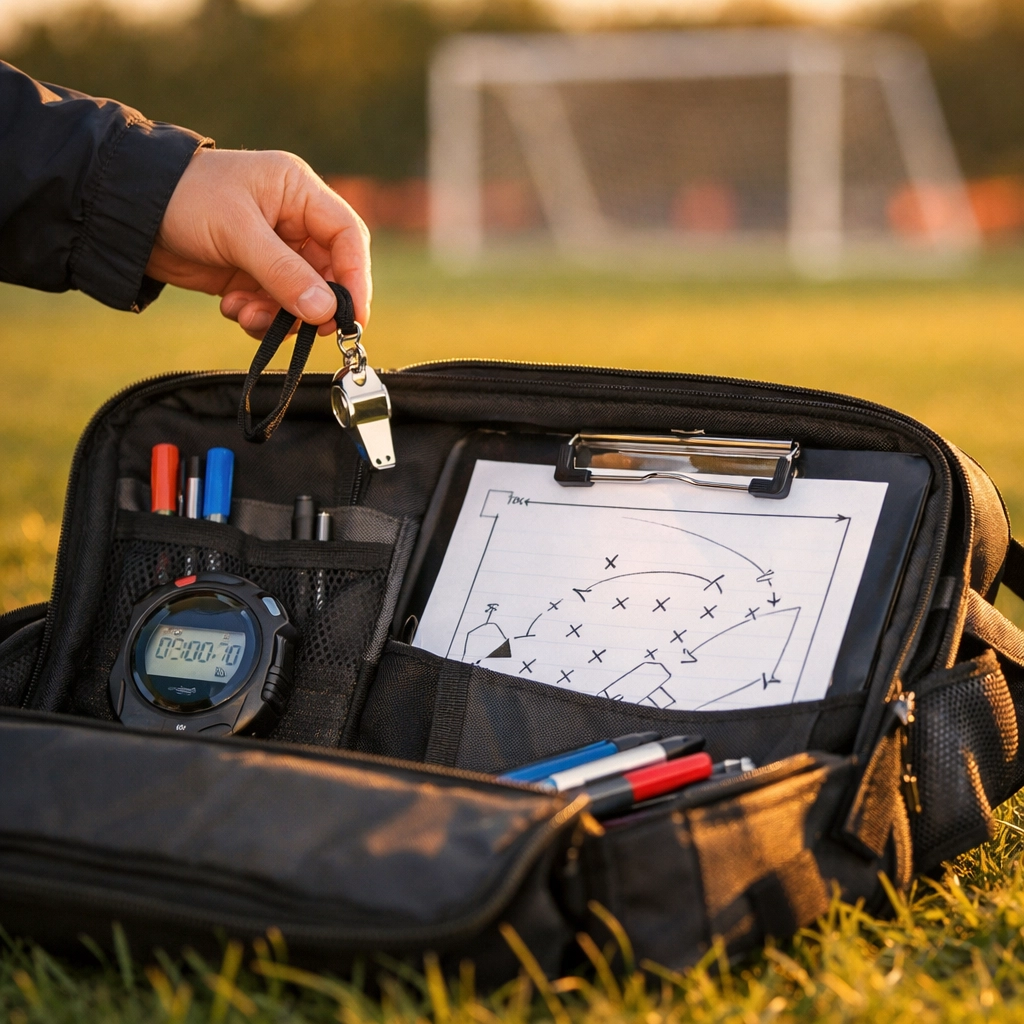
Think of these items as your coaching foundation. Everything else builds on top of this organizational layer.
Step 2: Get Your Training Fundamentals Right
Now we're getting to the actual sports equipment. This is where most new coaches go wild and overbuy. Don't do that.
The essentials:
-
Training balls appropriate for your sport (obviously), plus a quality pump and spare needles. Buy more balls than you think you need, nothing kills momentum like waiting for one ball while 20 players stand around. A good rule? At least one ball per every 3-4 players.
-
Ball pump and spare needles. Keep at least 3-4 needles in your bag. They disappear like socks in a dryer, and you'll need them when a ball goes flat mid-practice.
Why this matters: Properly inflated equipment isn't just about performance, it's about safety and consistency. Players develop muscle memory and touch based on how equipment responds. A half-flat ball throws everything off.
Step 3: Set Up for Drills & Movement
This is where your training kit starts to look like an actual training kit. These are the tools that transform an empty field into a dynamic training environment.
What you need:
-
Training cones (20-30 pieces minimum). Get a variety of sizes if you can. Flat disc cones are great for marking boundaries, while taller cones work better for slalom drills and visibility. Mix of colors helps you organize complex drills, "Sprint to the red cone, shuffle to the yellow."
-
Agility ladder (one for every 5-6 players is ideal). These develop lateral speed, coordination, footwork, and body control. They're incredibly versatile, you can use them for warm-ups, speed work, or cool-down routines.
-
Speed hurdles (6-12 hurdles to start). Adjustable height hurdles give you the most bang for your buck. You can use them for everything from basic skipping to explosive plyometric drills.
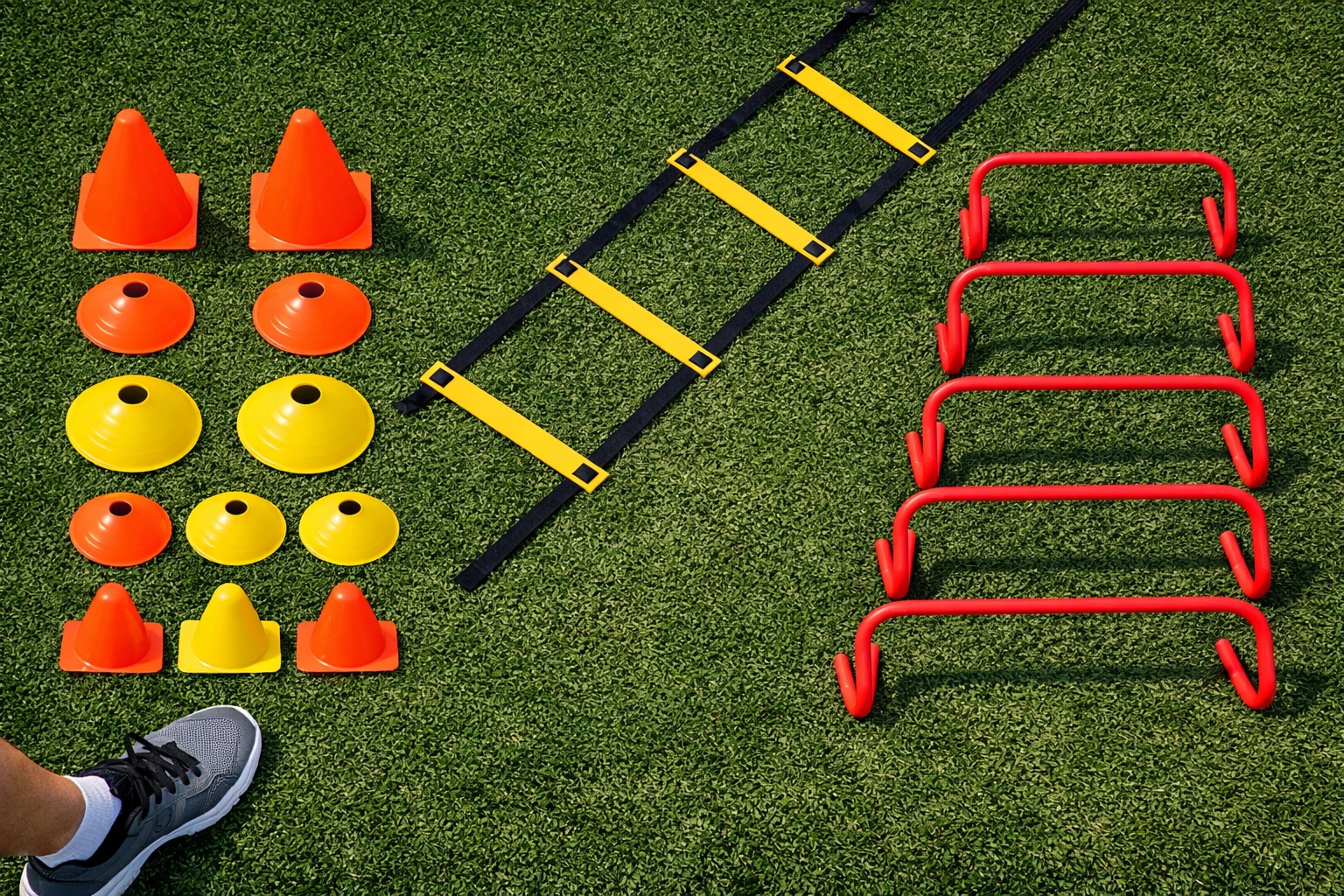
Here's why this combination works: Cones create your structure, ladders develop footwork fundamentals, and hurdles add the explosive movement component. Together, they cover about 80% of the movement patterns your players need to master.
Budget tip: Start with cones and one ladder. You can run incredibly effective sessions with just these two items. Add hurdles later when you're ready to progress to more advanced agility work.
Step 4: Player Management Basics
Running a practice isn't just about drills, it's about managing groups efficiently. These items help you organize players, run small-sided games, and keep everyone engaged.
Essential gear:
-
Pinnies or training bibs in at least 3-4 different colors. Get more than you think you need, aim for enough to cover your entire roster in two different colors. You'll use these daily for dividing teams, marking specific players during drills, and running small-sided games.
-
Lineup cards and pens (yes, actual pens that work in all weather). Keep a stash in your bag. Digital is great, but when you need to quickly jot down a formation change or note which player tweaked their ankle, nothing beats pen and paper.
-
Sport-specific rulebook. Sounds basic, but you'd be surprised how many coaches don't have one handy. You'll reference it more than you think, especially when dealing with parents who "know the rules."
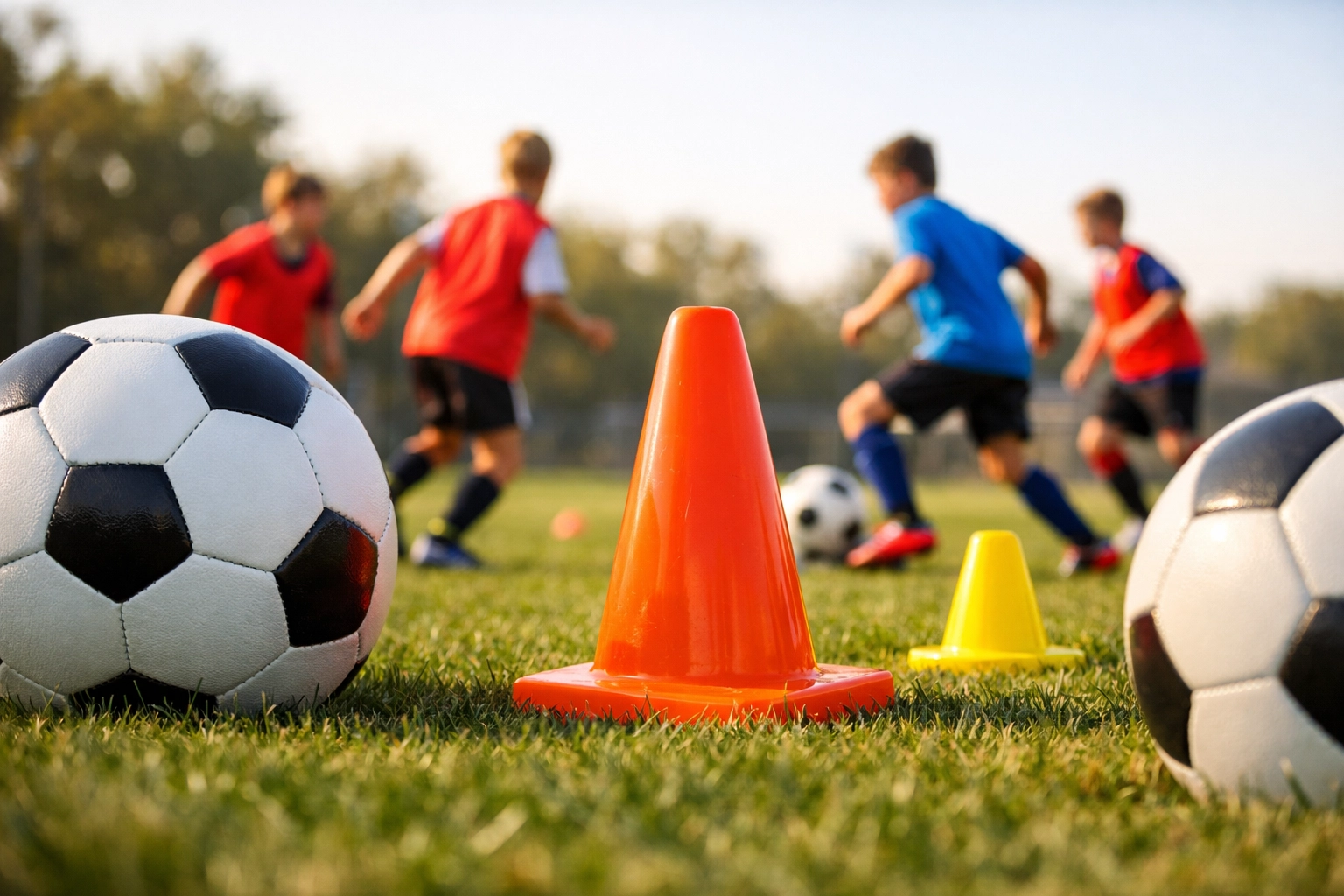
Why this matters: When you can quickly divide 20 players into four groups of five for small-sided drills, you maximize touches, engagement, and learning. Standing around is the enemy of good training.
Step 5: Safety & Hydration (Don't Skip This!)
This is the step that separates responsible coaches from lawsuits waiting to happen. I'm not being dramatic, player safety should be non-negotiable.
Must-haves:
-
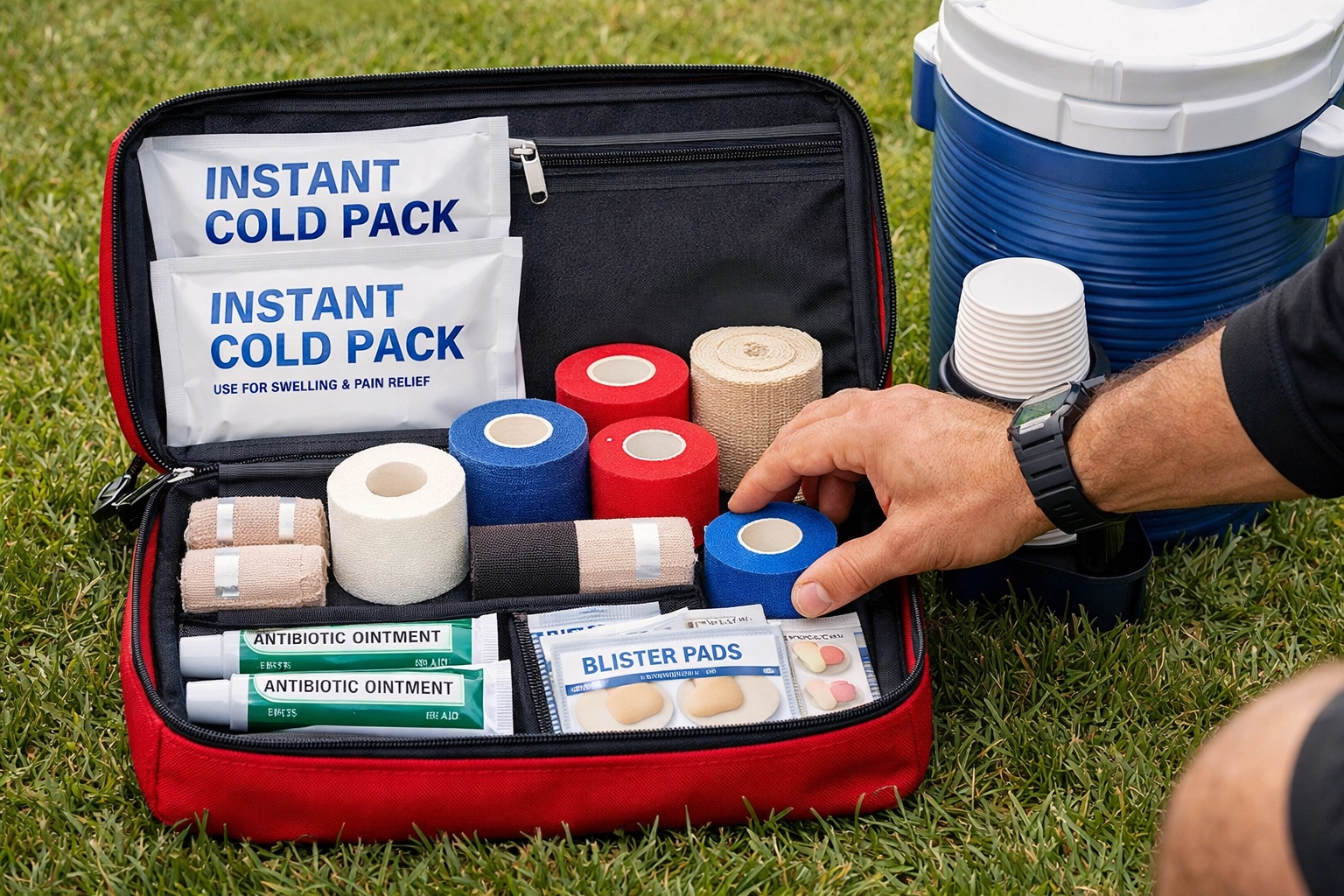
Comprehensive first aid kit tailored to your sport. At minimum: ice packs, athletic tape, bandages, antiseptic wipes, disposable gloves, and emergency contact information for every player. Refresh it every season.
-
Water bottles or team cooler with cups. Hydration isn't optional. If your players aren't taking water breaks every 15-20 minutes in hot weather, you're risking their health.
What to include in your first aid kit:
- Instant cold packs (replace annually)
- Athletic tape (various widths)
- Elastic bandages
- Antibacterial ointment
- Blister pads
- Medical scissors
- Disposable gloves
- Emergency contact cards
Safety reminder: Know where the nearest emergency services are located from your training field. Have a plan. Hope you never need it, but be prepared anyway.
Putting It All Together: Your Shopping Strategy
Okay, so you've got the five steps. Now what?
Don't buy everything at once. Start with Steps 1 and 2 for your first few sessions. Once you've got a feel for your team's needs and your coaching style, add Step 3. Steps 4 and 5 come as your squad grows and your sessions get more complex.
Budget breakdown approach:
- Weeks 1-2: Organization tools and basic balls ($100-150)
- Weeks 3-4: Add cones and one agility ladder ($75-100)
- Month 2: Pinnies and additional agility gear ($50-75)
- Month 3: Upgrade and expand based on what you're actually using
Pro tip: Check out our team training collection where we've bundled essential coaching equipment specifically for this framework. It takes the guesswork out and usually saves you 15-20% versus buying items individually.
Common Mistakes New Coaches Make
Buying too much too soon. You don't need 15 different types of training gear for week one. Start simple, learn what works, then expand.
Skipping the boring stuff. That first aid kit and those extra ball needles aren't exciting purchases, but they're the difference between looking like a pro and looking unprepared when things go sideways.
Not organizing equipment. Buy the bag first. Everything else goes IN the bag in an organized way. Future you will be grateful.
Your Next Steps
Building your first training kit doesn't have to be overwhelming. Follow these five steps in order, buy quality basics over fancy extras, and stay organized from day one.
Remember: the best coaches aren't the ones with the most expensive gear: they're the ones who show up prepared, organized, and ready to make every practice count.
Start with Step 1 this week. Get your organizational foundation sorted. Then build from there based on what your team actually needs, not what looks cool in a catalog.
Your players don't care if you have the latest tech gadgets. They care that practice is fun, productive, and that you're ready to coach when they show up ready to learn.
Now go build that kit. You've got this. 💪


