

If you're coaching a team and feeling frustrated by cramped training facilities, you're not alone. Many coaches face the challenge of developing lightning-fast athletes while working with limited space and large groups. The good news? Elite-level speed development doesn't require a football field or track. With the right approach and creative planning, you can build genuinely fast athletes in surprisingly tight spaces.
The key is understanding which components of speed training actually require distance and getting strategic about how you structure your sessions. Let's dive into proven methods that will transform your space constraints from limitations into advantages.
1. Understanding What Really Requires Space
Before diving into drills, let's get one thing straight: not all speed components need room to run. This is where many coaches get it wrong.
Components That Need Minimal Space:
• Acceleration mechanics - First 10 steps happen in just 10-15 yards
• Change of direction ability - Cuts and pivots in 5x5 foot squares
• Foot speed development - Rapid stepping patterns in place
• Rate of force development - Explosive power can be built with bodyweight
• Hip flexor strength - Critical for top speed, trainable anywhere
What Actually Needs Distance:
• Top-speed running (only component requiring 40+ yards)
• Full sprint endurance work
The game-changing question every space-limited coach should ask: "How do I maximize not having a lot of space to set myself up for success during times when I will have space?"

2. Strategic Group Management for Large Teams
Managing 30, 50, or even 100+ athletes in limited space isn't impossible - it just requires smart organization.
The Group Rotation System:
• For 100 athletes: Create 10 groups of 10
• For 50 athletes: Form 25 partner pairs for competitive races
• For 30 athletes: Use 6 groups of 5 with rotating stations
This approach keeps everyone moving while minimizing standing around time. Each group should spend 2-3 minutes per station before rotating.
Waterfall Start Technique:
Instead of having athletes sprint simultaneously, stagger starts by 3-4 seconds apart. This creates the illusion everyone is working at once while fitting multiple athletes through limited space in 40-60 seconds plus walk-back time.
Maximize Athlete Density Per Rep:
Look for drills involving twice as many athletes simultaneously. For example, partner resistance running or competitive mirror drills double your training efficiency without requiring additional space.
3. High-Impact Small-Space Drills
These drills deliver maximum speed development in minimal space while keeping large groups engaged.
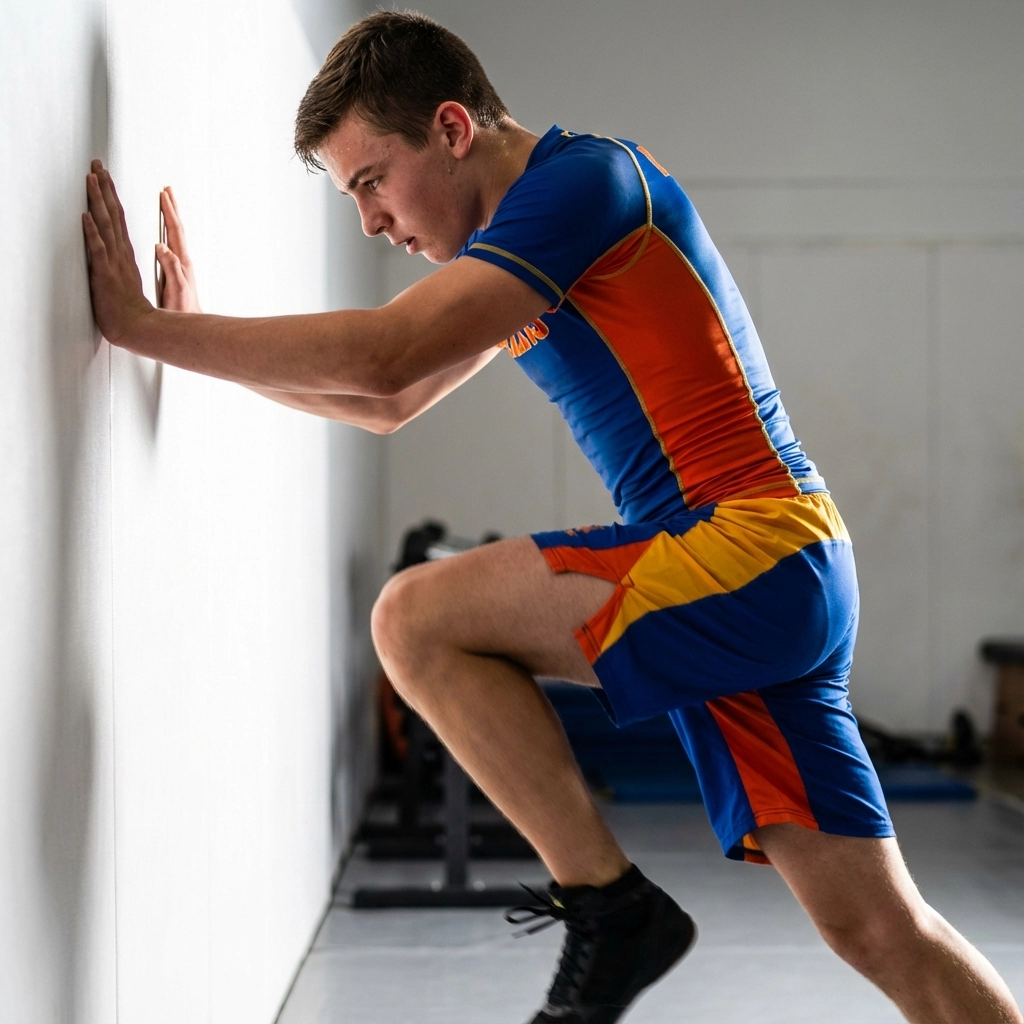
Wall Drive Series (0 horizontal space needed):
• Athletes face wall, hands at shoulder height
• Lean forward 45 degrees, staying tall through hips
• March knees up rapidly while maintaining sprint posture
• Duration: 3 rounds of 15 seconds
• Rest: 30 seconds between rounds
This drill teaches proper sprint posture and drive mechanics while requiring zero horizontal movement.
Fast Foot Ladder Alternatives (2x2 foot space):
Even without ladders, create rapid stepping patterns:
• In-in-out-out sequences
• Lateral quick steps with direction changes
• Single-leg hops in tight patterns
• Target: 15-20 contacts in 10 seconds
5-Yard Acceleration Buildups:
• Mark 5-yard zones with cones
• Athletes accelerate to 50% effort in first yard
• Build to 75% by yard 3
• Reach 90% by yard 5
• Volume: 6-8 repetitions
• Rest: Walk back between reps
4. Change of Direction Mastery
Limited space is actually perfect for developing elite change of direction skills - arguably more important than straight-line speed in most sports.
The 5x5 Square Series:
Set up 5-foot squares and rotate through:
• Forward-backward shuttles (5 seconds work, 10 seconds rest)
• Lateral cutting patterns (plant and drive emphasis)
• Multi-directional hops (single leg, both legs)
• Reactive pivots (coach calls direction mid-movement)
Competition Element:
Partner athletes up for head-to-head races in adjacent squares. Competition naturally increases intensity and effort levels.
Deceleration Focus:
Teach athletes to "slam on the brakes" effectively:
• Practice coming to complete stops in 2-3 steps
• Emphasize lowering center of gravity on approach
• Focus on wide foot placement for stability
• Key metric: Time from full speed to complete stop
5. Building Explosive Power Without Equipment
Bodyweight Plyometric Progressions:
Start with basic patterns and progress weekly:
Week 1-2: Foundation
• Jump squats (15 reps)
• Split jump lunges (10 each leg)
• Broad jumps (8 reps, stick the landing)
Week 3-4: Power Development
• Single-leg bounds (6 each leg)
• Tuck jumps (12 reps, knees to chest)
• Lateral bounds (8 each direction)
Week 5-6: Speed Integration
• Jump-to-sprint sequences (jump → 5-yard sprint)
• Reactive jumps (coach signals when to jump)
• Multi-directional explosive starts
Volume Guidelines:
• Beginners: 2-3 exercises, 2 sets each
• Advanced: 4-5 exercises, 3 sets each
• Rest: 60-90 seconds between sets

6. Session Structure That Maximizes Results
The 20-Minute Speed Block:
• Minutes 0-3: Dynamic warm-up (high knees, butt kickers, leg swings)
• Minutes 4-8: Acceleration mechanics (wall drives, starts)
• Minutes 9-14: Change of direction work (cutting, reactive drills)
• Minutes 15-18: Power development (jumps, bounds)
• Minutes 19-20: Cool-down (light movement, stretching)
Intensity Guidelines:
Every rep should be performed with maximum intent. Distance doesn't determine quality - explosive effort does. If athletes aren't breathing hard after each set, increase the intensity demand.
Rest Period Strategy:
• Power/explosive work: 90 seconds-2 minutes rest
• Speed mechanics: 60-90 seconds rest
• Conditioning circuits: 30-45 seconds rest
7. Progressive Overload in Small Spaces
Week-by-Week Progression:
Weeks 1-2: Movement Quality
Focus on perfect technique at moderate intensities. Athletes should master basic patterns before adding speed or complexity.
Weeks 3-4: Speed Integration
Increase movement velocity while maintaining technique. Add competitive elements and time challenges.
Weeks 5-6: Complex Patterns
Combine multiple movement patterns. Add reactive elements and decision-making components.
Weeks 7-8: Peak Performance
Maximum intensity work with sport-specific applications. Athletes should move with confidence and speed.
Tracking Progress:
Use objective measures even in small spaces:
• Time 10-yard acceleration runs
• Count foot contacts in timed intervals
• Measure broad jump distances
• Track improvement in directional change times
8. Safety and Injury Prevention
Red Flags to Watch:
• Athletes landing with straight legs (increase knee flexion)
• Excessive forward lean during direction changes
• Fatigue-induced sloppy technique
• Athletes favoring one leg during single-leg work
Space-Specific Safety Measures:
• Ensure 6-foot minimum between athletes during explosive drills
• Use clear boundary markers to prevent collisions
• Position spotters at drill endpoints
• Have water breaks every 8-10 minutes in tight spaces
Your Action Plan for This Week
Ready to transform your limited space into a speed development advantage? Here's your immediate next steps:
- Assess your space: Measure your available area and identify 3-4 station locations
- Divide your team: Create groups of 8-10 athletes maximum per station
- Choose 3 drills: Pick one acceleration, one change of direction, and one power exercise from this guide
- Plan your 20-minute block: Use the session structure provided as your template
- Test and adjust: Run one session, gather athlete feedback, and refine your approach
Remember, some of the fastest athletes in the world developed their speed in cramped gyms, small fields, and creative training spaces. Your space limitations aren't holding your athletes back - they're forcing you to be a more innovative, focused coach.
The athletes who learn to move efficiently in tight spaces often become the most agile, reactive players on full-sized fields. Start implementing these strategies this week, and watch your team's speed development accelerate faster than you thought possible in your "limited" space.


