

If you're looking to get faster without joining a gym or building an elaborate home setup, you're not alone. Many athletes and fitness enthusiasts struggle with limited space, tight budgets, and the challenge of finding equipment that actually delivers results.
Here's the good news: plyometric boxes might just be the game-changer you've been looking for. These simple, sturdy platforms pack serious punch when it comes to building explosive speed and power – all from the comfort of your own space.
1. The Space-Saving Speed Solution
Plyometric boxes are the Swiss Army knife of speed training equipment. Unlike treadmills, agility ladders, or complex weight setups, a single box takes up minimal floor space yet enables dozens of different exercises.
Here's what makes them perfect for home use:
• Compact footprint: Most boxes measure 20" x 24" x 16-30" – smaller than a coffee table
• Stackable design: Many models nest together when not in use
• Multi-functional: One piece of equipment, endless exercise variations
• No power requirements: Unlike treadmills or electronic equipment
• Weather independent: Perfect for garage, basement, or indoor training
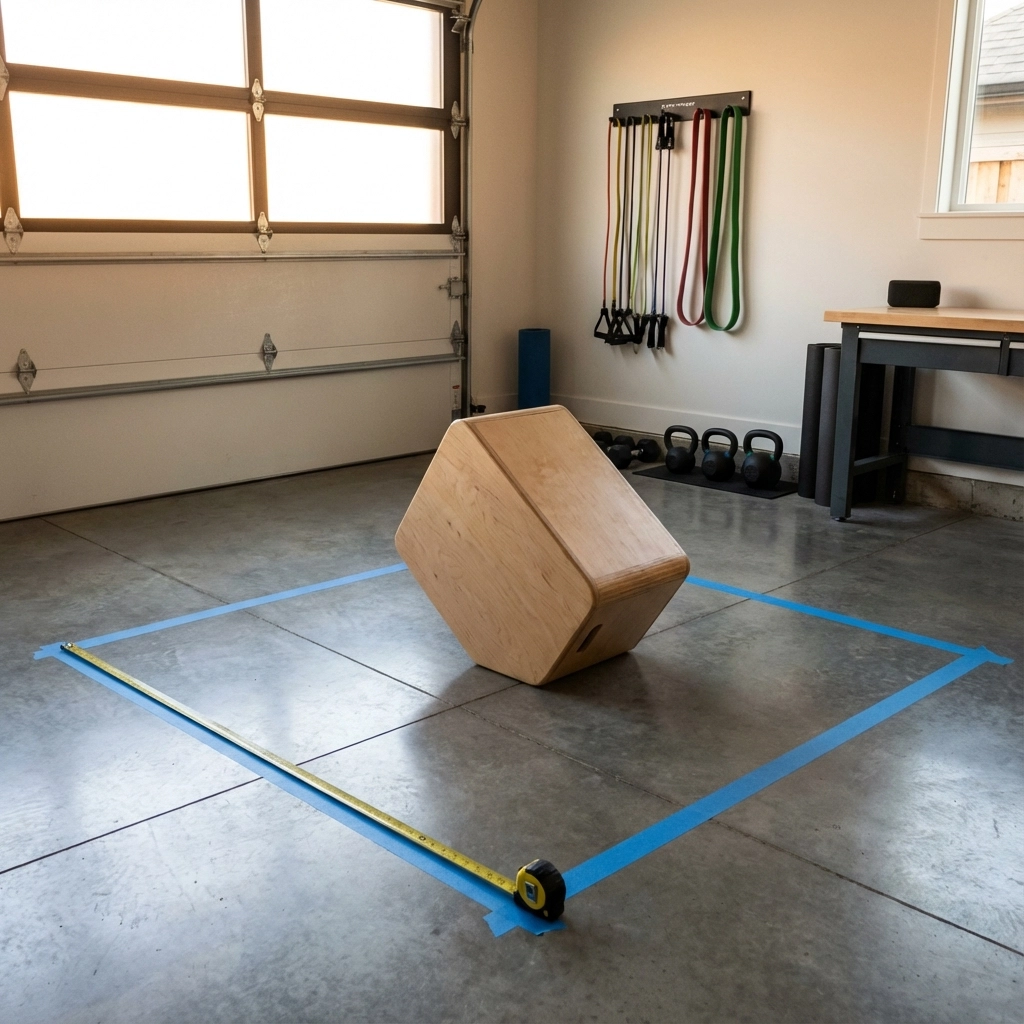
The bottom line? You can transform any 6x6 foot space into a legitimate speed training zone.
2. Why Plyometric Training Builds Real Speed
Before diving into specific exercises, let's talk about why plyometric boxes work so well for speed development. Plyometrics train your muscles to produce maximum force in minimum time – which is exactly what speed is all about.
When you perform box jumps, depth jumps, or step-ups, you're targeting your fast-twitch muscle fibers. These are the same muscle fibers that fire when you're sprinting, jumping, or making explosive movements in sports.
The Science Behind the Speed Gains
Research consistently shows that plyometric training:
• Increases sprint speed and velocity by improving neuromuscular coordination
• Enhances explosive power in the legs and hips
• Improves ground contact time – the key to faster running
• Builds vertical stiffness that translates directly to sprint ability
• Develops reactive strength for quicker direction changes
Here's the kicker: You see the greatest improvements in the initial acceleration phase of sprinting – exactly what matters most in competitive sports and real-world athletic performance.
3. Top 5 Plyometric Box Exercises for Speed
Let's get practical. Here are the most effective plyometric box exercises you can do at home, ranked by their speed-building potential:
Exercise #1: Box Jumps (The Foundation)
Target: Explosive leg power and vertical force production
How to do it:
• Start 2-3 feet away from an 18-24 inch box
• Jump onto the box with both feet, landing softly in athletic position
• Step down (don't jump down) to reset
• Key metric: Aim for 3-5 sets of 3-8 jumps, focusing on quality over quantity
Exercise #2: Depth Jumps (Advanced Power Builder)
Target: Reactive strength and rapid force development
How to do it:
• Start standing on the box
• Step off (don't jump off) and immediately explode upward upon landing
• Focus on minimal ground contact time
• Progressive approach: Start with 12-16 inch box, work up to 24-30 inches
Exercise #3: Lateral Box Step-Overs
Target: Multi-directional speed and hip stability
How to do it:
• Stand beside the box
• Step up and over to the other side quickly
• Focus on controlled, rapid movements
• Speed focus: Perform for 20-30 seconds at maximum pace

Exercise #4: Box Push-Offs
Target: Single-leg power and acceleration mechanics
How to do it:
• Place one foot on the box
• Drive through that leg to propel yourself forward
• Land on the opposite leg and immediately reset
• Sport-specific benefit: Mimics the driving motion in sprinting starts
Exercise #5: Speed Box Hops
Target: Force transfer and sprint-specific power
How to do it:
• Perform rapid, continuous hops onto and off the box
• Focus on quick ground contacts and explosive upward movement
• Research-backed: Studies show this exercise "vastly improves force transfer patterning"
4. Safety First: Avoiding Common Injuries
Let's be honest – plyometric training can be intense. Here are the red flags to watch for and safety guidelines that'll keep you training consistently:
Critical Safety Rules:
• Start low: Begin with a 12-16 inch box, even if you think you can handle more
• Quality over quantity: Better to do 20 perfect jumps than 50 sloppy ones
• Fresh legs only: Never do plyometrics when you're already fatigued
• Proper landing: Always land with knees slightly bent, weight on balls of feet
• Rest between sets: Take 60-90 seconds between sets for full recovery
Warning Signs to Stop Immediately:
• Sharp pain in knees, ankles, or lower back
• Significant decrease in jump height during a session
• Loss of landing control or balance
• Feeling dizzy or overly winded
Remember: Plyometric training works best in short bursts. If you're doing more than 20-30 minutes, you're probably doing too much.
5. Building Your Home Speed Training Program
Here's a simple, progressive program you can start this week:
Week 1-2: Foundation Phase
• Frequency: 2-3 sessions per week
• Focus: Basic box jumps and step-ups
• Volume: 3 sets of 5 jumps, focus on perfect form
• Box height: 12-16 inches
Week 3-4: Development Phase
• Frequency: 2-3 sessions per week
• Focus: Add lateral movements and single-leg variations
• Volume: 4 sets of 6-8 jumps
• Box height: 16-20 inches
Week 5-6: Performance Phase
• Frequency: 2-3 sessions per week
• Focus: Introduce depth jumps and complex movements
• Volume: 3-5 sets of 3-6 jumps (quality focus)
• Box height: 18-24 inches
6. Common Mistakes That Kill Your Progress
Avoid these training errors that hold most people back:
Mistake #1: Going Too High Too Soon
The fix: Start with a height where you can land confidently every time. You can always progress upward.
Mistake #2: Jumping Down From the Box
The fix: Always step down to reset. Jumping down creates unnecessary impact and fatigue.
Mistake #3: Training When Tired
The fix: Do plyometrics at the beginning of your workout when you're fresh and explosive.
Mistake #4: Ignoring Landing Mechanics
The fix: Spend time practicing soft, controlled landings. This is where injuries happen.
Mistake #5: Doing Too Much Volume
The fix: Think explosive quality, not cardio quantity. Less is often more with plyometrics.
7. Choosing the Right Box for Your Space
Not all plyometric boxes are created equal. Here's what to look for:
Essential Features:
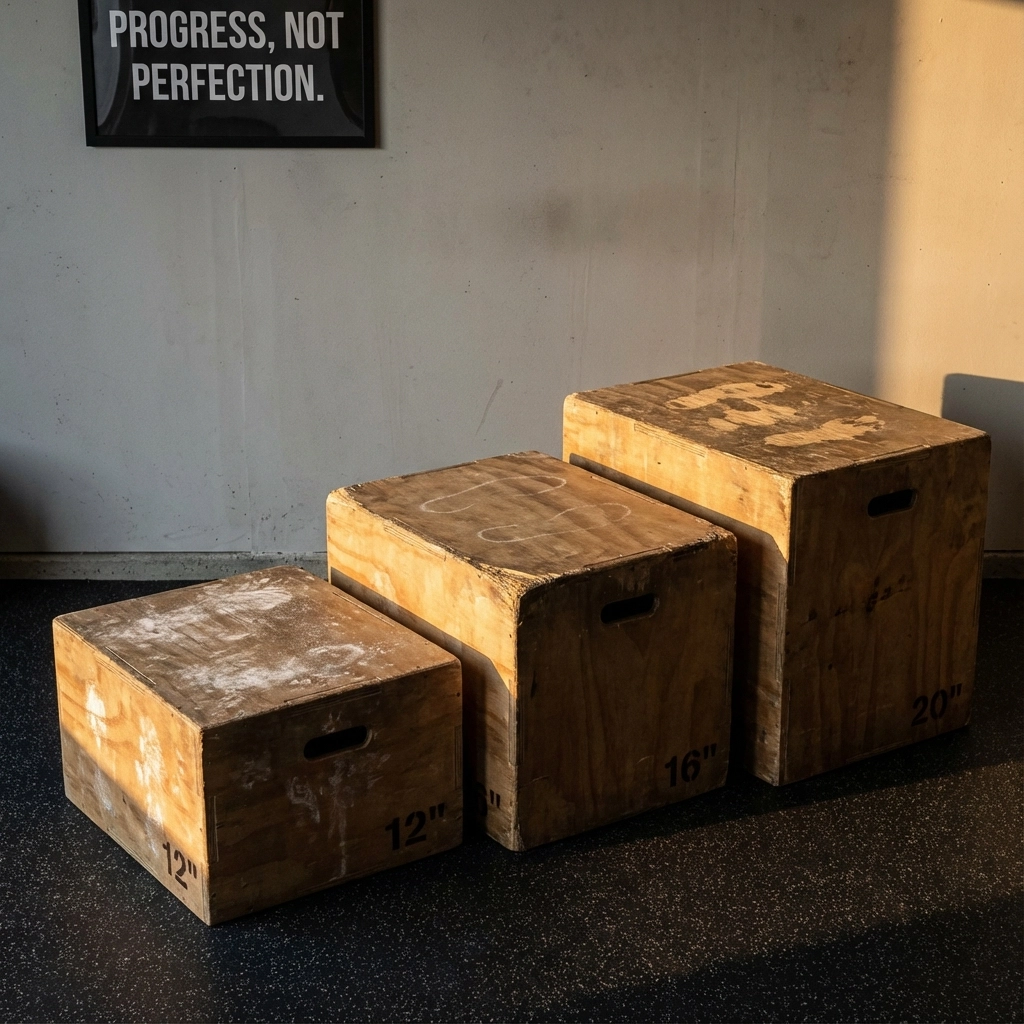
• Adjustable height or multiple height options (12", 16", 20", 24")
• Non-slip top surface for secure landings
• Stable base that won't tip or slide
• Appropriate weight capacity (at least 300+ lbs)
• Rounded edges to prevent injury if you miss
Space Considerations:
• Foam boxes: Softer landings, better for beginners, but less durable
• Wood boxes: Traditional, sturdy, professional feel
• Metal boxes: Most durable, often stackable, gym-quality
• Adjustable boxes: Great for progression, space-efficient
Budget tip: You can start with a sturdy step or platform you already have at home, but invest in proper equipment as you progress.
8. Tracking Your Speed Improvements
Here's how to measure if your plyometric training is actually making you faster:
Simple Tests You Can Do at Home:
• Vertical jump test: Measure your max jump height monthly
• 10-yard sprint: Time yourself over a short distance
• Standing broad jump: Track horizontal jumping distance
• Box jump height: Gradually increase the height you can successfully jump
What to Expect:
• Week 2-3: Improved landing confidence and technique
• Week 4-6: Noticeable gains in jump height and explosiveness
• Week 8-12: Measurable improvements in sprint times and reactive movements
Pro tip: Keep a simple training log. Seeing your numbers improve over time is incredibly motivating and helps you stay consistent.
Your Next Steps to Faster Speed
Ready to start building serious speed at home? Here's your action plan:
- This week: Choose your plyometric box and clear a 6x6 foot training space
- Start simple: Begin with basic box jumps, 3 sets of 5 reps, 2-3 times per week
- Focus on form: Perfect your landing technique before increasing intensity
- Track progress: Set up simple tests to measure your improvement
- Stay consistent: Commit to 6 weeks of regular training to see real results
Remember: Speed isn't just about running faster – it's about explosive power that translates to every athletic movement you make. Whether you're trying to shave seconds off your sprint times, jump higher, or just feel more athletic in daily life, plyometric boxes give you a proven, space-efficient way to get there.
The best part? You can start today, right from your own home. No gym membership required, no complex equipment setup, just you, a box, and the commitment to get faster.
For more training tips and equipment guidance, check out our complete guide to speed and agility training.
Your speed goals are within reach – it's time to jump in.


