

If you're trying to get faster, you've probably stood in the sports equipment aisle wondering: should I grab resistance bands or speed hurdles? You're not alone. This is one of the most common questions we get at Rapid Sports, and honestly, it's a smart one to ask.
Both pieces of equipment promise to boost your speed, but they work in completely different ways. The good news? You don't need to be a sports scientist to figure out which one will help you reach your goals faster.
Understanding Resistance Bands for Speed Training
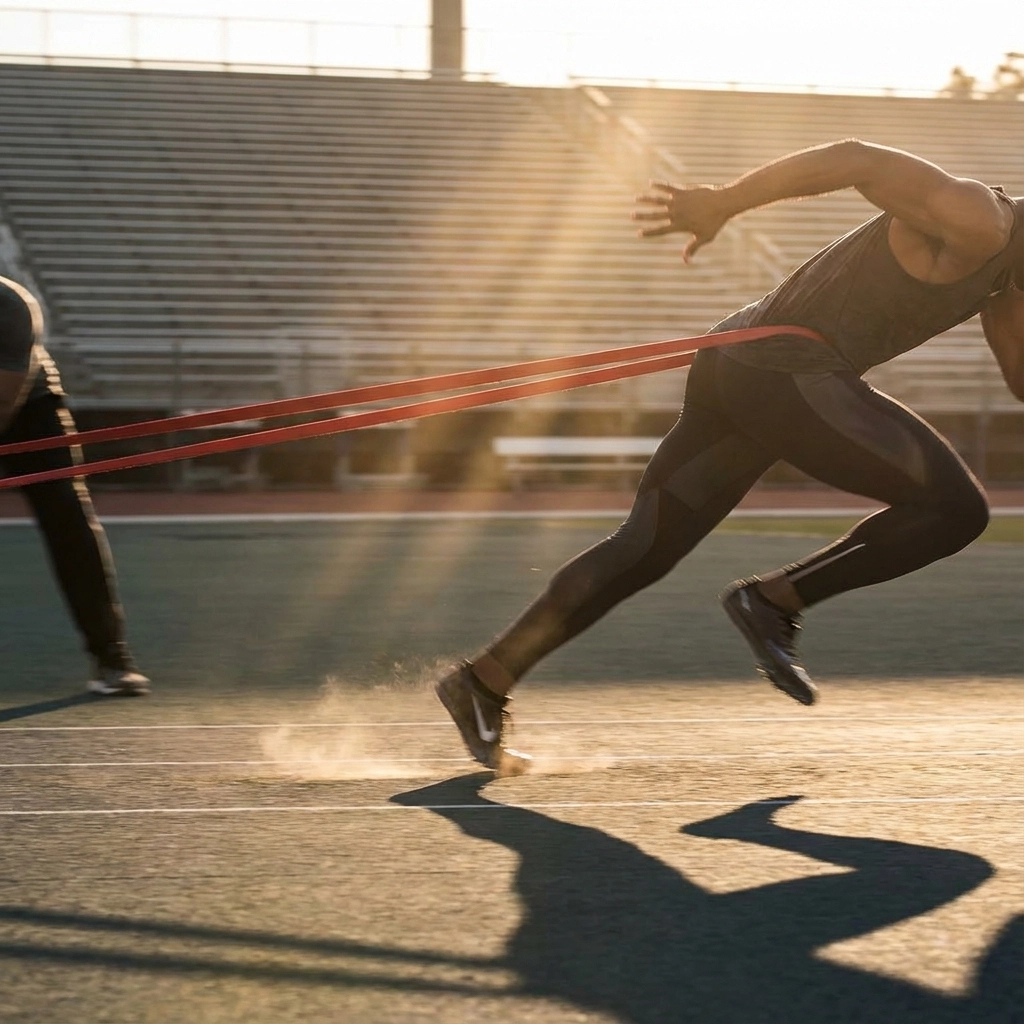
Resistance bands might look simple, but they're speed-building powerhouses. When you use them for sprint training, you're essentially adding resistance to your natural running motion, forcing your muscles to work harder than they normally would.
How resistance bands boost speed:
• Overspeed training: When the band pulls you forward, you run faster than your normal pace, training your nervous system for higher speeds
• Resisted sprints: Running against band resistance builds explosive power in your legs
• Force development: Your muscles learn to generate more power with each stride
• Stride length improvement: The resistance challenges you to take longer, more powerful steps
The science is pretty straightforward: when you remove the resistance, your body maintains that increased power output, making you naturally faster.
Popular resistance band speed drills:
• Partner-assisted overspeed runs (10-20 meters)
• Wall-anchored resisted sprints
• Band-assisted acceleration drills
• Lateral movement training with mini bands
One thing that makes resistance bands special is their versatility. You can use them for strength training, speed work, and injury prevention all in one session.
Speed Hurdles: The Agility and Footwork Masters
Speed hurdles (also called agility hurdles or mini hurdles) take a completely different approach to making you faster. Instead of adding resistance, they focus on improving your footwork, coordination, and movement efficiency.
How speed hurdles boost speed:
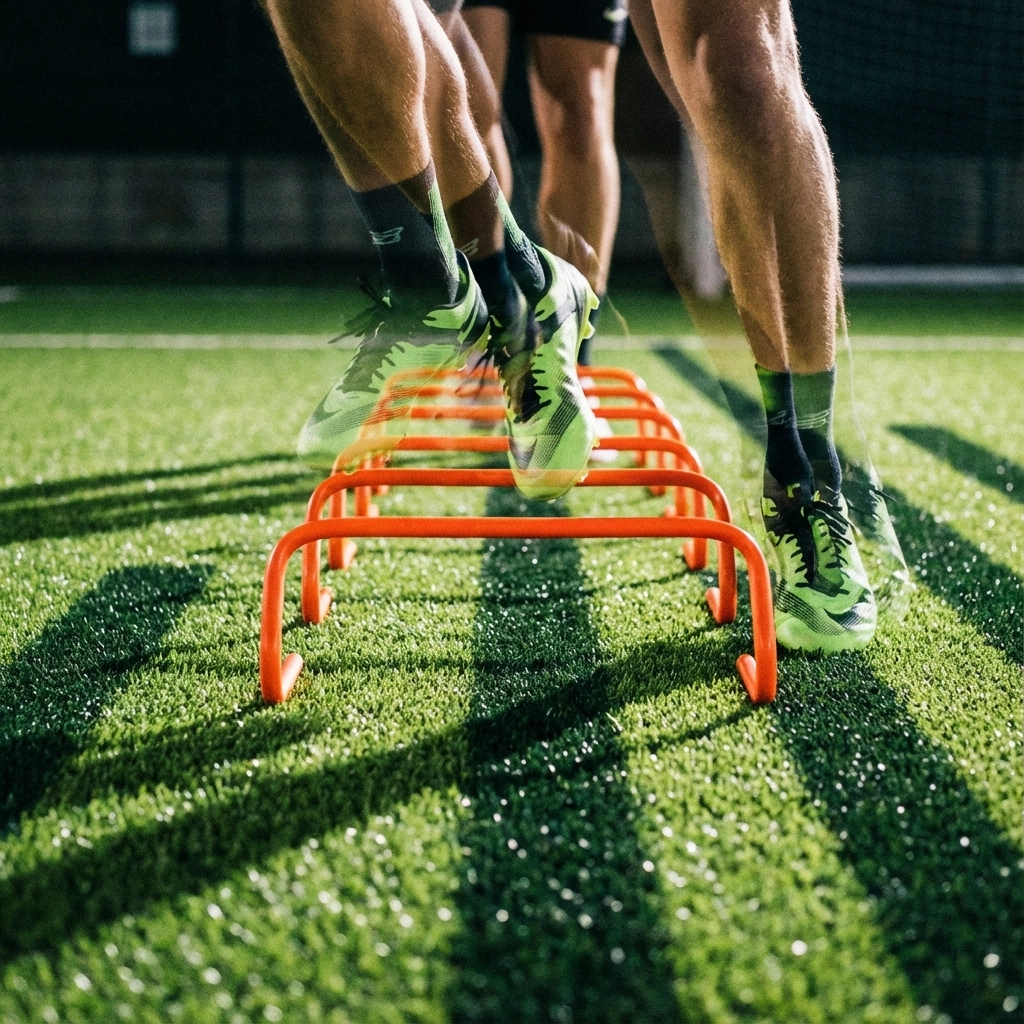
• Improved foot speed: Quick, precise steps over hurdles train your feet to move faster
• Better coordination: Your brain learns to coordinate complex movement patterns
• Increased stride frequency: You develop the ability to take more steps per second
• Enhanced agility: Lateral and multi-directional movements become more fluid
• Proprioception training: Better body awareness leads to more efficient movement
Speed hurdles are like dance lessons for your feet. They teach your nervous system to fire faster and more precisely, which translates directly to improved speed on the field or track.
Common speed hurdle drills:
• Two-feet forward hops (focusing on quick ground contact)
• Single-leg lateral bounds
• In-in-out-out patterns for coordination
• Forward-backward combinations
• Icky shuffle variations
The Head-to-Head Comparison
Let's break down how these two training tools stack up against each other in the areas that matter most for speed development.
Power Development
Winner: Resistance Bands
Resistance bands force your muscles to generate more force with each step. This increased force production directly translates to more powerful strides and faster sprint times. Speed hurdles, while excellent for coordination, don't provide the same resistance challenge that builds raw power.
Foot Speed and Quickness
Winner: Speed Hurdles
If you want lightning-fast feet, hurdles are your best friend. The quick, precise movements required to clear hurdles train your nervous system for rapid-fire foot placement. Resistance bands can't match this specific type of neuromuscular training.
Acceleration Improvement
Winner: Resistance Bands
Those crucial first few steps of a sprint require explosive power, which resistance bands excel at developing. The resisted acceleration drills build the specific strength patterns needed for faster starts.
Agility and Direction Changes
Winner: Speed Hurdles
Speed hurdles train you to move efficiently in all directions, not just forward. The various drill patterns improve your ability to cut, dodge, and change direction quickly – skills that bands can't effectively target.
Versatility and Convenience
Winner: Resistance Bands
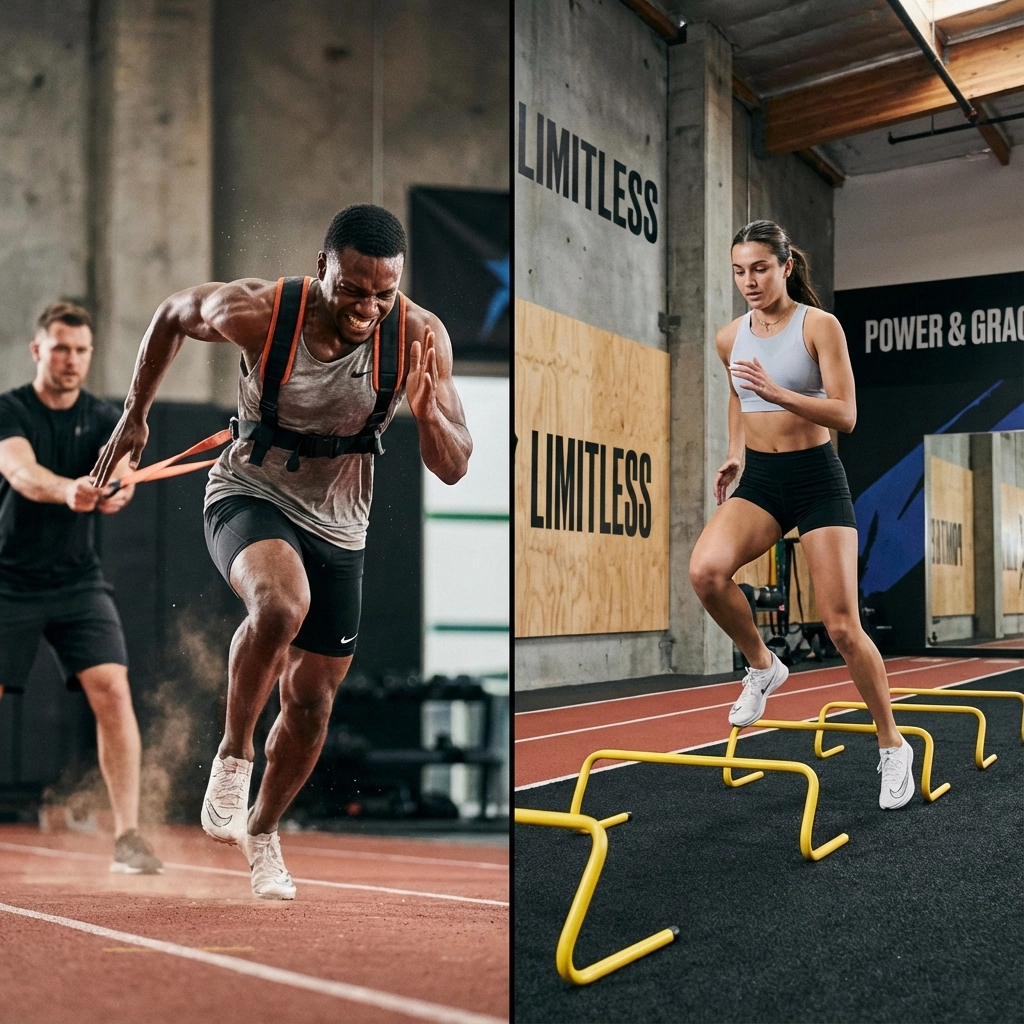
Bands win this category hands down. You can use them for strength training, stretching, rehabilitation, and speed work. They're also more compact and easier to transport than a set of hurdles.
Cost Effectiveness
Winner: Resistance Bands
A quality set of resistance bands typically costs less than a set of adjustable speed hurdles and offers more training options. However, both are relatively affordable compared to other speed training equipment.
Which Should You Choose Based on Your Goals?
The "faster" option depends entirely on what type of speed you're trying to develop and what your current weaknesses are.
Choose Resistance Bands If:
• You're a sprinter looking to improve straight-line speed
• Power is your weakness – you feel strong but not explosive
• You want maximum versatility from your training equipment
• You're working on acceleration from a standing start
• Budget is tight and you want the most bang for your buck
• Space is limited – bands are incredibly portable
Choose Speed Hurdles If:
• You play field sports that require quick direction changes
• Foot speed is your weakness – you feel powerful but not quick
• Coordination needs work – you're athletic but not smooth
• You're working on agility for sports like soccer, basketball, or tennis
• You want sport-specific training that mimics game movements
• You have adequate training space for hurdle setups
The Smart Money Solution: Use Both
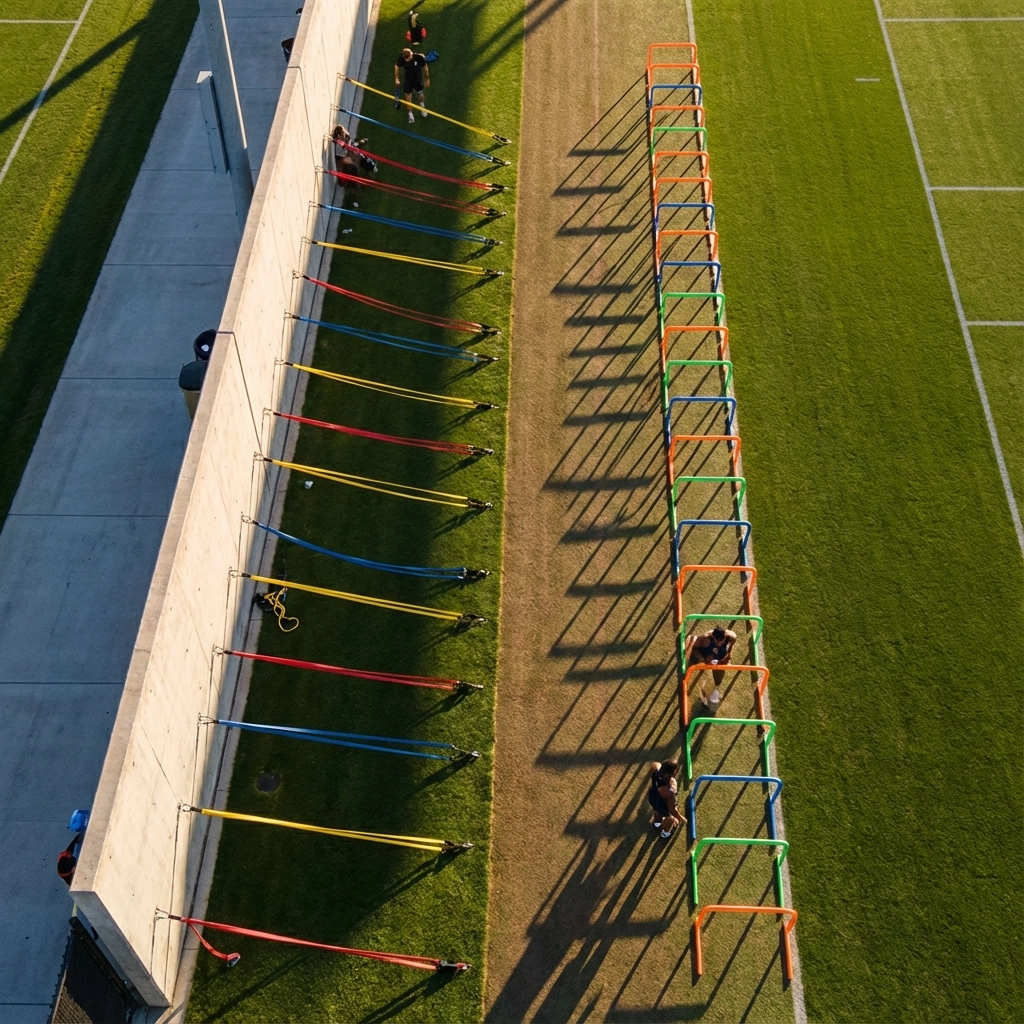
Here's what many athletes discover: you don't have to choose just one. The most effective speed training programs combine both resistance bands and speed hurdles, using each tool for what it does best.
Weekly training example:
• Monday: Resistance band acceleration work (3x20 meter resisted sprints)
• Wednesday: Speed hurdle agility drills (15-20 minutes of various patterns)
• Friday: Combined session using bands for warm-up and hurdles for skill work
This approach addresses both power development and movement efficiency, giving you the best of both worlds.
Getting Started: Your First 4 Weeks
Week 1-2: Foundation Phase
Resistance Band Focus:
• 2 sessions per week
• 3-4 sets of 10-20 meter resisted runs
• Focus on form over speed
• Rest 90 seconds between sets
Speed Hurdle Focus:
• 2 sessions per week
• Basic two-foot hops over 6-8 hurdles
• 3 sets of 2 trips through
• Focus on consistent rhythm
Week 3-4: Progression Phase
Resistance Band Focus:
• Add overspeed training (partner-assisted)
• Increase distance to 30 meters
• Reduce rest to 60 seconds between sets
Speed Hurdle Focus:
• Introduce single-leg patterns
• Add lateral movements
• Increase to 4 sets of 2 trips through
Common Mistakes to Avoid
With Resistance Bands:
• Using too much resistance (should allow normal running form)
• Skipping the warm-up (cold muscles + resistance = injury risk)
• Forgetting to include overspeed work (only doing resisted runs)
With Speed Hurdles:
• Setting hurdles too high (6-12 inches is plenty)
• Rushing through drills without focus on form
• Ignoring lateral and backward movements
The Bottom Line
So which boosts speed faster? The honest answer is that both can make you faster, but in different ways and timelines.
Resistance bands typically show results in straight-line speed within 4-6 weeks of consistent training. You'll notice more powerful starts and stronger acceleration.
Speed hurdles often show improvements in agility and multi-directional speed within 2-4 weeks, with noticeable improvements in foot speed and coordination.
For most athletes, the winning combination is using both tools as part of a well-rounded speed training program. Start with whichever addresses your biggest weakness, then add the other after 4-6 weeks of consistent training.
Remember, the equipment that works fastest is the one you'll actually use consistently. Pick the option that excites you most, fits your space and budget, and aligns with your sport-specific needs.
Ready to get started? Check out our agility training collection to find the perfect equipment for your speed goals. Your faster self is waiting – it's time to make it happen.


