
First-Step Quickness: The Coach's Guide to Weighted Vest Drills
by Paul Harwood
·
If you've been searching for ways to help your athletes explode off the line faster, you're not alone. First-step quickness separates good players from great ones: and weighted vests might be the missing piece in your training toolkit.
Here's the thing: weighted vests aren't magic. But when you use them right, they're one of the most practical pieces of speed training gear for coaches who want results without complicated setups.
Let's break down exactly how to use weighted vest drills to build that explosive first step your athletes need.
Why Weighted Vests Actually Work
The science is pretty straightforward. When your athletes train with added resistance, their muscles work harder to generate force. Once you remove the vest, regular movements feel lighter and faster: like taking off ankle weights after a workout.
This is called the overload principle, and it's the foundation of all strength and speed development.
Here's what happens during weighted vest training:
- Muscles generate more force against resistance
- The nervous system adapts to moving explosively under load
- Athletes develop stronger hip drive and leg power
- Once the vest comes off, movements feel effortless
The result? Athletes who can explode from a standstill position faster than before.
Safety First: Getting Started the Right Way
Before you hand out vests to your entire team, let's talk about doing this safely. Weighted vests amplify everything: including poor form and bad habits.
Start with the right weight:
- Begin with 4–10% of each athlete's body weight
- For a 180-pound athlete, that's roughly 9–18 pounds
- When in doubt, go lighter
Who should use weighted vests:
- Athletes with solid movement mechanics
- Players who can perform drills correctly at bodyweight
- Those with a strength training foundation
Who should wait:
- Complete beginners still learning basic form
- Athletes recovering from lower body injuries
- Players who can't maintain good posture during drills
Remember: you're building speed, not breaking down bodies. Quality always beats quantity.
5 Essential Drills for Building Explosive First Steps
Let's get into the practical stuff. These five drills target first-step quickness from different angles. Mix and match based on your sport and your athletes' needs.
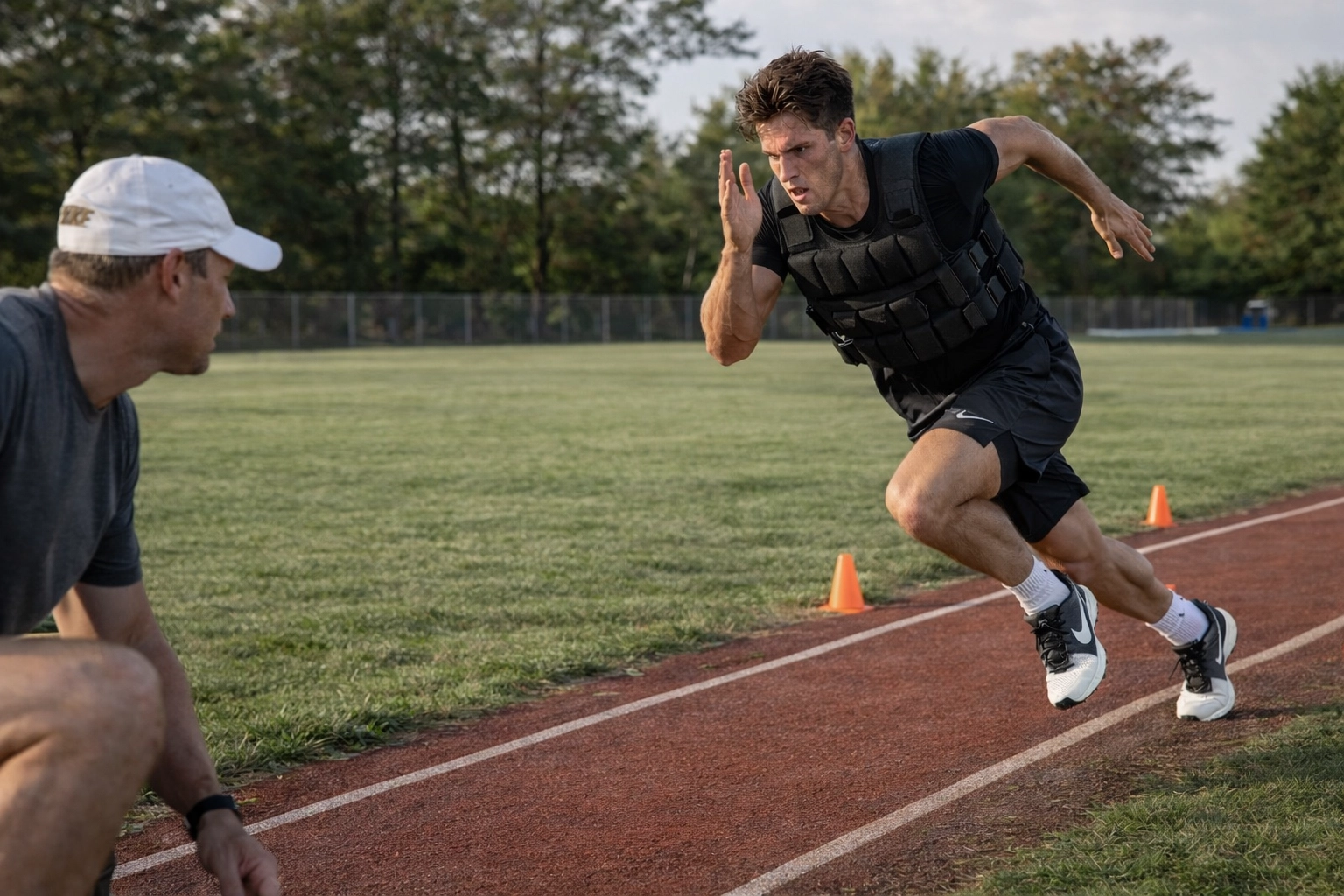
1. Weighted Acceleration Sprints
This is your bread-and-butter drill for building power off the line.
How to do it:
- Start from a standing, kneeling, or 3-point stance
- Sprint 10–15 yards at max effort
- Focus on driving the knees forward and up
- Keep the chest slightly forward, not upright
Coaching cues:
- "Drive your knees through the ground"
- "First three steps are the most important"
- "Push, don't reach"
Start with 3 reps and work up to 5. Give athletes full recovery between sprints: we're training power, not conditioning.
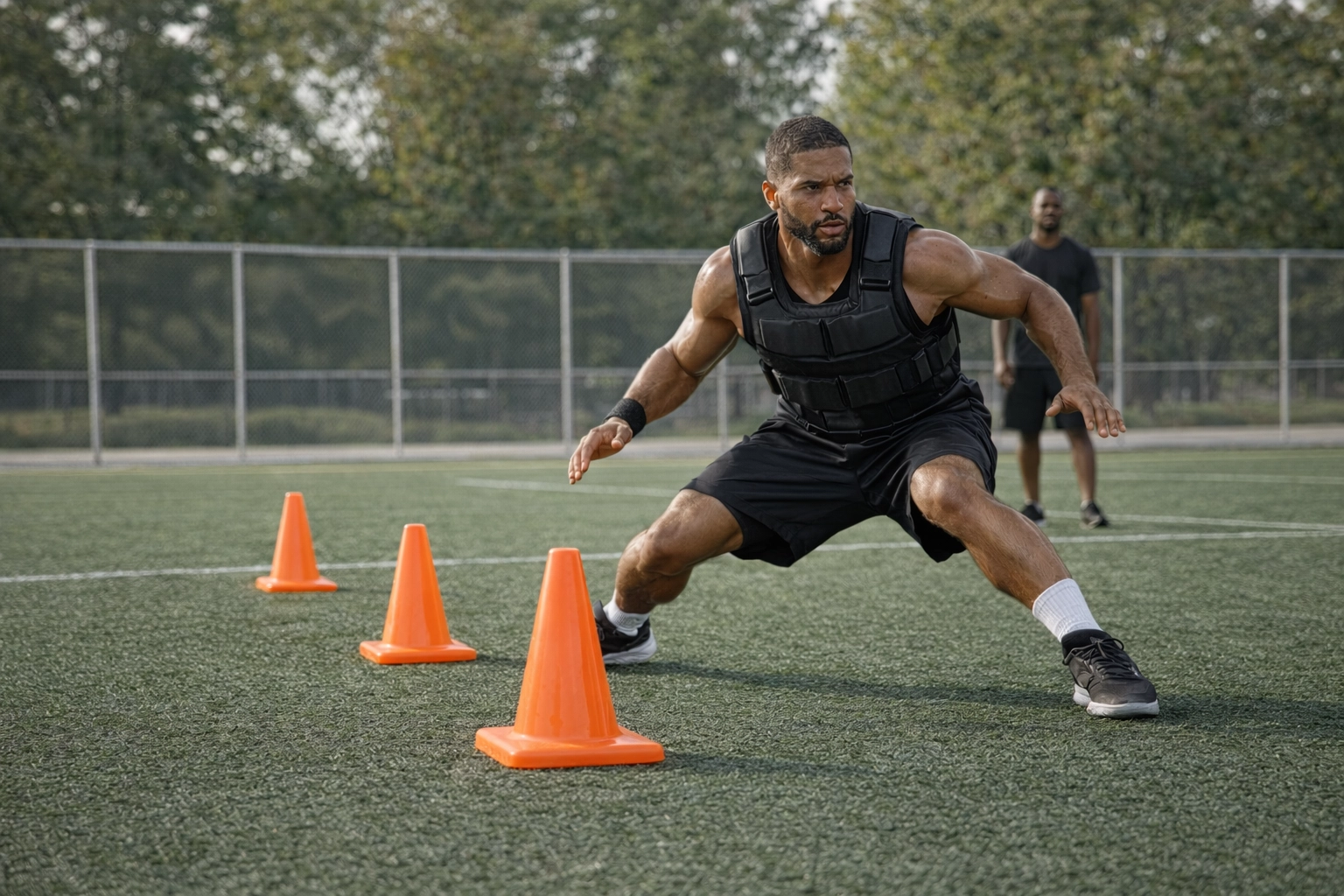
2. Lateral Cone Shuffles
First-step quickness isn't just about moving forward. Your athletes need to change direction fast too.
Setup:
- Place two cones 5 yards apart
- Athletes shuffle side-to-side wearing the vest
- Keep the chest up and stay low in an athletic stance
- Touch each cone before changing direction
Run this for 10 seconds per rep, focusing on quick feet and controlled movement. This drill builds the lateral strength that makes defensive players unstoppable.
3. Weighted Skater Jumps
Single-leg power is everything for first-step explosiveness. Skater jumps target exactly that.
How to perform:
- Jump laterally from one leg to the other
- Land softly with control on the outside leg
- Pause briefly, then explode to the other side
- Keep movements controlled: this isn't about distance
Do 3 sets of 6–8 jumps per side. The vest adds resistance, but the focus stays on landing mechanics and balance.
Key point: If athletes can't land softly, the vest is too heavy or they're not ready for this progression.
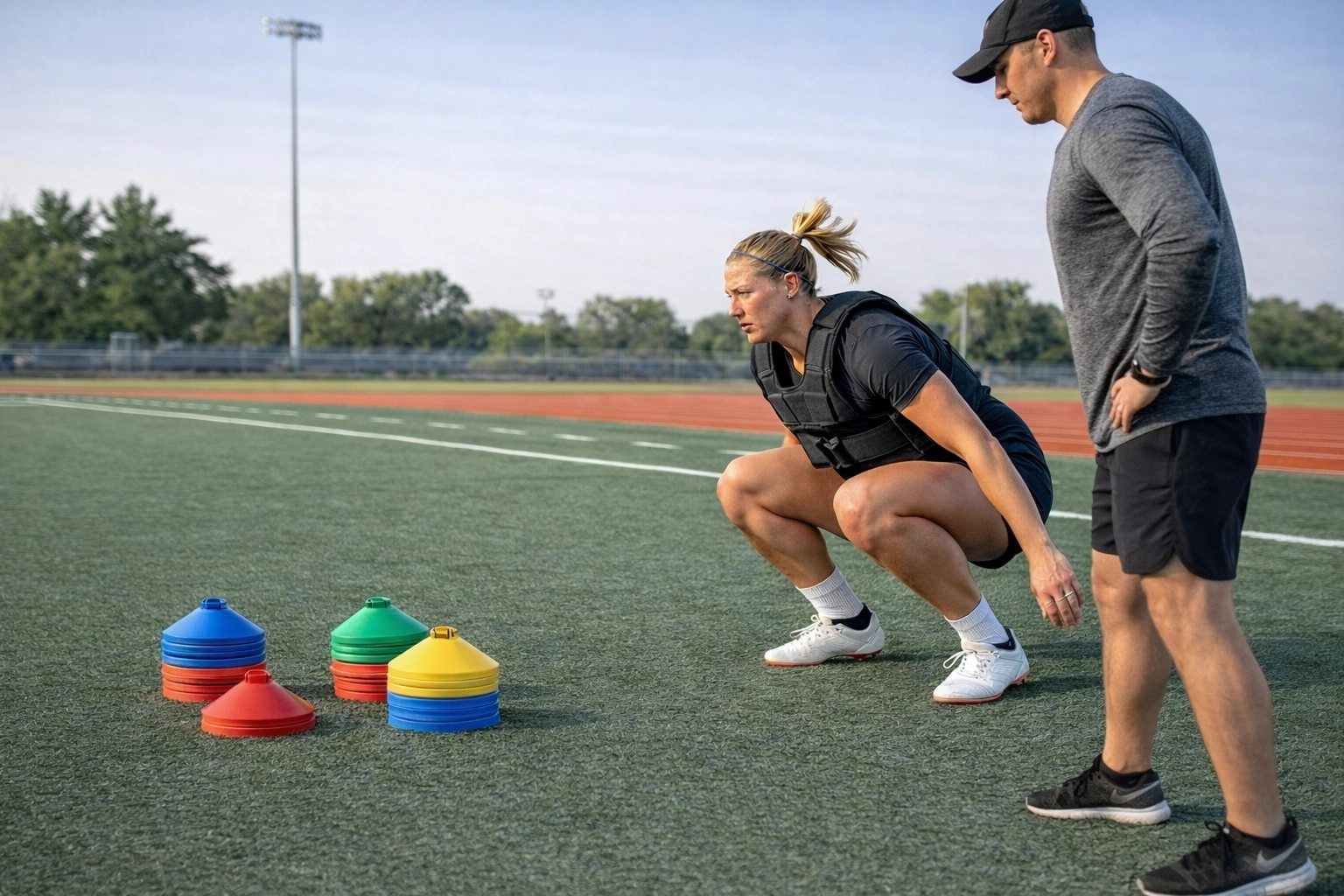
4. Weighted Broad Jumps
Nothing builds lower body explosiveness quite like broad jumps with added resistance.
The drill:
- Stand with feet hip-width apart
- Swing arms back, then explode forward
- Land in a controlled athletic position
- Reset completely before the next jump
Perform 3–5 quality jumps per set. Focus on landing mechanics over distance. A shorter jump with good form beats a longer jump with poor control every time.
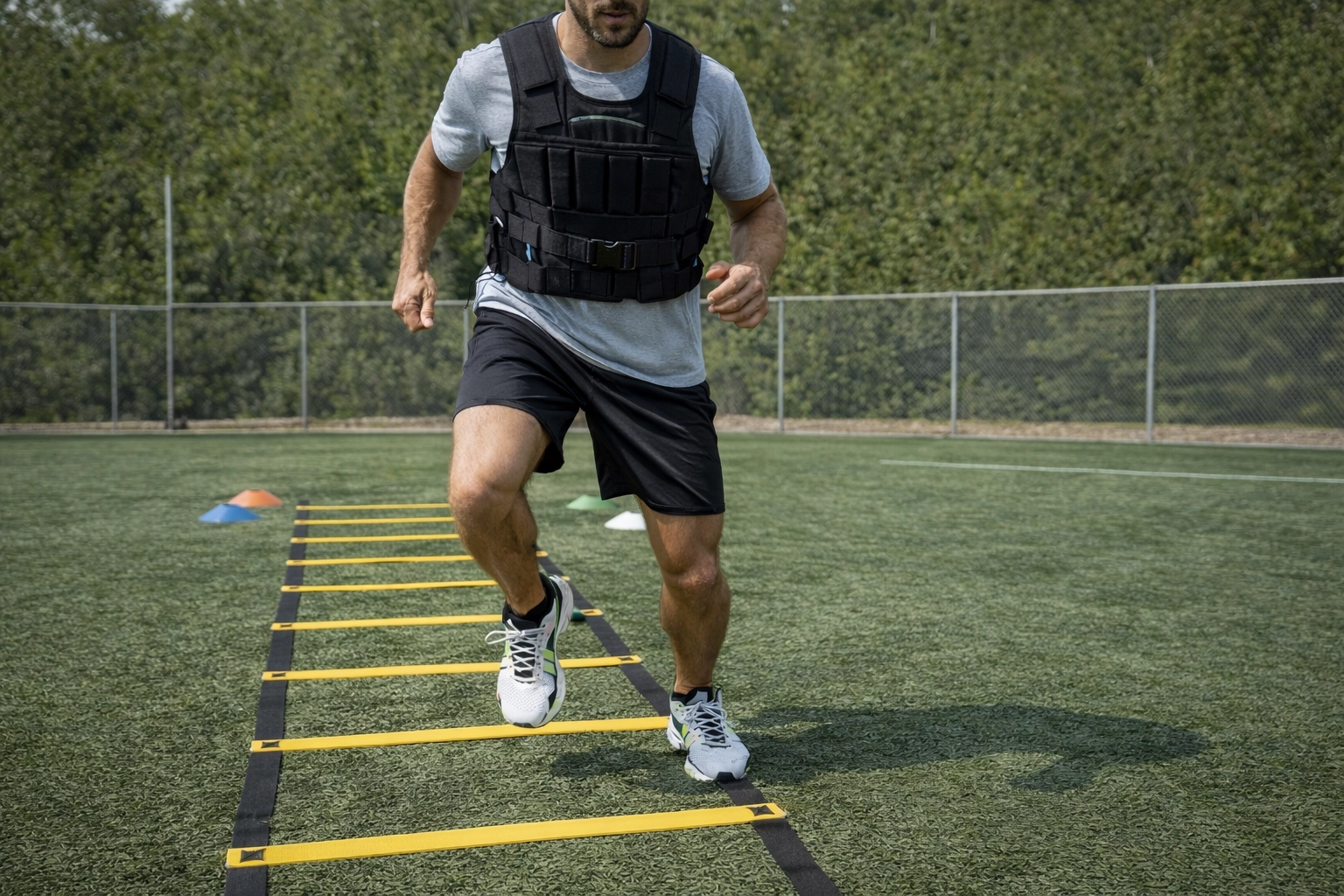
5. Modified Ladder Drills
Speed ladders get a bad rap, but they're actually useful when combined with light resistance training.
Best practices:
- Use a lighter vest (under 6% of body weight)
- Stick to basic patterns: Ickey shuffle, lateral steps, in-and-outs
- Focus on foot speed while maintaining form
- Keep sets short: 10–15 seconds max
The vest adds just enough resistance to make athletes work harder without destroying their form.
Programming Tips: How to Use These Drills
You can't just throw weighted vest drills into your practice randomly. Here's how to actually program this stuff.
Sample Week Structure:
Monday – Acceleration Focus
- Dynamic warm-up (A-skips, wall drives)
- Weighted vest 10-yard sprints × 4
- Medicine ball slams × 3 sets
- Core stability work
Wednesday – Jump and Agility Day
- Movement prep
- Weighted broad jumps × 3 sets
- T-drill or 5-10-5 shuttle (no vest)
- Box jumps (no vest) × 3 sets
Friday – Speed Day
- Light warm-up
- Contrast sprints (explained below)
- Regular sprint work
- Cool down and stretch
Notice what's missing? Long runs with weighted vests. Never use vests for distance work or max-speed sprints. They're tools for building power and acceleration, not endurance.
The Contrast Training Secret
Want to know the most effective way to use weighted vests? It's called contrast training, and it's surprisingly simple.
Here's how it works:
- Perform a drill with the weighted vest (e.g., 10-yard sprint)
- Rest 30–60 seconds
- Perform the same drill without the vest, focusing on speed
- Rest fully, then repeat
Your athletes will feel noticeably faster during the unweighted reps. This "lightened" sensation helps their nervous system learn to move explosively. It's like training your body to remember what fast feels like.
Try this for 3–4 rounds per exercise. The results speak for themselves.
Common Mistakes to Avoid
Let's talk about what not to do. These mistakes will waste time and potentially hurt your athletes.
Using too much weight too soon: More isn't better. Start light and progress slowly. Adding 2–3 pounds per week is plenty.
Poor form under load: If an athlete's technique breaks down, the vest is too heavy. Period.
Training volume over intensity: Keep reps low and quality high. Five perfect reps beat ten sloppy ones every time.
Skipping the unweighted work: Weighted vests are one tool in your arsenal. Combine them with regular speed work, plyometrics, and strength training.
Using vests during the season: Save weighted vest training for off-season and preseason blocks when you're building speed, not just maintaining it.
Your Next Steps
First-step quickness isn't built overnight. But with consistent, smart training, your athletes will see real improvements in 4–6 weeks.
Start small. Pick one or two drills from this guide and add them to your training sessions twice a week. Focus on form, gradually add weight or reps, and watch your athletes get faster.
Looking for the right training equipment to get started? You don't need a complicated setup: just a quality weighted vest and the commitment to use it correctly.
Remember: the best speed training gear for coaches isn't the fanciest or most expensive. It's the equipment you'll actually use consistently with proper technique and smart programming.
Now get out there and help your athletes build those explosive first steps. 🏃♂️💨
