

If you're coaching young players, whether it's football, basketball, athletics, or any other sport, you've probably wondered how to keep them engaged, motivated, and actually enjoying themselves. You're not alone. Creating a fun, positive training environment isn't just a nice-to-have; it's the foundation for developing confident, resilient young athletes who stick with sport for years to come.
The good news? You don't need fancy qualifications or decades of experience to get this right. With a few practical shifts in your approach, you can transform your training sessions into something kids genuinely look forward to.
Let's break it down.
1. Why a Positive Training Environment Actually Matters
Before diving into the how, let's talk about the why. Young players aren't mini-adults. Their brains are still developing, their attention spans are shorter, and their emotional responses are more intense.
A positive environment helps young players:
- Build confidence and self-esteem
- Develop a genuine love for sport
- Stay motivated through setbacks
- Learn faster (yes, really: stress blocks learning)
- Form lasting friendships with teammates
On the flip side, a negative or overly pressurised environment can lead to burnout, anxiety, and kids quitting sport altogether. The stakes are higher than just winning matches.
2. Set the Tone from Day One
First impressions matter. The culture you establish in your first few sessions will shape everything that follows.
Here's how to start strong:
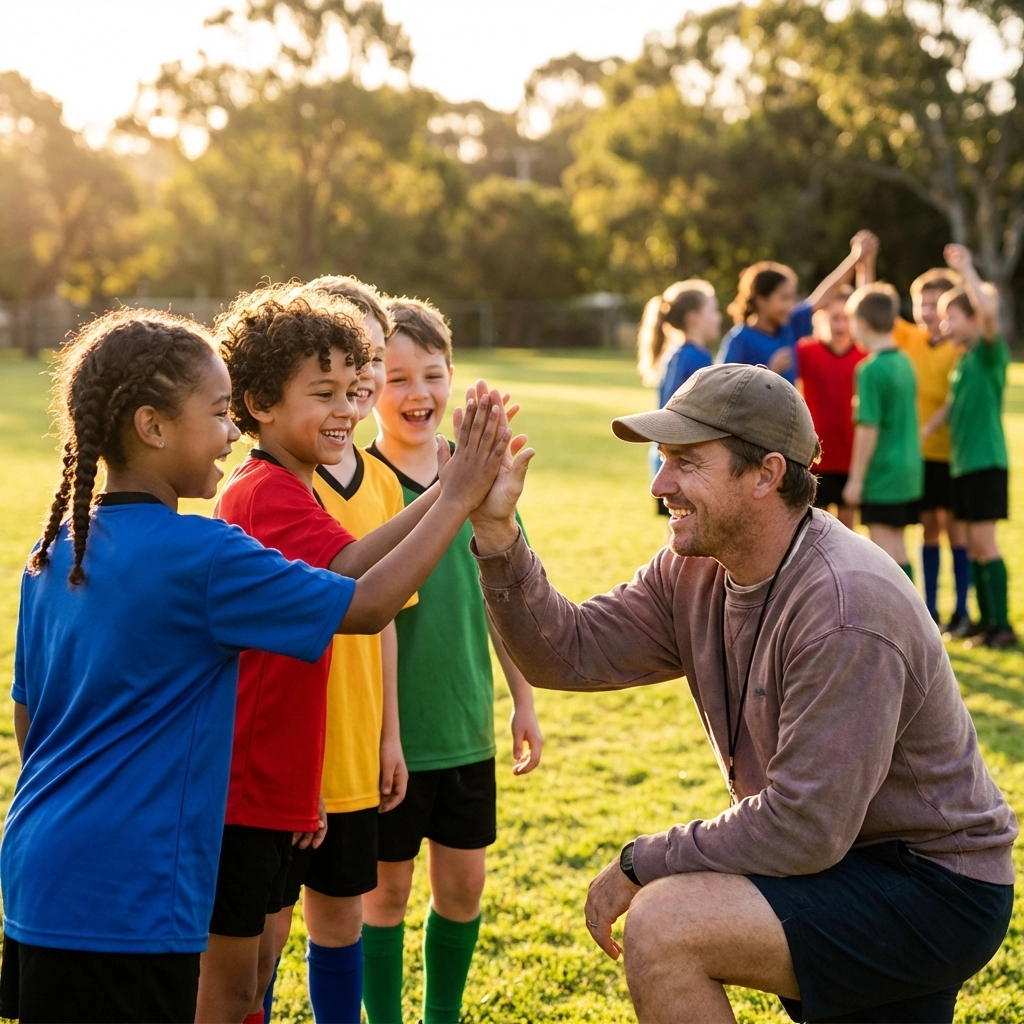
- Greet every player by name. It sounds simple, but personal acknowledgement makes kids feel seen and valued.
- Establish clear, simple rules together. Involve players in setting expectations: they're more likely to follow rules they helped create.
- Lead with enthusiasm. Your energy is contagious. If you're excited, they'll be excited.
- Model the behaviour you want to see. Respect for teammates, opponents, and officials starts with you.
Think of yourself as the thermostat, not the thermometer. You set the temperature for the whole group.
3. Master the Art of Constructive Feedback
How you give feedback can make or break a young player's confidence. The goal isn't to sugarcoat everything: kids can spot fake praise a mile off. Instead, focus on being specific, positive, and actionable.
The feedback formula that works:
- Start with what they did well. "Great effort chasing that ball down!"
- Offer one specific improvement. "Next time, try planting your foot before you pass."
- End with encouragement. "Keep it up: you're getting stronger every session."
Quick tips:
- Aim for a ratio of around 5 positive comments to 1 correction
- Avoid public criticism: save constructive feedback for quieter moments
- Focus on effort and process, not just outcomes
- Use phrases like "not yet" instead of "you can't": this builds a growth mindset
Remember, young players don't need perfection. They need to know you believe in them.
4. Design Age-Appropriate Training Sessions
One of the biggest mistakes coaches make? Running sessions that are too long, too complex, or too repetitive for the age group.
Here's a quick guide:
| Age Group | Ideal Session Length | Key Focus |
|---|---|---|
| 5-8 years | 30-45 minutes | Fun games, basic coordination, lots of variety |
| 9-12 years | 45-60 minutes | Skill introduction, simple tactics, team play |
| 13-16 years | 60-90 minutes | Technique refinement, strategy, fitness elements |
Structure your sessions with variety:
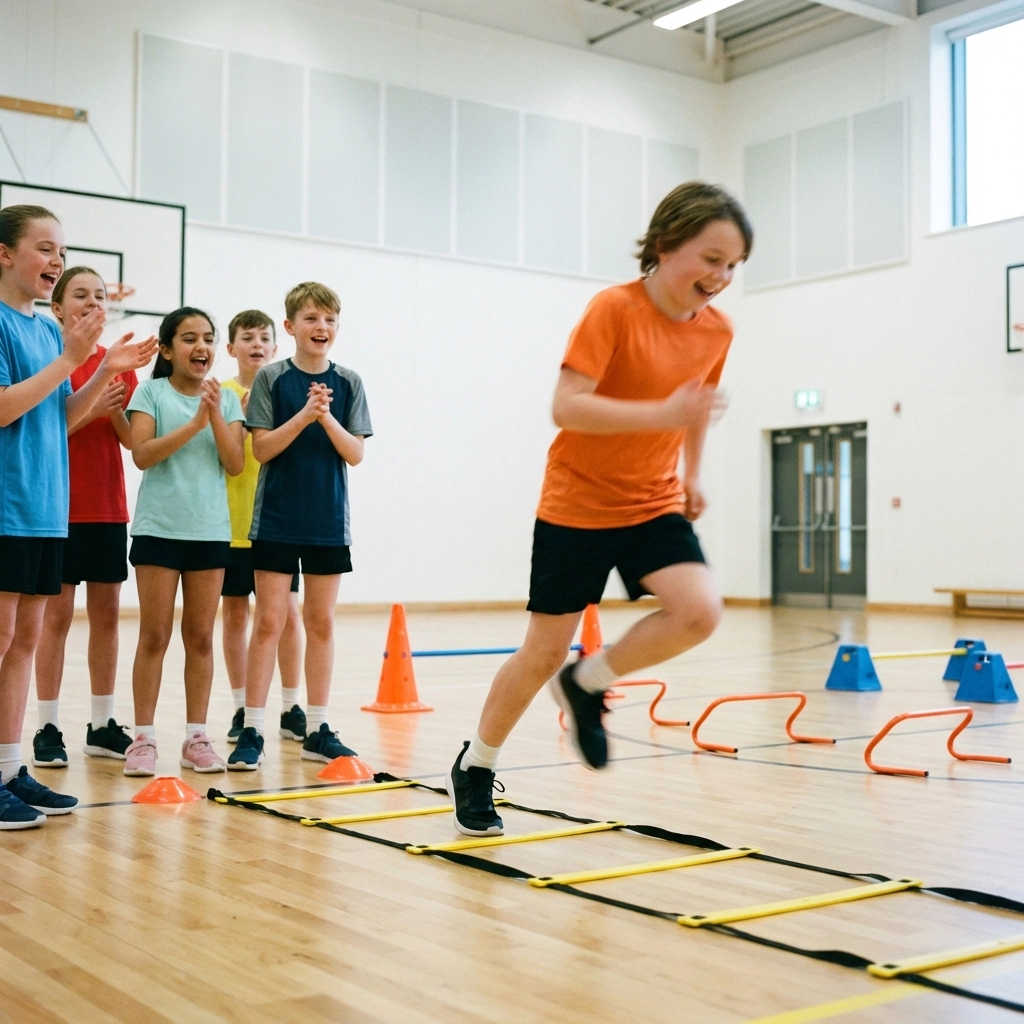
- Warm-up (5-10 mins): Dynamic movements, fun games to get moving
- Skill work (15-20 mins): Focused drills with clear objectives
- Game play (15-25 mins): Small-sided games where skills are applied
- Cool-down (5 mins): Light stretching, team huddle, positive send-off
Pro tip: Change activities every 10-15 minutes for younger age groups. Their attention spans are short, and boredom is the enemy of engagement.
5. Prioritise Physical and Emotional Safety
Kids can't learn or have fun if they don't feel safe: physically or emotionally.
Physical safety checklist:
- Check equipment before every session for wear and damage
- Ensure the training area is free from hazards
- Schedule regular water breaks (every 15-20 minutes in warm weather)
- Always include proper warm-up and cool-down routines
- Have a basic first aid kit on hand
Emotional safety is just as important:
- Create a no-mockery zone. Mistakes are part of learning: make sure everyone knows that.
- Address negative behaviour immediately. Don't let put-downs or bullying slide.
- Give players permission to try and fail. Celebrate brave attempts, not just successful ones.
- Check in with quieter players. Not every kid will speak up if something's wrong.
When players feel safe, they take risks, try new things, and grow faster.
6. Build Team Culture and Inclusivity
A strong team culture doesn't happen by accident. It takes intentional effort: but the payoff is massive.
Ways to build connection:
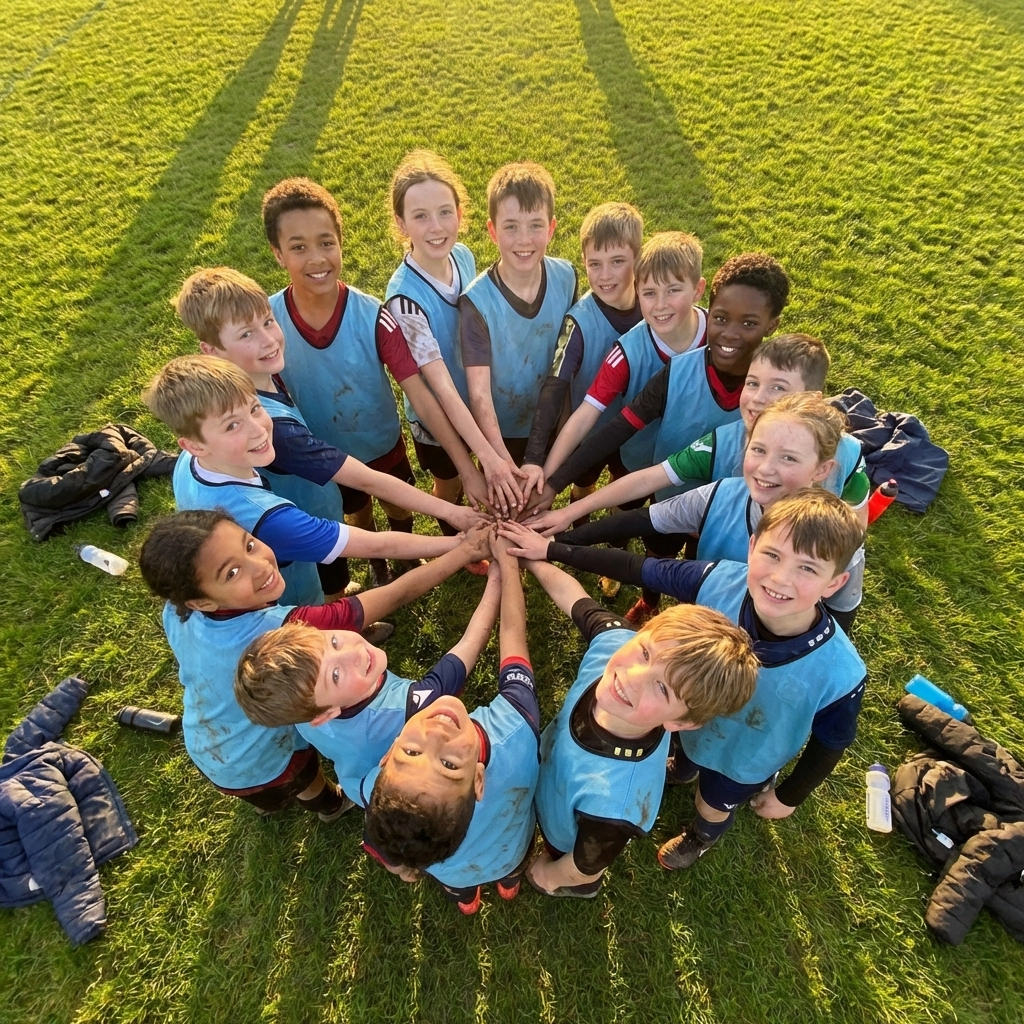
- Team-building activities: Simple games, challenges, or even just time to chat before sessions
- Celebrate everyone's contributions: Not just the fastest or most skilled: highlight effort, teamwork, and improvement
- Encourage peer support: Pair up players to help each other during drills
- Create team traditions: A group chant, a funny handshake, or end-of-session rituals
Make inclusivity a priority:
- Adapt drills so all ability levels can participate and succeed
- Rotate teams and partnerships regularly so everyone mixes
- Be mindful of language: avoid singling out players or making comparisons
- Address barriers to attendance (carpools, flexible scheduling, clear communication with parents)
Every player should feel like they belong: regardless of skill level.
7. Common Mistakes to Avoid
Even well-meaning coaches can fall into traps that undermine a positive environment. Here are some red flags to watch for:
❌ Focusing too much on winning. Results matter less than development at young ages. Shift your focus to effort, improvement, and enjoyment.
❌ Overloading with instructions. Too much information overwhelms young players. Keep it simple: one or two key points per activity.
❌ Playing favourites. Every player notices who gets more attention. Spread your time and encouragement evenly.
❌ Neglecting the quiet ones. Confident, vocal players often dominate. Make space for quieter kids to contribute and shine.
❌ Forgetting to have fun yourself. If coaching feels like a chore, kids will pick up on it. Reconnect with why you started.
8. Quick Wins You Can Try This Week
Ready to put this into action? Here are some simple changes you can make immediately:
- Start your next session with a fun warm-up game instead of static stretches
- Give three specific compliments to players who don't usually get praised
- Ask players what they enjoyed most at the end of the session: and actually listen
- Introduce a "mistake of the week" celebration: highlight a brave attempt that didn't quite work out
- Send a quick message to parents sharing one positive thing about their child
Small steps add up to big culture shifts.
Your Next Step
Creating a fun, positive training environment isn't about being soft or avoiding challenge. It's about building a space where young players feel supported enough to push themselves, fail safely, and grow.
The best coaches aren't the ones who produce instant results. They're the ones whose players still love sport years later.
So, take one idea from this guide and try it at your next session. Notice what changes. Adjust. Keep going.
You've got this.
Looking for more coaching tips and resources? Check out our coaching and training blog for practical guides to help you and your players get the most out of every session.


