

If you're looking to boost your athletes' explosive power without complicated equipment or endless gym sessions, hurdle drills might be your secret weapon. These simple yet effective exercises train your body to produce maximum force in minimal time: exactly what you need for faster sprints, higher jumps, and quicker direction changes.
The best part? You don't need a fancy facility or expensive gear to get started. A few adjustable hurdles and some open space are all it takes to transform your training routine.
Why Hurdle Drills Build Explosive Power
Hurdle drills work by training two critical athletic qualities: rapid force production and efficient force absorption. When you clear a hurdle, your muscles must generate maximum power instantly to lift your body up and over. Then, upon landing, they need to absorb that impact and immediately prepare for the next explosive movement.
This rapid cycle of power generation and absorption teaches your muscles to store and release elastic energy: like a rubber band being stretched and released. This "elastic recoil" is what separates explosive athletes from those who move more slowly and deliberately.
Key benefits include:
• Improved vertical jump height
• Faster acceleration out of starting positions
• Better deceleration and cutting ability
• Enhanced single-leg stability and balance
• Increased power endurance for repeated explosive movements
Think of hurdle drills as teaching your muscles to act like a high-performance spring rather than a slow hydraulic lift.
Getting Your Setup Right
Before diving into specific drills, let's get your training space organized properly. You'll need:
Equipment needed:
• 5-6 adjustable hurdles (6-18 inches for most athletes)
• Approximately 20-30 meters of clear, flat space
• Cones for marking drill boundaries
• Stopwatch for timing recovery periods
Spacing guidelines:
• Mini-hurdle bounces: 80cm (2.5 feet) between hurdles
• Single-leg hops: 1-1.5 meters between hurdles
• Lateral movements: 1 meter spacing works best
• Advanced drills: Adjust based on athlete height and ability

Start every session with a thorough warm-up including dynamic stretching, light jogging, and progressive jumping movements. Your muscles need to be properly prepared for the explosive demands ahead.
Phase 1: Foundation Building (Weeks 1-3)
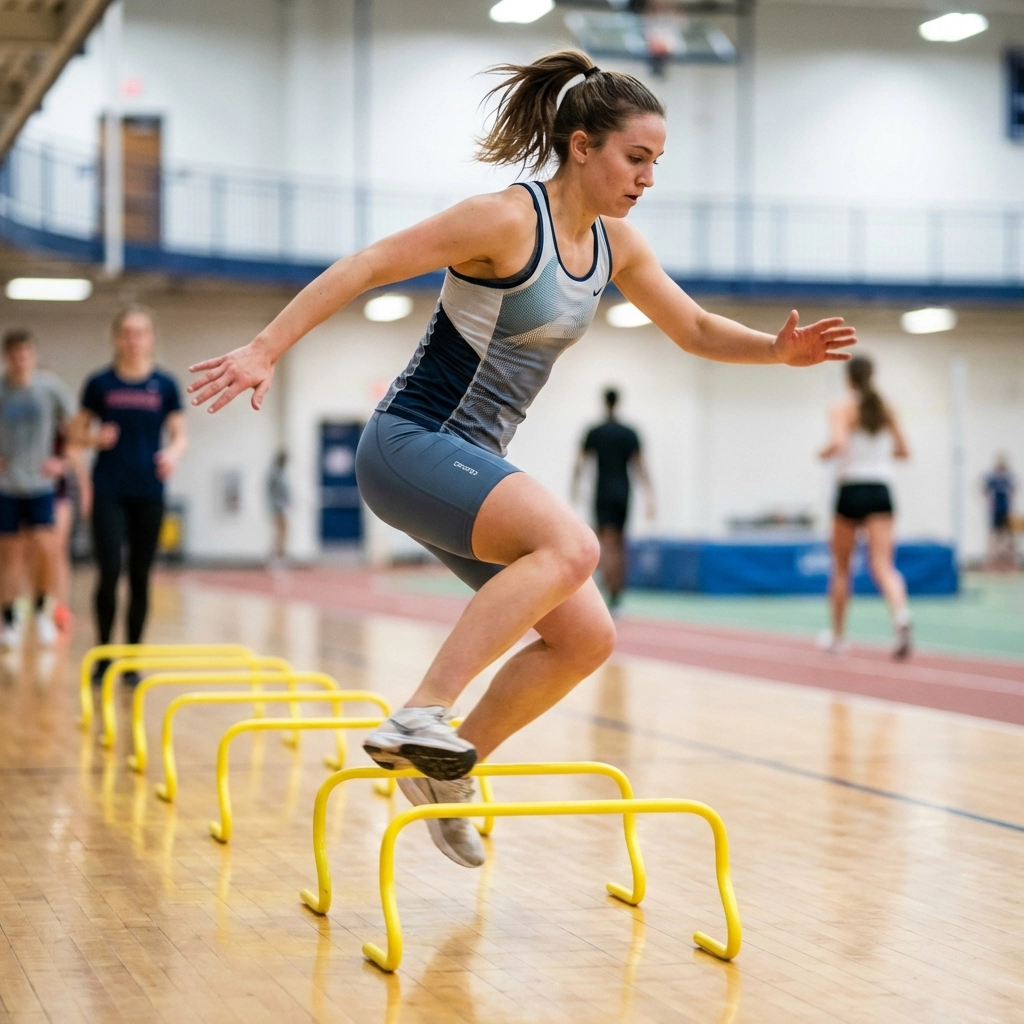
Phase 1 focuses on teaching proper landing mechanics and building basic explosive power. Use lower hurdles (6-12 inches) and prioritize speed over height.
Double-Leg Forward Hops
Start with the most basic movement pattern. Set up 5 hurdles at 6-8 inches high, spaced 80cm apart.
Technique points:
• Land on the balls of your feet
• Keep ground contact time minimal (think "hot coals")
• Use arms for momentum and balance
• Focus on quick, rhythmic bouncing
Sets and reps: 3 sets of 5 hurdles, 45-60 seconds rest between sets
Lateral Shuffle Hops
Place hurdles in a line and move sideways over each one, staying low in an athletic position.
Key coaching cues:
• Maintain wide base of support
• Keep chest up, eyes forward
• Don't cross feet during the shuffle
• Explode laterally, not just vertically
Progression tip: Start with no hurdles, just lateral shuffles, then add low hurdles as technique improves.
Phase 2: Power Development (Weeks 4-6)
Time to challenge your athletes with higher hurdles (12-15 inches) and more complex movement patterns. This phase builds serious explosive power while maintaining good form.
Single-Leg Forward Bounds
Switch to unilateral training to expose and fix strength imbalances between legs.
Setup: 4-5 hurdles, 1.2 meters apart, 10-12 inches high
Execution:
• Take off and land on the same leg for each hurdle
• Focus on forward distance, not just height
• Stick each landing before exploding to the next hurdle
• Complete one leg, rest, then switch sides
Common mistakes to avoid:
• Rushing the landings (stick each one!)
• Letting the knee cave inward on landing
• Using the arms incorrectly for balance
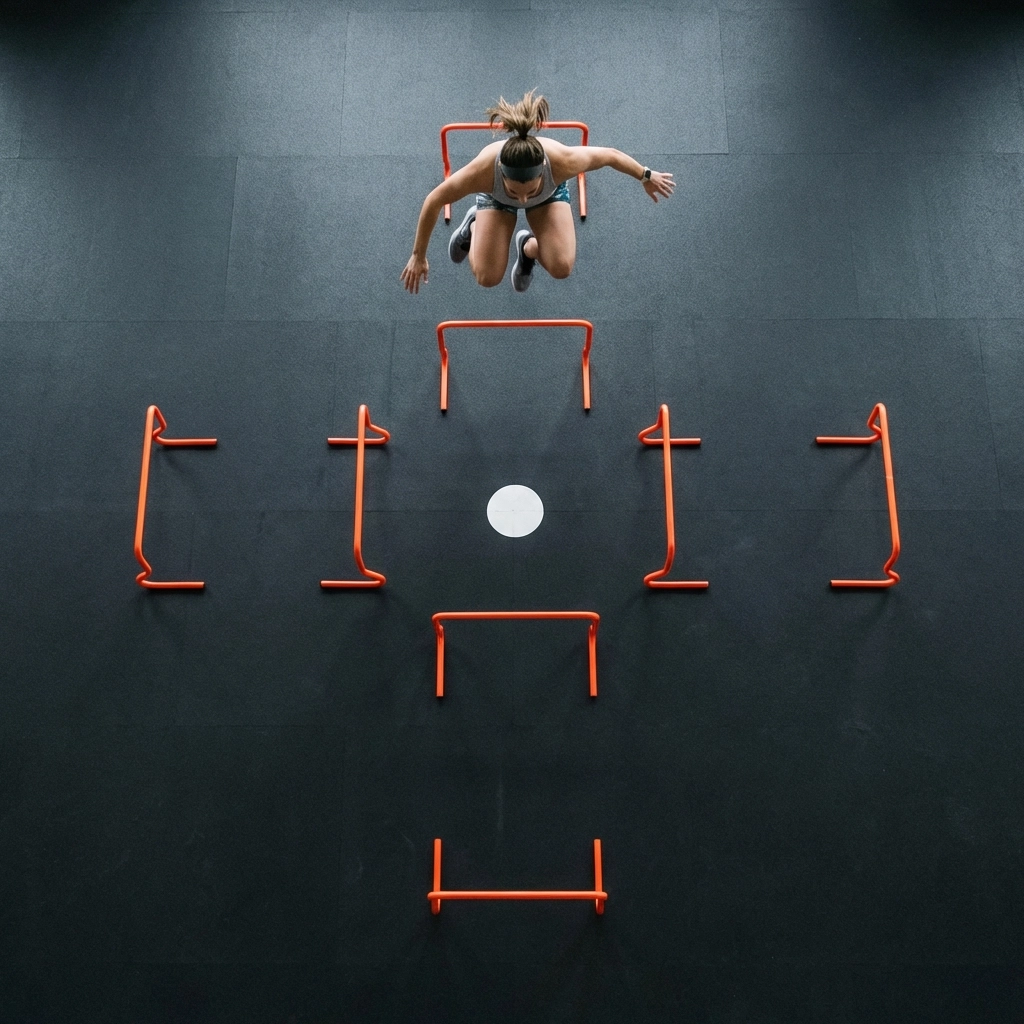
Compass Jumps
This drill trains multi-directional power: crucial for sports requiring quick cuts and direction changes.
Setup: Place 4 hurdles in a cross pattern around a center point
Movement sequence:
- Start in center, jump forward over north hurdle, return to center
- Jump right over east hurdle, return to center
- Jump backward over south hurdle, return to center
- Jump left over west hurdle, return to center
Complete the entire sequence before resting. This challenges your nervous system to adapt to different movement patterns rapidly.
Phase 3: Advanced Integration (Weeks 7+)
Phase 3 introduces the highest hurdles (15-18 inches) and most complex drills. Only progress here once athletes demonstrate perfect form in earlier phases.
Single-Leg Rapid Crossover
This advanced drill develops rotational power and single-leg stability under fatigue.
Technique breakdown:
• Start beside the hurdle in single-leg stance
• Explosively rotate hip and clear hurdle with outside leg
• Land on opposite leg and immediately reverse the movement
• Continue for 8-10 rapid crossovers
Safety note: This is demanding on ankle stability. Ensure athletes have mastered basic single-leg landings first.
Forward-Back Rapid Transitions
Set up a single hurdle and perform rapid forward-backward jumps for 15 seconds.
Focus points:
• Minimize ground contact time
• Stay light on your feet
• Maintain consistent hurdle clearance height
• Keep core engaged throughout
This drill specifically targets the rapid force development needed for sports requiring quick directional changes.
Programming Your Hurdle Training
Frequency: 2-3 sessions per week, never on consecutive days
Session structure:
• Warm-up: 10-15 minutes
• Technical drills: 15-20 minutes
• Power drills: 10-15 minutes
• Cool-down: 5-10 minutes
Weekly progression example:
• Week 1: Focus on landing mechanics and rhythm
• Week 3: Add lateral movements and single-leg work
• Week 5: Introduce rapid transitions and complex patterns
• Week 7+: Sport-specific combinations and higher intensities
Rest periods matter: Give 45-60 seconds between sets for Phase 1, 60-90 seconds for Phase 2, and up to 2 minutes for Phase 3 advanced drills. Quality movement is more important than pushing through fatigue.
Safety First: Red Flags to Watch
Hurdle training is generally safe when performed correctly, but watch for these warning signs:
Stop immediately if you see:
• Excessive forward lean during landing
• Knees caving inward consistently
• Loss of rhythm or timing
• Athletes favoring one leg significantly
• Complaints of sharp pain (versus normal muscle fatigue)
Injury prevention tips:
• Always start with lower hurdles and proper warm-up
• Progress height and complexity gradually
• Focus on perfect form over speed initially
• Ensure adequate recovery between intense sessions
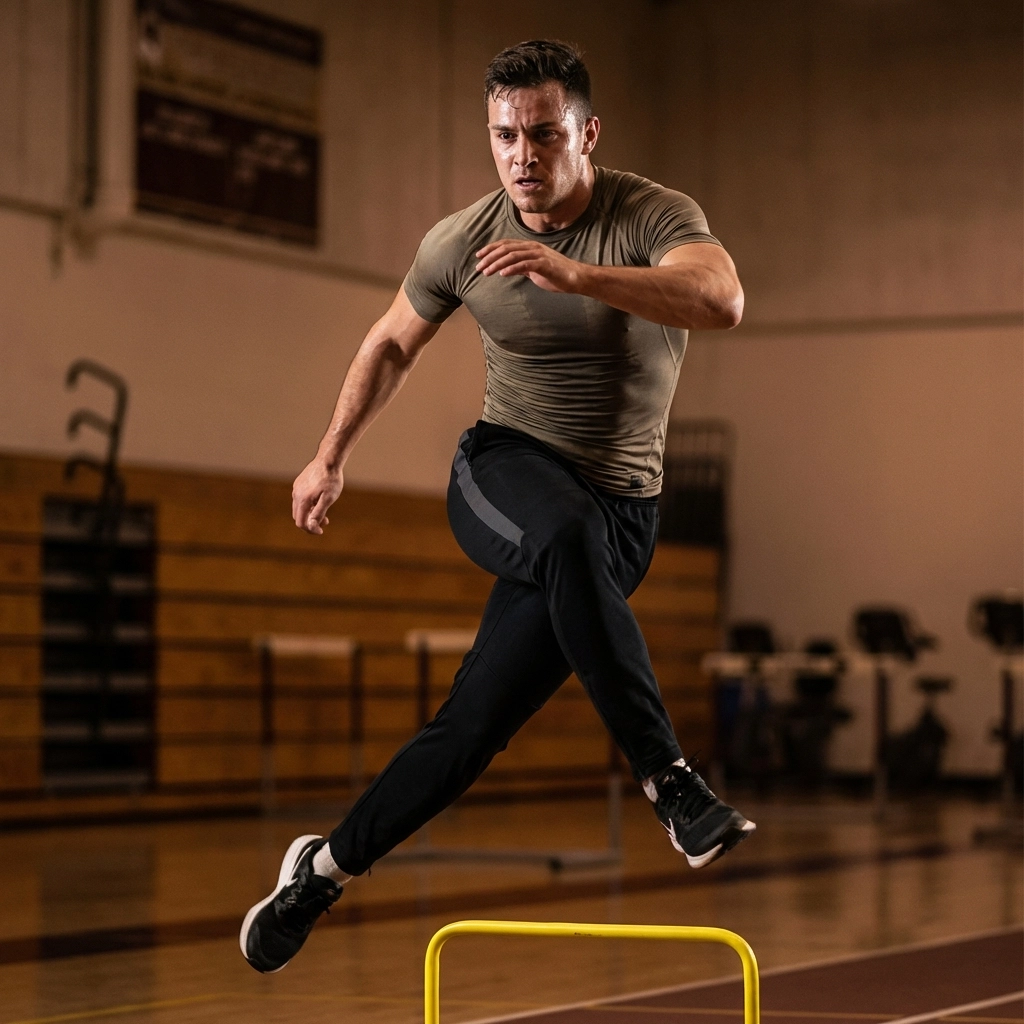
Remember: it's better to master lower hurdles with perfect technique than to struggle over higher ones with poor form.
Common Mistakes That Kill Progress
Mistake #1: Rushing the progression
Moving to higher hurdles too quickly leads to compensation patterns that are hard to break later.
Mistake #2: Ignoring landing mechanics
The landing is more important than the takeoff. Teach athletes to "stick" landings before focusing on explosive power.
Mistake #3: Training when fatigued
Plyometric quality drops significantly with fatigue. Keep sessions shorter and more focused rather than longer and sloppy.
Mistake #4: Neglecting single-leg work
Bilateral movements hide weaknesses. Single-leg drills expose and fix imbalances before they become injuries.
Taking It to the Next Level
Once your athletes master basic hurdle progressions, consider these advanced applications:
• Sport-specific patterns: Design hurdle sequences that mimic movement demands of your specific sport
• Reactive training: Add visual or auditory cues to make hurdle drills more game-like
• Combination training: Pair hurdle drills with resistance work using harness systems for added challenge
The key is maintaining the quality of movement while gradually increasing the complexity and demands of your training.
Hurdle drills offer a simple yet powerful way to develop the explosive power that separates good athletes from great ones. Start with the basics, progress methodically, and watch your athletes transform their power output in just a few weeks of consistent training.
Ready to get started? Begin with Phase 1 this week and focus on building that solid foundation. Your athletes' explosive power gains will speak for themselves.


