

If you're new to coaching young athletes, or even if you've been at it for a while, you've probably noticed that not every kid bounces onto the pitch ready to go. Some hang back. Some watch from the sidelines. Some need a gentle nudge (or ten) before they'll join in.
And that's completely normal.
Shy or hesitant kids aren't broken, difficult, or uninterested. They just need a different approach. The good news? With a few simple adjustments, you can help these young athletes build confidence, find their voice, and genuinely enjoy being part of the team.
Let's look at the most common mistakes coaches make with shy kids, and exactly how to fix them.
1. Why Some Kids Hold Back (It's Not What You Think)
Before diving into mistakes, it helps to understand what's actually going on with hesitant kids.
Shyness isn't a flaw. It's simply a temperament. Some children need more time to warm up to new people, places, and activities. Others feel overwhelmed by noise, crowds, or being watched. A few might have had negative experiences in sport before.
Here's what shy kids are often thinking:
- "What if I mess up and everyone laughs?"
- "I don't know anyone here."
- "This is too loud/fast/scary."
- "I'm not as good as the other kids."
Once you understand where they're coming from, it becomes much easier to support them properly.
2. Common Mistakes Coaches Make With Shy Kids
Even well-meaning coaches can accidentally make things harder for hesitant youngsters. Here are the most common slip-ups:
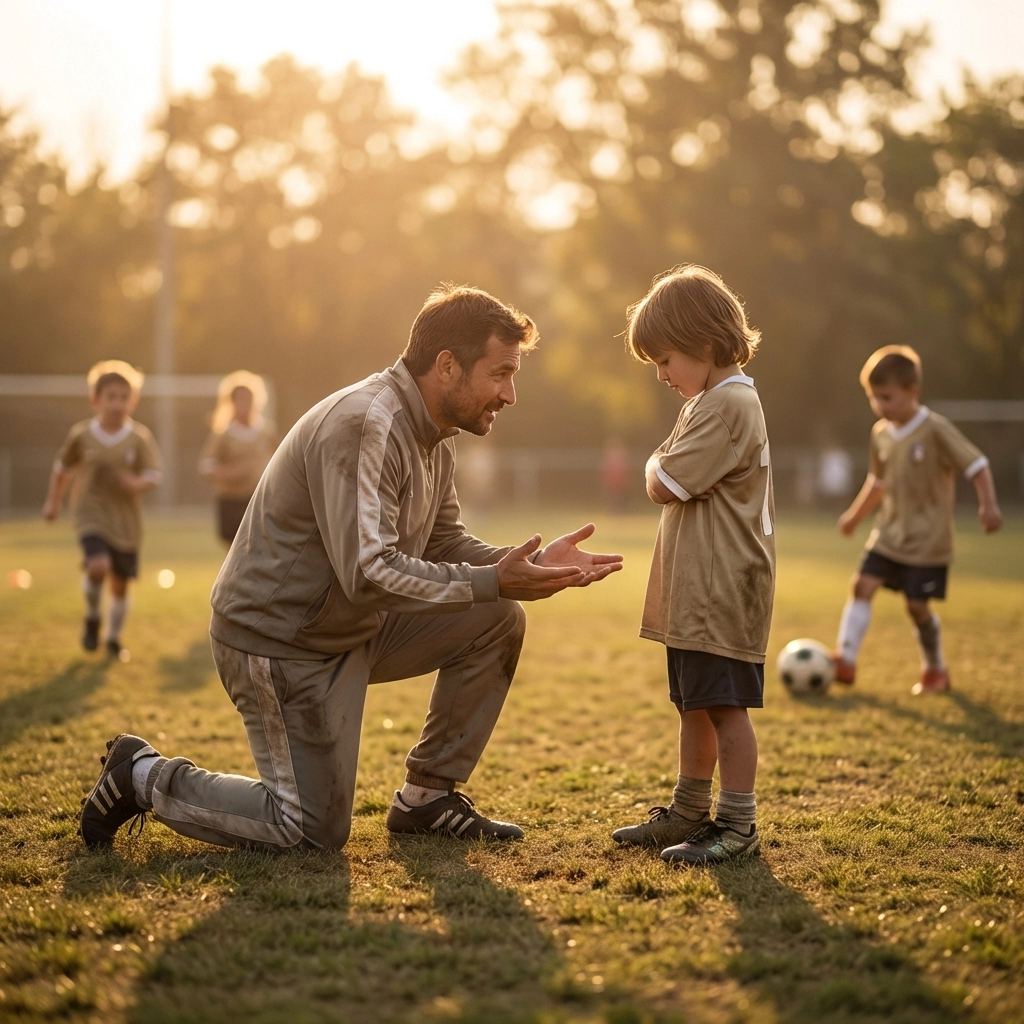
Mistake #1: Rushing Them to Participate
Shy kids are notoriously slow to engage, and that's okay. Pushing them to "just join in" or "stop being silly" often backfires. The pressure increases their anxiety, and you risk losing them to quitting altogether.
The fix: Let them watch first if that's their comfort level. Give them time to observe before slowly offering opportunities to participate. Progress might look like standing near the group → passing once → joining a small drill.
Mistake #2: Paying Too Much (or Too Little) Attention
There's a fine balance here. Hover over a shy child constantly, and you'll embarrass them. Ignore them completely, and they'll fade into the background without ever engaging.
The fix: Check in briefly and casually. A quick smile, a thumbs up, or a low-key "good effort" goes a long way. Think little and often rather than big spotlight moments.
Mistake #3: Singling Them Out in Front of Peers
Calling attention to a shy child, even positively, can feel mortifying to them. Saying things like "Look, everyone, Jamie finally joined in!" might seem encouraging, but it highlights that they're different.
The fix: Keep praise quiet and personal. A private high five or a quick word after the session means far more than public recognition.
Mistake #4: Making Abrupt Changes Without Warning
Shy kids need mental preparation for changes. Suddenly switching activities, rearranging groups, or springing surprises can spike their anxiety.
The fix: Give advance notice. "In five minutes, we're going to switch to a new game" gives them time to mentally adjust. Predictability is their friend.
Mistake #5: Labelling Them as "The Shy One"
Saying things like "Oh, that's just Jamie: he's shy" in front of others (or even to parents) can stick with a child and shape how they see themselves. Labels suggest there's something wrong with them.
The fix: Avoid labels entirely. Instead, describe behaviour if needed: "Jamie likes to take his time warming up." This is neutral and doesn't define the child.
3. How to Help Shy Kids Thrive (Practical Strategies)
Now for the good stuff: what actually works. These strategies are easy to implement and make a real difference.

✅ Build Personal Connections Off the Field
Get to know the shy child as a person. Ask about their favourite colour, their pet, what they watched on TV last night. These small conversations build trust and show them you care beyond their performance.
Try this: Arrive a few minutes early and chat casually while kids are gathering. No pressure, no agenda: just connection.
✅ Create a Low-Pressure Environment
When the cost of "failure" feels manageable, kids are more willing to try. Remove judgment from drills. Celebrate effort over outcome. Make it clear that mistakes are part of learning.
Try this: Use phrases like "Nice try: that's how we improve!" or "I love that you had a go." Normalise errors for everyone, not just shy kids.
✅ Start With Small Wins
Build confidence progressively. Begin with activities where success is almost guaranteed, then gradually increase the challenge. Early wins create momentum.
Try this: Partner shy kids with supportive teammates for initial drills. Use simple equipment like marker cones or agility ladders for low-stakes coordination activities that feel achievable.
✅ Validate Their Feelings
Let kids know it's okay to feel nervous or hesitant. Discomfort in new situations is completely normal. Teaching them to recognise their body's signals: racing heart, sweaty palms: and develop coping techniques like deep breathing helps them manage anxiety.
Try this: Say things like "Feeling a bit nervous? That's totally normal. Even professional athletes get butterflies."
✅ Model Confident Behaviour
Kids learn by watching. Show them how you handle tricky situations: introduce yourself to new people, laugh off your own mistakes, stay calm under pressure. Normalise taking breaks to recharge too.
Try this: Share a quick story about a time you felt nervous and how you handled it. This makes you relatable and shows them confidence can be learned.
4. Real-World Examples That Work
Here's how these strategies look in action:
| Situation | Common Mistake | Better Approach |
|---|---|---|
| New kid won't leave parent's side | Forcing them to join immediately | Let them watch for 10 minutes, then invite them to help you carry cones |
| Child freezes during a drill | Calling attention to them | Quietly move on, then check in privately afterwards |
| Shy player improves | Announcing it to the whole group | Private praise: "I noticed your passes today: really coming along" |
| Unexpected rain changes plans | Abruptly moving indoors | "Heads up everyone, in 3 minutes we're heading inside" |
5. Quick Wins to Try This Week
Ready to put this into practice? Here are five things you can do at your very next session:
- Learn one new fact about your shyest player (favourite food, hobby, sibling's name)
- Give a 2-minute warning before any activity change
- Offer quiet praise to at least one hesitant child
- Create a "watch first" option for new drills
- Avoid using the word "shy" when describing any child
Small shifts add up. You don't need to overhaul your entire coaching style: just make a few thoughtful adjustments.
You've Got This
Supporting shy or hesitant kids isn't about being a perfect coach. It's about being a patient, observant, and caring one. These children often become the most dedicated, thoughtful, and loyal team members once they feel safe and valued.
Give them time. Build connection. Celebrate small wins. And remember: the quiet kid watching from the sideline today might just be your team captain tomorrow.
For more coaching resources and training equipment to support your sessions, explore our full range at Rapid Sports. We're here to help you help them thrive. 💪


