

If you're new to using a speed ladder, or coaching athletes who've never seen one before, you're in the right place. The speed ladder is one of the most versatile pieces of training equipment out there. It's lightweight, affordable, and brilliant for developing quick feet, coordination, and agility.
The best part? You don't need fancy drills to see real results. Start with the basics, nail the fundamentals, and watch your athletes transform their footwork in just a few weeks.
In this guide, we'll walk you through 5 beginner-friendly speed ladder drills that any coach can teach and any athlete can learn. Simple instructions, real results.
Why Speed Ladder Training Works
Before we dive into the drills, let's quickly cover why the speed ladder deserves a spot in your training sessions.
Speed ladders help develop:
- Foot speed – Quick, light steps that translate to faster movement on the pitch, court, or track
- Coordination – Training your brain and feet to work together smoothly
- Agility – The ability to change direction without losing balance or momentum
- Body control – Better awareness of where your feet are and what they're doing
Think of speed ladder drills like learning dance moves. At first, they feel awkward and slow. But with practice, the patterns become automatic, and that's when the magic happens.
For young athletes especially, these drills build confidence as they master new skills. There's something satisfying about nailing a tricky footwork pattern that felt impossible just a week ago.
Before You Start: Quick Tips for Coaches
A few things to keep in mind before introducing these drills:
- Start slow. Every drill should be learned at walking pace first. Speed comes later.
- Focus on form. Light, quick steps beat sloppy fast ones every time.
- Keep sessions short. 10-15 minutes of ladder work is plenty. Quality over quantity.
- Demonstrate clearly. Show athletes the pattern before asking them to try it.
- Celebrate progress. Even small improvements matter, especially for beginners.
Right, let's get into the drills.
Drill 1: One Foot in Each Box (The Basic Run)
Difficulty: Beginner
Focus: Forward speed, basic coordination
This is the simplest drill and the perfect starting point for anyone new to the speed ladder.
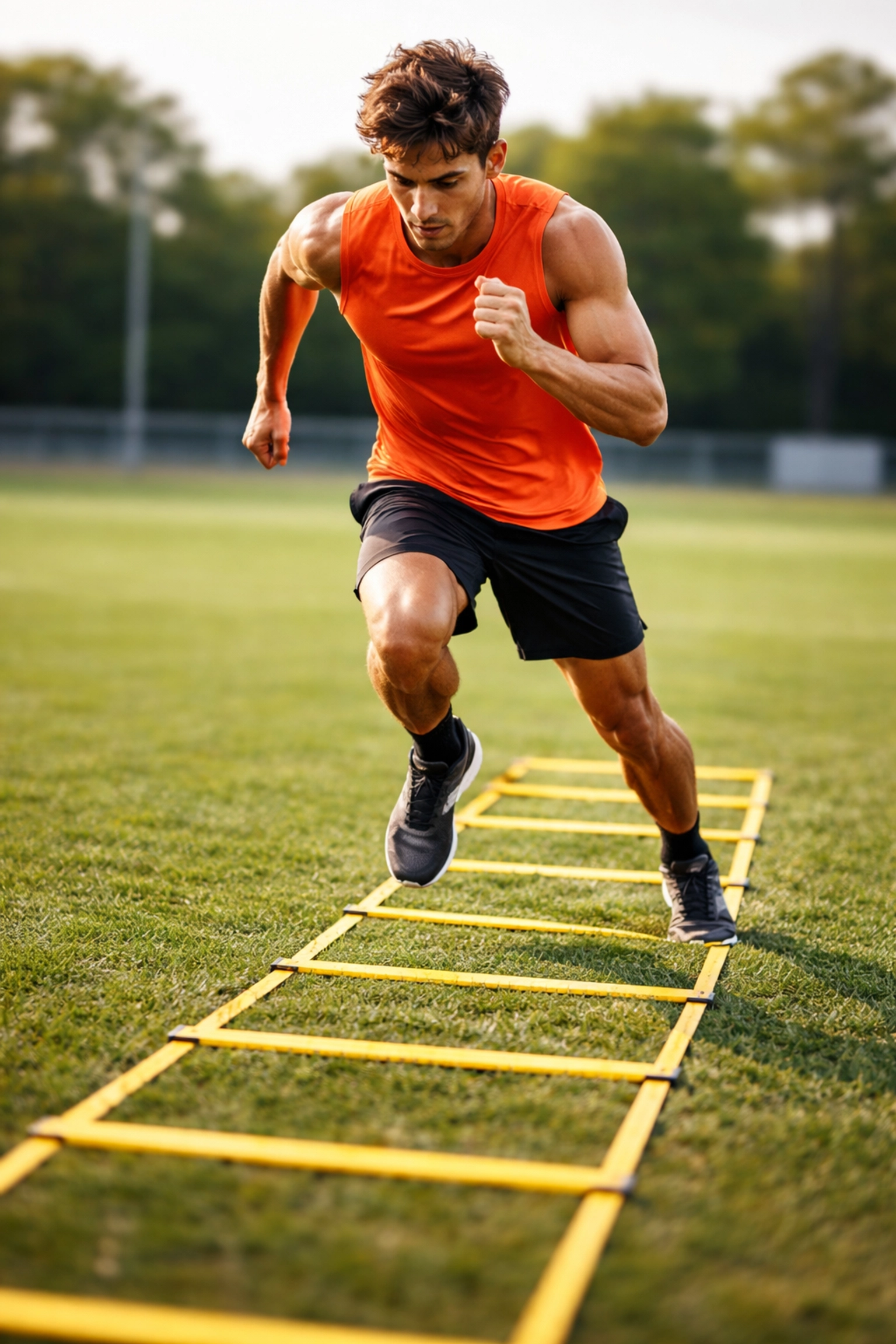
How to do it:
- Stand at one end of the ladder, facing forward
- Run through the ladder, placing one foot in each box
- Pick your feet up just enough to clear each rung
- Keep your arms bent at 90 degrees with a small, controlled swing
- Maintain a slight forward lean with your weight over your toes
Coaching cues:
- "Stay light on your feet"
- "Eyes forward, not down at the ladder"
- "Quick steps, don't overstride"
Common mistake: Athletes often take big, heavy steps. Remind them that speed ladder training is about quick, controlled movements: not stomping through.
Drill 2: Two Feet in Each Box
Difficulty: Beginner
Focus: Coordination, rhythm, foot control
Once athletes are comfortable with the basic run, progress to placing both feet in each box.
How to do it:
- Start at one end of the ladder
- Step into the first box with your lead foot
- Quickly bring your second foot into the same box
- Move to the next box and repeat
- Maintain steady forward movement throughout
Coaching cues:
- "Right-left, right-left: find your rhythm"
- "Stay compact, don't let your feet spread wide"
- "Keep your core engaged"
Pro tip: Have athletes count out loud ("one-two, one-two") to help establish a consistent rhythm. This is especially helpful for younger players who are still developing their coordination.
Drill 3: Lateral In and Out
Difficulty: Beginner to Intermediate
Focus: Lateral movement, hip mobility, balance
This drill shifts the focus to sideways movement: essential for sports that require quick changes of direction.
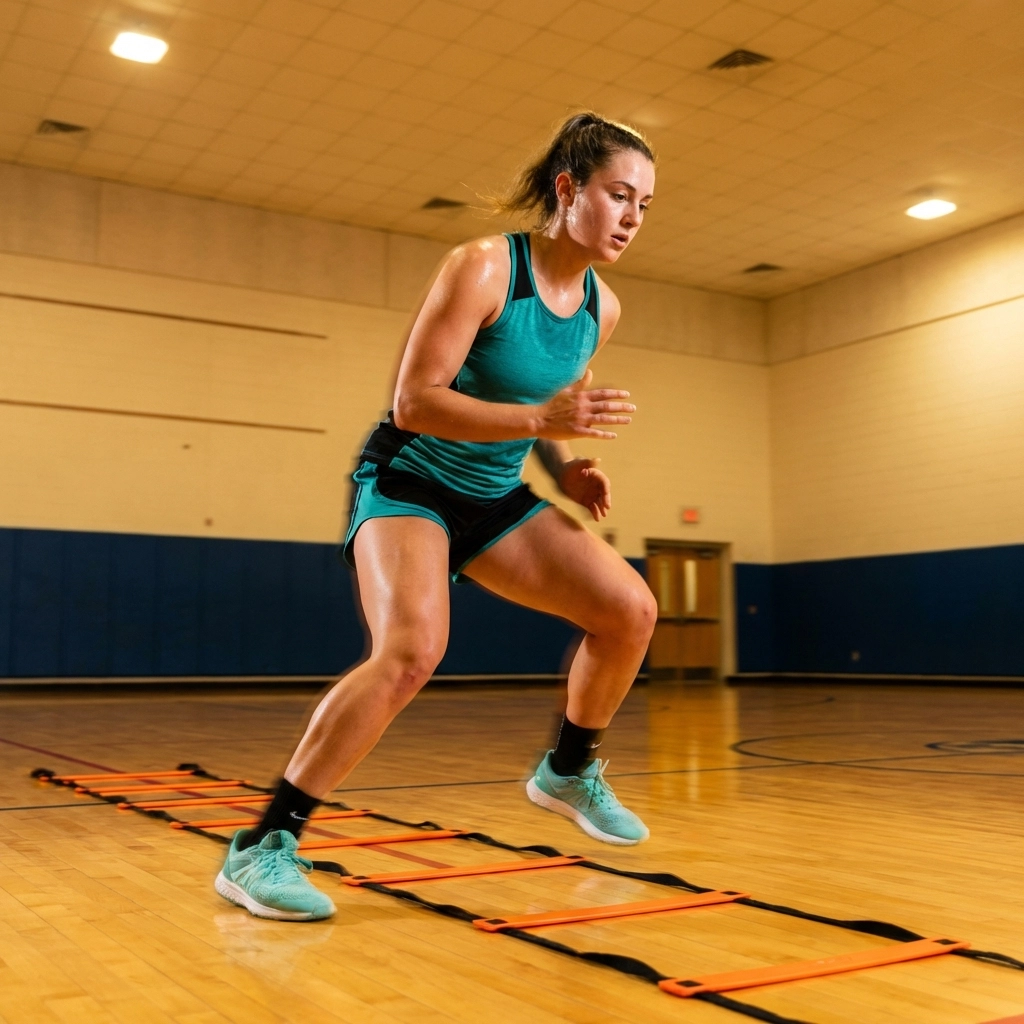
How to do it:
- Stand sideways to the ladder
- Step into the first box with your lead foot (closest to the ladder)
- Bring your trailing foot into the same box
- Step out with your lead foot to the outside of the ladder
- Step out with your trailing foot
- Continue down the ladder: "In, in, out, out"
Coaching cues:
- "Push off your back foot: don't hop"
- "Stay low in your athletic stance"
- "Lead with the same foot throughout"
Important: Complete this drill moving in both directions so athletes develop equal footwork on both sides. Neglecting one side creates imbalances that can affect performance and increase injury risk.
Drill 4: Bunny Hops
Difficulty: Beginner to Intermediate
Focus: Explosive power, rhythm, lower body strength
Time to add some bounce. Bunny hops are a fun way to develop explosive footwork while keeping things playful: perfect for younger athletes.
How to do it:
- Stand at one end of the ladder with feet together
- Hop into the first box with both feet
- Hop out to the side (both feet landing outside the ladder)
- Hop into the next box
- Continue alternating: inside, outside, inside, outside
- Pump your arms in rhythm with your jumps
Coaching cues:
- "Stay low and bent at the knees"
- "Land soft: quiet feet"
- "Use your arms for momentum"
Variation: Once mastered going forward, challenge athletes to try it moving backward. This adds an extra layer of coordination and is great for building confidence.
Drill 5: Double Trouble (The Icky Shuffle)
Difficulty: Intermediate
Focus: Complex coordination, multi-directional movement
This is the drill that looks impressive once mastered. It takes time to learn, but it's worth the effort.
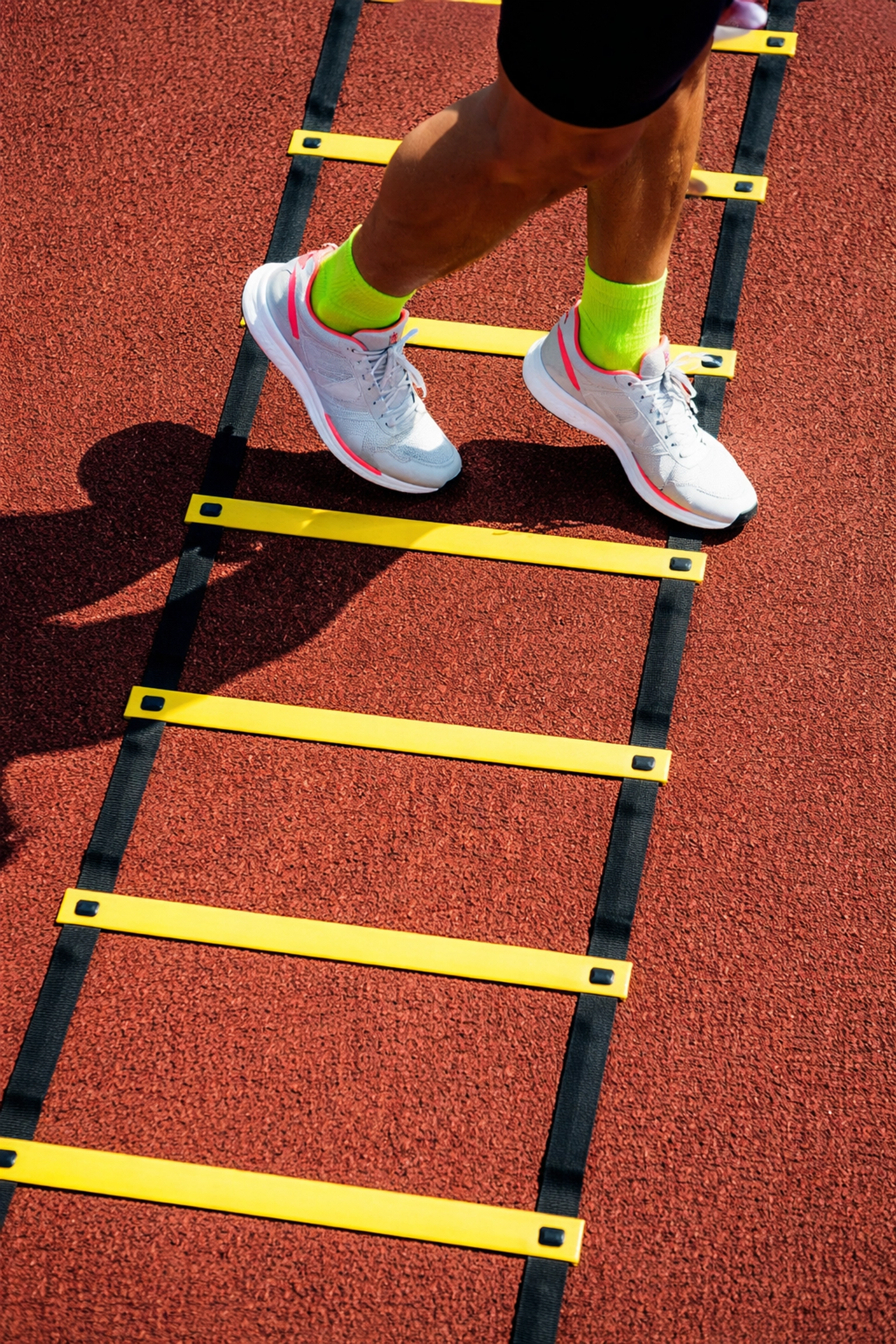
How to do it:
- Start outside the ladder on one side
- Step into the first box with your lead foot
- Step into the same box with your second foot
- Step out to the opposite side with your lead foot
- Step out with your second foot
- Move to the next box and repeat the pattern
- Follow the rhythm: "In, in, out, out"
Coaching cues:
- "Learn the pattern slowly before adding speed"
- "Both feet touch every box"
- "Keep your hips facing forward"
Pro tip: Break this drill down into sections. Practice the "in, in" movement first, then add the "out, out." Once the full pattern clicks, gradually build up speed.
Common Speed Ladder Mistakes to Avoid
Even simple drills can go wrong. Watch out for these common issues:
| Mistake | Why It's a Problem | The Fix |
|---|---|---|
| Looking down at feet | Slows reaction time, creates bad habits | Focus eyes forward, trust your feet |
| Heavy, flat-footed steps | Reduces speed and agility | Stay on balls of feet, light and quick |
| Rushing before ready | Leads to sloppy form and frustration | Master the pattern slowly first |
| Skipping warm-up | Increases injury risk | Always warm up with dynamic stretches |
| Only going one direction | Creates muscle imbalances | Practice drills in both directions |
How Often Should Athletes Practice?
For best results, include speed ladder drills 2-3 times per week as part of a warm-up or dedicated agility session. Keep each session between 10-15 minutes: short, focused bursts work better than long, tiring sessions.
Consistency beats intensity. A few minutes of quality practice several times a week will deliver better results than one marathon session.
Ready to Level Up Your Training?
The speed ladder is just one piece of the puzzle. Once your athletes have mastered these basic drills, you can progress to more complex patterns or combine ladder work with other agility tools like resistance bands, cones, and hurdles.
For more training tips and equipment guides, check out our speed training blog or explore our complete guide to using a speed ladder.
Now grab a ladder, gather your athletes, and get moving. Quick feet start with simple steps: and you've got everything you need to begin.


