
Leg Resistance Bands: Simple Drills to Boost Your Lateral Speed
by Paul Harwood
·
If you've ever watched a footballer cut past a defender or a tennis player dart across the baseline, you've seen lateral speed in action. That quick, explosive side-to-side movement doesn't just happen: it's trained. And one of the simplest tools to develop it? Leg resistance bands.
Whether you're new to agility training or looking to add something fresh to your warm-up routine, leg resistance bands are a game-changer. They're affordable, portable, and incredibly effective at targeting the muscles you need for faster lateral movement. Let's break down exactly how to use them.
1. Why Leg Resistance Bands Work for Lateral Speed
Before we dive into drills, it helps to understand why these simple loops of elastic are so effective.
They target your hip abductors and glutes
Your hip abductors (the muscles on the outer side of your hips) and glutes are the primary drivers of lateral movement. Every time you push off to the side, these muscles fire. Resistance bands place constant tension on them, forcing them to work harder than they would without resistance.
They increase muscle activation
Unlike free weights, bands provide resistance throughout the entire range of motion. This means your muscles stay engaged from start to finish: no rest at the top or bottom of the movement.
They build coordination and control
Moving against band resistance requires you to stabilise your body while generating power. This builds the agility and coordination needed for quick direction changes on the pitch, court, or track.
Think of it like this: training with resistance bands is like practising your footwork in thick sand. When you remove the resistance, your movements feel lighter, faster, and more explosive.
2. Getting Started: Choosing the Right Band
Not all resistance bands are created equal. Here's what to look for:
- Loop-style bands – These sit around your ankles or thighs and stay in place during dynamic movements
- Appropriate resistance level – Start with a lighter band if you're new to this; you can always progress to heavier resistance
- Comfortable width – Wider bands (around 5-8cm) tend to be more comfortable and less likely to roll up
If you're looking for a quality set to get started, check out our Kinetic Resistance Leg Band Exercise Set: it's designed specifically for these types of drills.
3. Essential Warm-Up: Activating Your Glutes
Before jumping into speed drills, you need to wake up those glutes. A quick 2-3 minute activation routine makes a big difference.
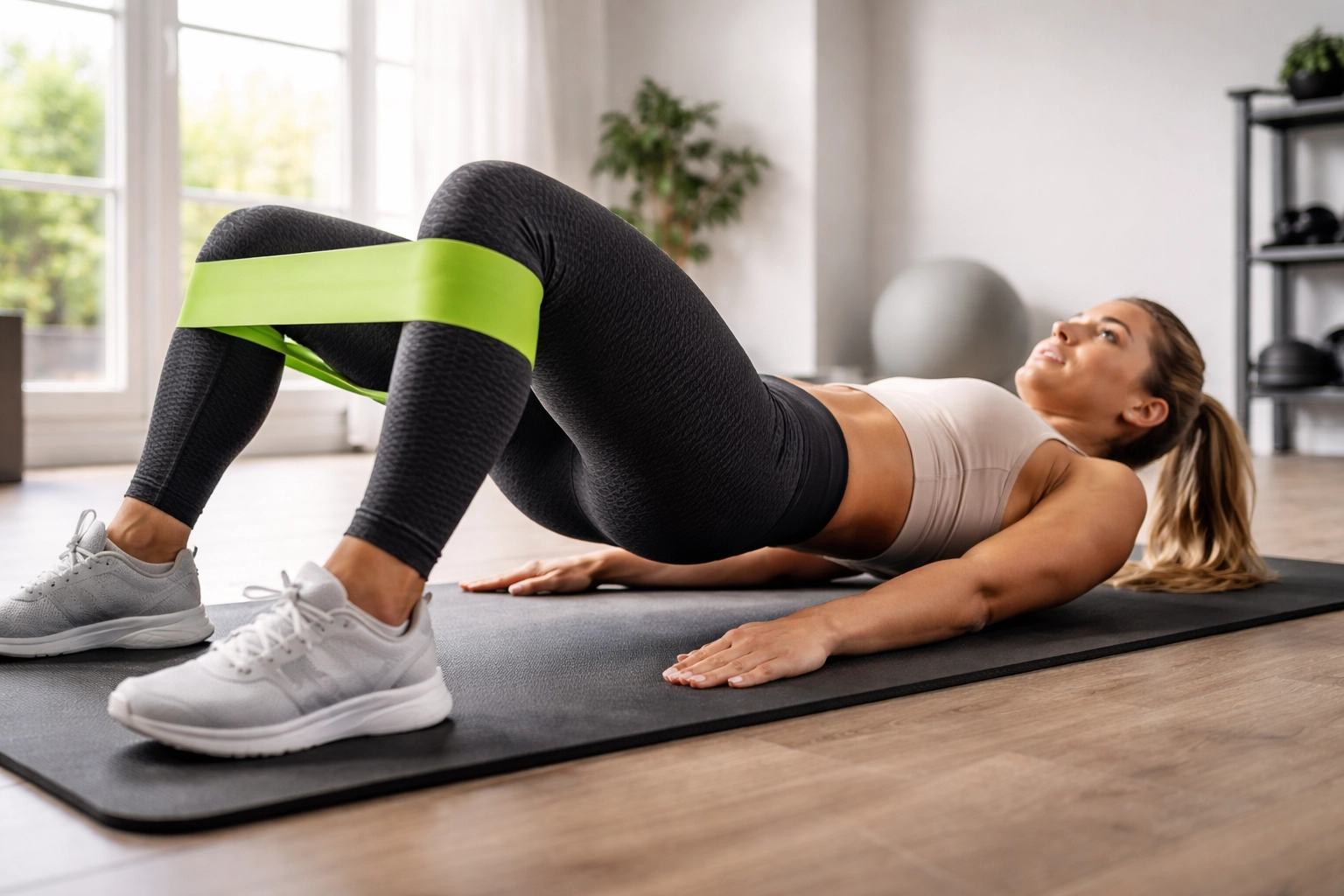
Glute Bridge with Band
- Place the band just above your knees
- Lie on your back with knees bent and feet flat on the floor
- Push your knees outward against the band as you lift your hips toward the ceiling
- Squeeze your glutes at the top for 2 seconds
- Lower and repeat for 10-15 reps
This simple move fires up your glutes and prepares them for the lateral work ahead.
4. Core Drills for Lateral Speed
Now for the good stuff. These four drills form the foundation of any leg resistance band training programme focused on lateral speed. Master these before moving on to more advanced variations.
Drill 1: Lateral Band Walk
This is the bread and butter of lateral resistance training. Simple, effective, and perfect for any skill level.
How to do it:
- Place the band around your ankles
- Stand with feet shoulder-width apart, knees slightly bent
- Take a controlled step to the side with one foot, stretching the band
- Bring the other foot in, maintaining tension on the band
- Continue for 10-15 steps in one direction, then reverse
Key points:
- Keep your chest up and core engaged
- Don't let your knees cave inward
- Maintain a low, athletic stance throughout
- Aim for 2-3 sets each direction
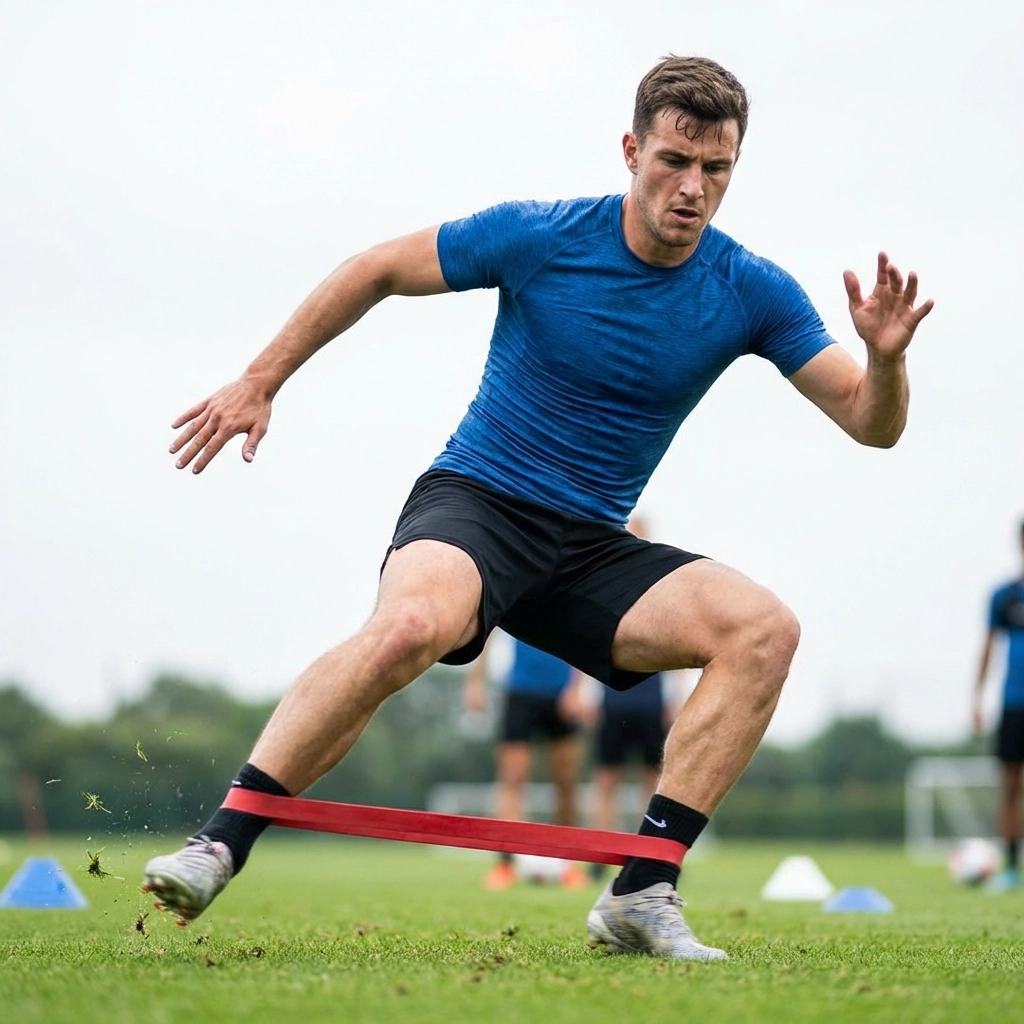
Drill 2: Side Shuffle with Resistance
This takes the lateral walk and adds speed: perfect for building reactive quickness.
How to do it:
- Band around ankles, athletic stance
- Shuffle quickly to one side for 5-10 metres
- Stay low with quick, choppy steps
- Keep constant tension on the band
- Shuffle back in the opposite direction
Key points:
- Focus on quick feet rather than long strides
- Keep your weight on the balls of your feet
- Arms should move naturally for balance
- Perform 4-6 sets with 30-45 seconds rest between
Drill 3: Lateral Lunges with Band
This drill builds single-leg strength and hip mobility: both essential for powerful lateral pushes.
How to do it:
- Place the band around your thighs, just above the knees
- Stand with feet hip-width apart
- Step out to the side with your right foot, bending your right knee
- Push your hips back as if sitting into a chair
- Keep your left leg straight, feeling the stretch on the band
- Push back to the starting position
- Repeat 8-10 times per side
Key points:
- Keep your chest lifted and back straight
- Your bent knee should track over your toes
- Control the movement: don't rush
- Feel the burn in your quads, glutes, and inner thighs
Drill 4: Monster Walks
A brilliant drill for targeting the glutes from multiple angles.
How to do it:
- Band around ankles or just above knees
- Adopt a quarter-squat position
- Step forward and outward at a 45-degree angle with your right foot
- Follow with your left foot, also stepping forward and out
- Continue for 10-15 steps, then walk backwards to start
Key points:
- Maintain constant tension on the band
- Stay low throughout the movement
- Keep steps controlled and deliberate
- Great as a warm-up or finisher
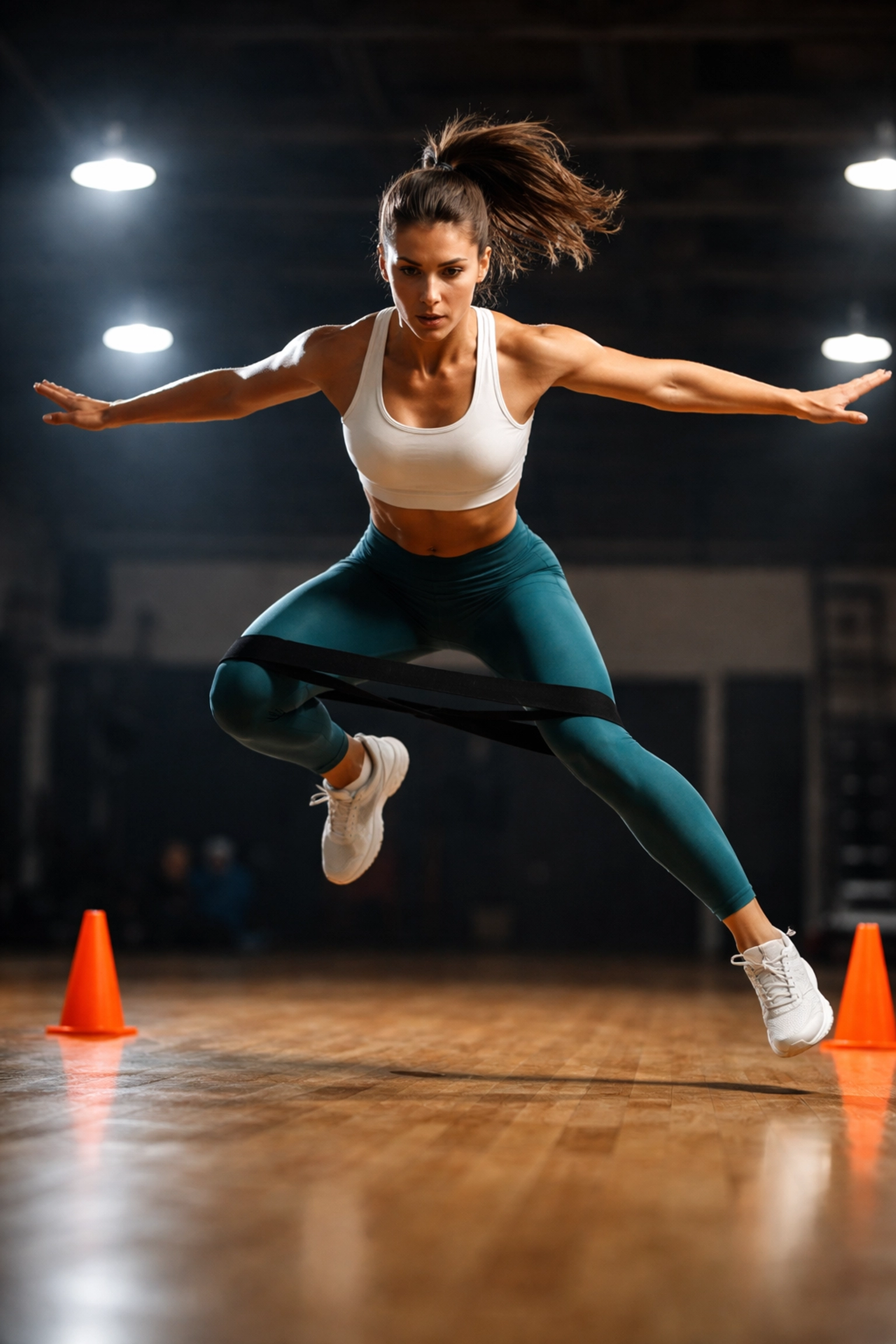
5. Advanced Drill: Lateral Power Jumps
Once you've mastered the basics, this drill takes things up a notch with explosive lateral power.
How to do it:
- Place the band just above your knees
- Set up two cones or markers about 1 metre apart
- Start at one cone in an athletic stance
- Explode laterally to the opposite cone, landing softly on one foot
- Immediately push back to the starting position
- Perform 8-12 reps per set
Programming tip: Do 4-6 sets with the band on, then remove the band and perform 2 sets without resistance. This contrast training helps maximise power output: you'll feel noticeably quicker and more explosive.
Rest 45-90 seconds between sets to ensure maximum effort on each rep.
6. Safety Tips to Keep in Mind
Resistance band training is generally very safe, but a few precautions will help you avoid injury:
- Start light – Begin with lower resistance and fewer reps before progressing
- Check your band – Inspect for tears or wear before each session
- Keep knees soft – Never lock out your knees during lateral movements
- Stop if it hurts – Discomfort in the muscles is normal; sharp pain is not
- Warm up first – Cold muscles and bands don't mix well
7. Common Mistakes to Avoid
Even simple drills can go wrong. Watch out for these:
- Knees caving inward – This defeats the purpose and can strain your joints
- Standing too upright – Stay in an athletic, slightly crouched position
- Rushing through reps – Quality beats quantity every time
- Using too much resistance – Your form should never suffer for extra challenge
- Forgetting to breathe – Keep breathing steady throughout each drill
8. How to Programme These Drills
Not sure when to use these exercises? Here are some simple options:
As a warm-up (5-10 minutes):
- Glute bridges x 15
- Lateral band walks x 10 each way
- Monster walks x 10 steps forward and back
As part of agility training (15-20 minutes):
- All four core drills, 2-3 sets each
- Add lateral power jumps if ready
Frequency:
- 2-3 times per week is plenty for most athletes
- Allow at least one day of recovery between sessions
Ready to Move Faster?
Leg resistance bands are one of the most underrated tools in speed and agility training. They're simple to use, easy to take anywhere, and genuinely effective at building the lateral quickness that makes a difference on game day.
Start with the basic drills, focus on quality movement, and gradually increase resistance as you get stronger. Within a few weeks, you'll notice the difference in your side-to-side speed.
Browse our full Resistance Bands collection to find the right set for your training, or explore more agility training equipment to build a complete speed toolkit.
Now get moving: those lateral gains won't build themselves! 🏃♂️
