

So you've just signed up to coach a youth team – congrats! Now comes the slightly overwhelming part: figuring out what gear you actually need without blowing your entire budget before the first practice.
If you're staring at endless online catalogs wondering what's essential and what's just marketing fluff, you're not alone. Here's the truth: you don't need everything, and the expensive stuff isn't always better. Let's break down the 10 things every youth coach should know before spending a single penny.
1. Buy Multi-Purpose Gear First (Your Wallet Will Thank You)
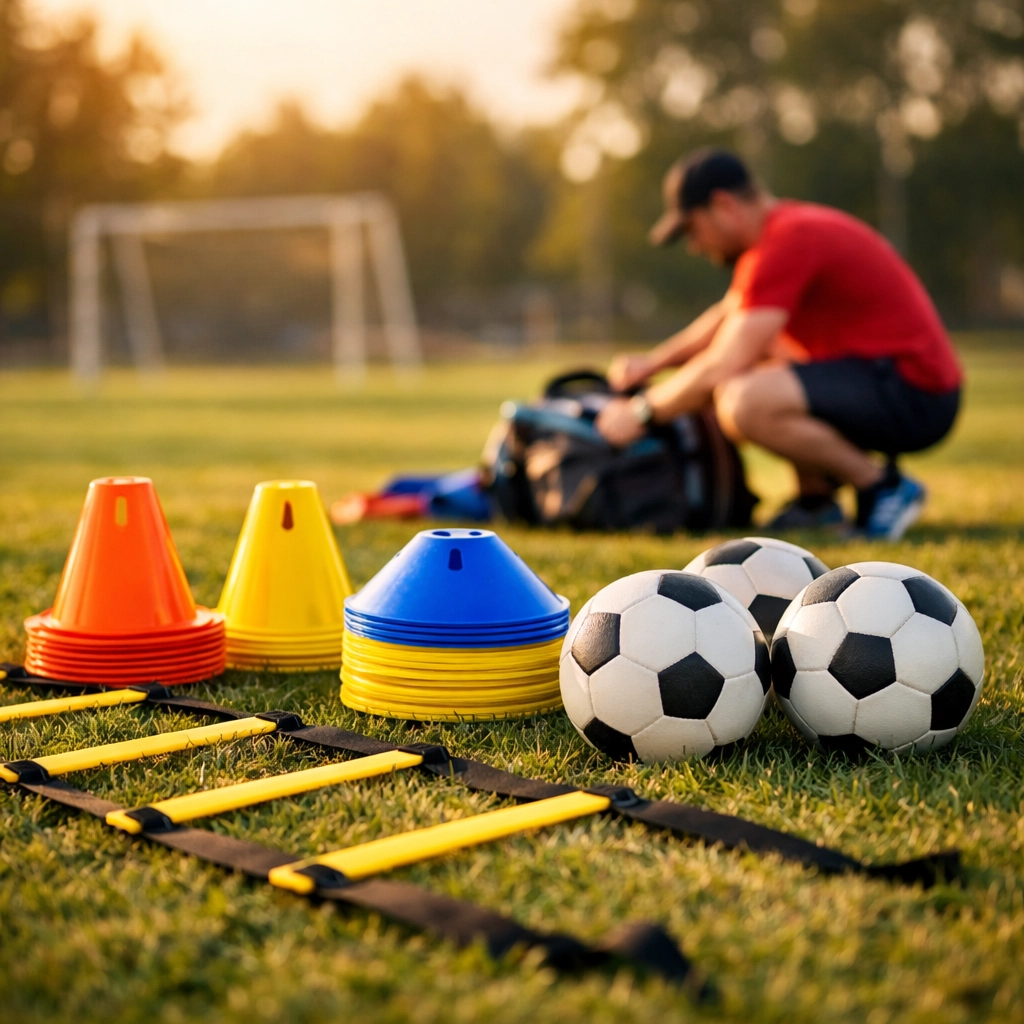
Here's the golden rule that'll save you hundreds: prioritize equipment that serves multiple purposes.
Before you start filling shopping carts, ask yourself: "Can this be used for different drills, different age groups, or even different sports?" Training cones can mark boundaries, create obstacle courses, and define practice zones. Agility ladders work for footwork drills across soccer, basketball, and football. A good stopwatch times sprints, drill circuits, and game intervals.
Start with versatile basics and build your collection over time. You don't need a specialized piece of equipment for every single drill – trust me, coaches have been running effective practices with simple gear for decades.
2. Your Coaching Bag Is More Important Than You Think
This isn't just a bag – it's your mobile command center. A quality coaching bag with multiple compartments keeps you organized and ready for anything.
Look for these features:
- Water-resistant material (because practice doesn't always stop for drizzle)
- Reinforced stitching and robust zippers (this bag will take a beating)
- Multiple compartments (so you're not digging for your whistle while 20 kids wait)
- Sturdy, padded handles (you'll be hauling this around a lot)
Think of it as an investment piece. A $50-70 bag that lasts five seasons beats buying three cheap ones that fall apart. Plus, when everything has its place, you spend less time fumbling and more time coaching.
3. Yes, You Really Need a Whistle (And a Lanyard)
It sounds basic, but hear me out. A whistle is your most-used piece of equipment. Period.
On a noisy field with 15-20 excited kids, your voice alone won't cut it. A whistle:
- Grabs immediate attention (even from the kid daydreaming in left field)
- Signals drill starts and stops clearly
- Saves your vocal cords for actual instruction
Attach it to a lanyard and wear it around your neck. You'll use it 50+ times per practice. If it's buried in your pocket or bag, you'll waste precious practice time fishing for it while players lose focus.
Pro tip: Get a whistle with a clear, sharp tone that cuts through ambient noise. And grab a backup – they get lost.
4. Training Cones Are Your Swiss Army Knife
If you only buy one piece of training equipment, make it a set of quality training cones.
These simple tools are insanely versatile:
- Mark drill stations and practice zones
- Create footwork patterns and agility courses
- Define boundaries for small-sided games
- Set up passing gates or dribbling lanes
- Build obstacle courses for conditioning
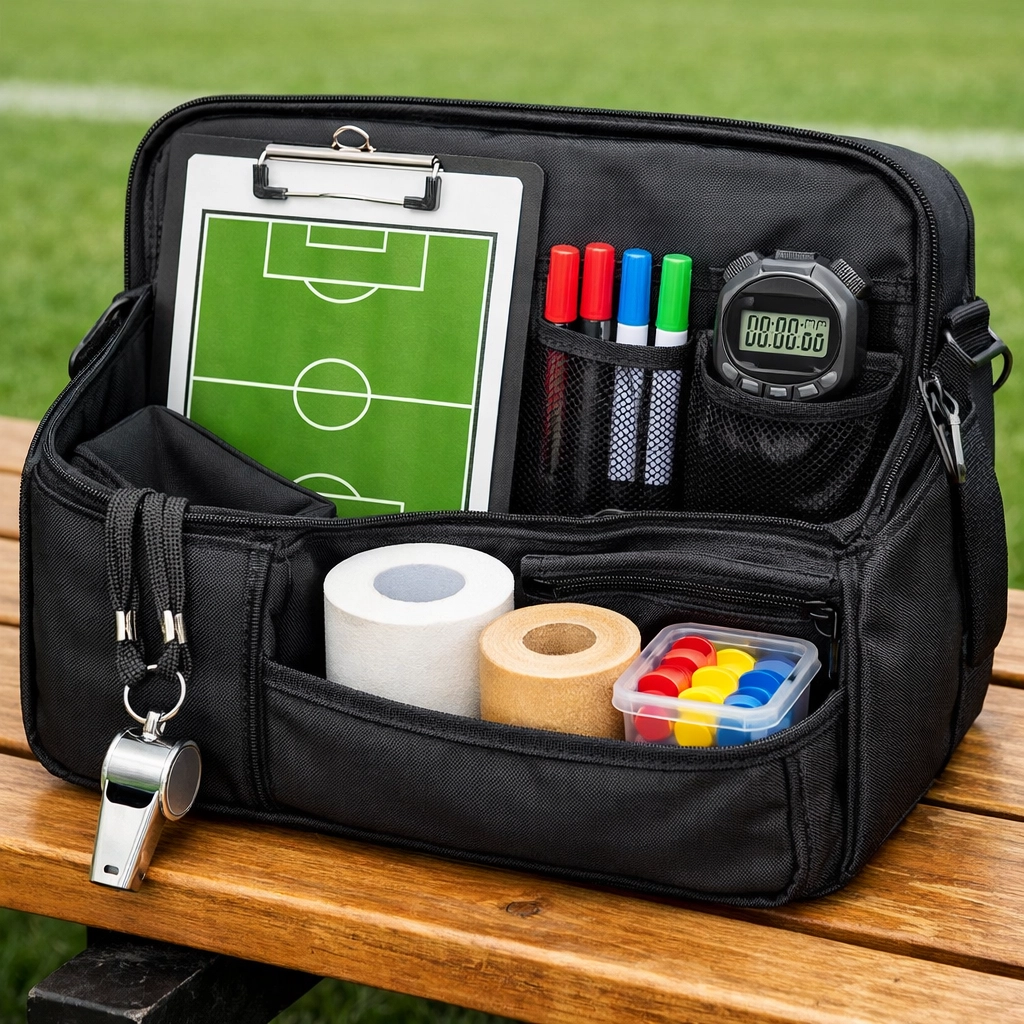
A set of 20-30 cones in multiple colors gives you endless drill possibilities. They stack flat, weigh almost nothing, and cost way less than fancy gadgets that do one specific thing.
The best part? They work across every sport and age group. Whether you're coaching 6-year-olds or teenagers, cones are always relevant.
5. Pinnies Don't Have to Break the Bank
Scrimmage vests (or pinnies) are essential for organizing team activities, but don't overspend here.
You need them to:
- Quickly divide players into teams during scrimmages
- Run competitive drills without confusion
- Create visual clarity on the field
Here's what to look for:
- Lightweight, breathable mesh material
- At least two different colors (three is better)
- Numbered options if you want more organization
- Reversible designs for extra flexibility
You can find quality sets for $20-40 that'll last multiple seasons. Just make sure they're large enough to fit over winter layers if you coach year-round.
6. Match Your Practice Balls to Game Balls
This seems obvious, but it's crucial: use the same type and quality of balls in practice that you'll use in games.
If your league plays with size 4 soccer balls, don't practice with size 5s. If you're coaching baseball, use regulation baseballs, not softer training versions (except for specific safety drills with younger kids).
Why? Muscle memory. Players need to develop a feel for the actual ball they'll use in competition – its weight, bounce, and behavior.
Also, keep these handy:
- Ball pump with extra needles
- Pressure gauge (balls at the wrong pressure affect skill development)
- Ball bag to keep everything organized
Having 10-12 balls means every player gets touches during drills instead of standing in long lines waiting for their turn.
7. A Clipboard Isn't Old School – It's Essential
In our smartphone era, a physical clipboard might seem outdated. It's not.
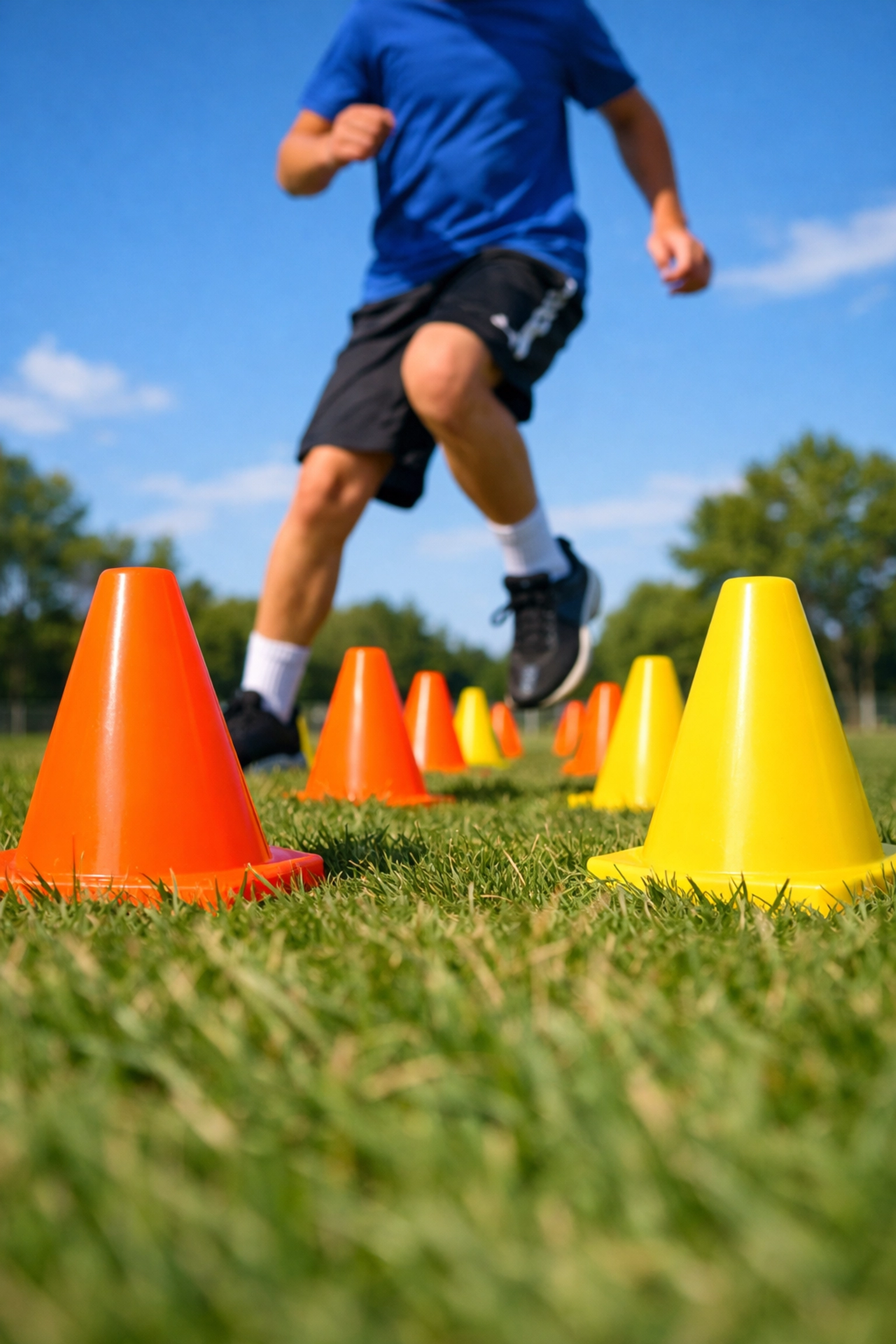
A coaching clipboard with a scorebook helps you:
- Track player attendance and participation
- Document individual progress over the season
- Maintain organized lineups and rotations
- Take notes during practice and games
- Keep stats that help with player development
Bonus: grab a dry-erase coaching board too. Being able to draw up plays or formations on the spot gives you visual instruction that kids understand way faster than verbal explanations alone. Show, don't just tell.
Keep extra markers and an eraser in your coaching bag. You'll use these more than you expect.
8. Time Your Drills – A Stopwatch Keeps Practice Efficient
Kids have short attention spans. A structured, well-paced practice keeps them engaged and learning.
A stopwatch helps you:
- Keep drills moving at the right pace
- Time conditioning circuits accurately
- Maintain consistent practice structure
- Track individual improvement in timed drills
Instead of letting drills drag on until kids get bored or rushing through important fundamentals, timing creates rhythm. "We're doing this for 8 minutes, then rotating" gives players clear expectations.
Most smartphones have stopwatch functions, but a dedicated stopwatch (or a good sports watch) means you're not constantly pulling out your phone. Plus, wet or muddy hands and expensive phones don't mix well.
9. Safety First – Build a Proper First Aid Kit
This is non-negotiable. Accidents happen, and you need to be prepared.
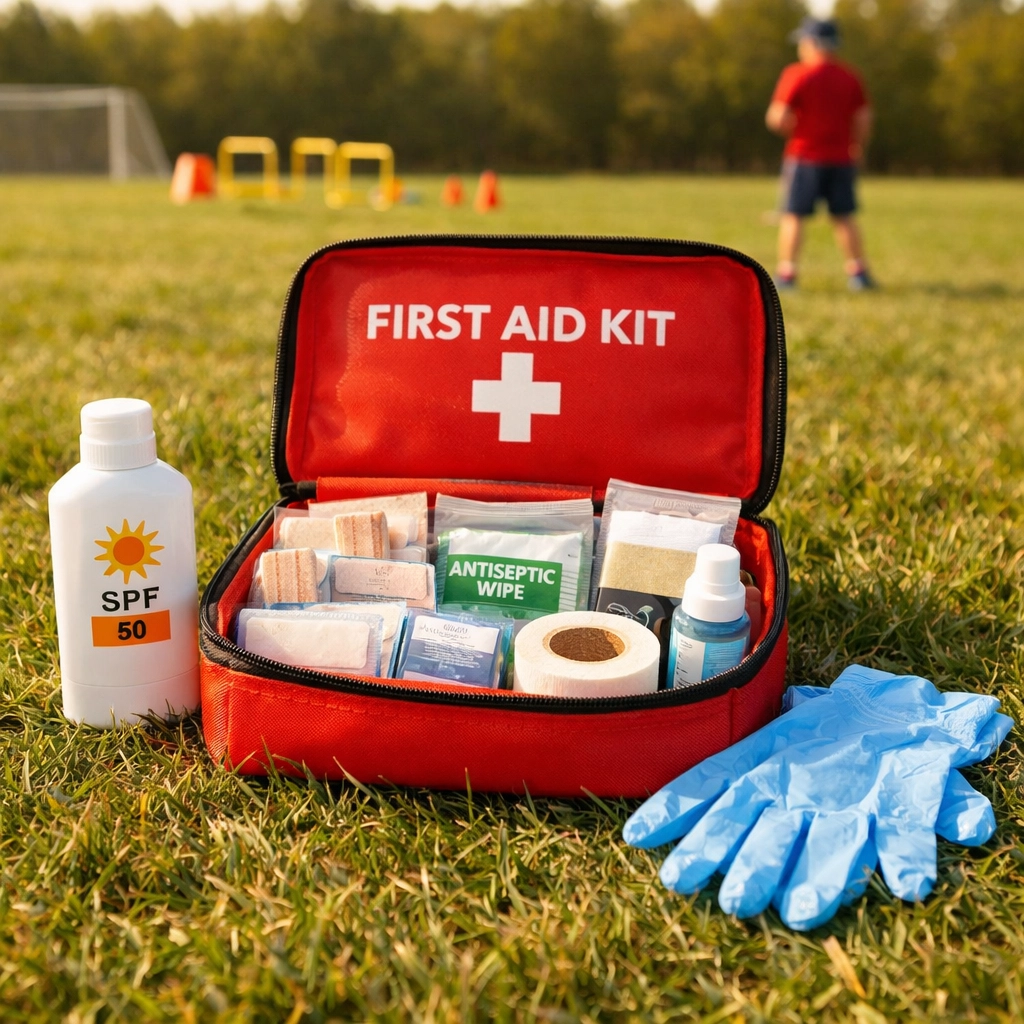
Your coaching first aid kit should include:
- Adhesive bandages in various sizes
- Antiseptic wipes and ointment
- Gauze pads and athletic tape
- Ice packs (instant cold packs work)
- Elastic bandages for sprains
- Disposable gloves
- Emergency contact information for all players
Also, keep sunscreen accessible for outdoor practices – sunburns are preventable.
Check your kit regularly and restock after you use supplies. Keep it in an easily accessible part of your coaching bag, not buried at the bottom.
And if a serious injury occurs, don't hesitate – call for professional medical help immediately. Your job is to provide basic first aid and ensure proper care.
10. Hydration Isn't Optional – Make It Easy
Dehydrated athletes perform poorly and face serious health risks. Making hydration convenient encourages players to actually drink enough water.
Consider these options:
- Large coolers with a spigot for team access
- Individual water bottles with player names
- Reminder breaks built into practice structure
Schedule water breaks every 15-20 minutes during intense practices, more often in hot weather. Don't wait for kids to ask – they often won't until they're already dehydrated.
Teaching proper hydration habits now builds lifelong healthy behaviors. Plus, hydrated players have better focus, energy, and injury prevention.
Start Smart, Build Over Time
Look, you don't need to buy everything on day one. Start with the absolute essentials:
- Coaching bag
- Whistle and lanyard
- Training cones (20-30 count)
- Pinnies (at least 2 colors)
- Appropriate balls for your sport
- First aid kit
- Water/hydration system
Then build your collection based on your team's specific needs and your coaching style. Notice that footwork needs work? Add an agility ladder. Want to track speed development? Invest in a good stopwatch. Need to work on specific skills? Add sport-specific training aids.
The goal isn't to have the most gear – it's to run effective practices that develop skills, build confidence, and keep kids excited about playing. Sometimes the coach with the simplest setup and clearest instruction gets the best results.
Now get out there and make it happen. Your players are lucky to have a coach who cares enough to prepare properly. You've got this! 🙌


