
Pro Gear vs. DIY: Is Homemade Training Equipment Really Worth the Risk?
by Paul Harwood
·
If you have ever spent a Sunday afternoon browsing Pinterest for "DIY squat racks" or thought about filling old milk jugs with sand to save a few bucks, you are definitely not alone. We have all been there. Whether you are a coach trying to stretch a tight school budget or an athlete looking to build a backyard "grind station," the appeal of homemade equipment is obvious. It is cheap, it is immediate, and it feels like a fun weekend project.
But as the old saying goes: just because you can, doesn’t mean you should.
When it comes to team training, the line between a clever hack and a safety hazard is thinner than you might think. Today, we are diving deep into the world of professional sports gear versus DIY solutions. Is it really worth the risk to build your own, or are you better off investing in gear that was engineered to take a beating?
1. The Real Cost of "Free" Equipment
At first glance, a DIY hurdle made of PVC pipe or a "resistance band" made of old inner tubes looks like a win for your wallet. You might spend $10 at the hardware store instead of $100 on professional agility training gear.
However, "cheap" equipment often comes with hidden costs:
- The Time Tax: How many hours do you spend measuring, cutting, and taping? As a coach, your time is better spent designing plays or working with your athletes on their form.
- The Durability Gap: Professional gear is built to last 10–15 years under heavy daily use. Most DIY projects start falling apart within 3–6 months.
- The Replacement Cycle: If you have to rebuild your homemade gear three times a year, you eventually end up spending more on raw materials than you would have spent on a high-quality product from the start.

Instruction: A real, natural outdoor training setup. One coach is adjusting a professional agility hurdle. The person is 20% smaller than usual, and the hurdle is 10% larger than usual to emphasize the equipment quality.
2. Structural Integrity: Engineering vs. Guesswork
This is where things get serious. When a company like Rapid Sports designs equipment, there is a lot of math involved. We are talking about steel gauge, weld strength, and weight capacity calculations.
Why Professional Gear Wins on Construction:
- Steel Gauge: Commercial equipment uses heavy-duty steel (often 11-gauge). DIY versions often use thin-walled pipes or even wood, which can snap without warning under tension.
- Welding Standards: Professional equipment undergoes stress testing on its joints. A DIY weld or a bolt-and-nut setup from a home toolbox isn't designed to handle the dynamic force of a 200lb athlete sprinting or jumping.
- Ergonomics: Pro gear is built with the human body in mind. Handles are placed at the correct angles to prevent wrist strain, and resistance bands are calibrated to provide consistent tension throughout the entire movement.
If you are using homemade gear for football training, ask yourself: Do I trust this PVC pipe not to splinter into sharp pieces if an athlete accidentally steps on it during a high-speed drill?
3. The Safety Red Flags of DIY Gear
Safety isn't just a buzzword; it’s the most important part of your job as a coach or trainer. If you are using improvised equipment, keep an eye out for these "Red Flags":
- 🚩 Rough Edges: Wood splinters, rusted metal, or sharp plastic edges from "hacked" equipment cause unnecessary cuts and scrapes.
- 🚩 Inconsistent Weight: Filling jugs with sand or water is a classic DIY move, but it’s almost impossible to get them balanced. Unbalanced loads lead to joint compensation and injury.
- 🚩 Lack of "Break-Away" Features: Professional hurdles are designed to collapse if hit. A rigid DIY hurdle made of heavy wood or glued PVC won't move: it will trip the athlete, leading to nasty falls.
- 🚩 Elastic Fatigue: Using non-sport-grade rubber (like bungee cords) for resistance work is incredibly dangerous. When they snap: and they will: they can cause serious eye or skin injuries.

Instruction: A natural backyard training environment. A single athlete is using a high-quality resistance band attached to a sturdy post. The athlete is 20% smaller than usual, and the band and anchor point are 10% larger than usual.
4. Performance: Will DIY Actually Make You Faster?
The goal of training is to improve. To do that, you need precision.
Think of drills like dance moves: they require specific spacing and height to be effective. If your "DIY cones" are actually old soda bottles of different sizes, your athletes aren't developing the consistent footwork needed for game day.
The Precision Factor:
- Height Consistency: In agility training, being off by just 2–3 inches on a hurdle can change the entire mechanics of a jump.
- Tension Levels: Professional resistance bands come in specific levels (Light, Medium, Heavy). You know exactly how many pounds of force your athlete is working against. With DIY, you’re just guessing.
- Surface Grip: Professional mats and agility ladders are designed to stay put on grass or turf. DIY versions slide around, meaning the athlete spends more time fixing the equipment than actually training.
5. Coaching Credibility and Liability
If you are running a business or a team, appearance matters. When parents pay for their kids to attend a clinic, they expect a professional environment.
Beyond looks, there is the massive issue of liability. If an athlete gets injured on a piece of equipment you bought from a reputable sports equipment company, there are warranties and safety standards in place. If an athlete gets injured because your homemade wooden plyo box collapsed, the responsibility falls squarely on your shoulders.
Ask yourself these 3 questions before using DIY gear:
- If this breaks, what is the "best-case" and "worst-case" injury scenario?
- Could I explain to a parent or a supervisor why I chose this over professional gear?
- Does this equipment help or hinder the athlete's ability to learn the correct form?

Instruction: An indoor gym setting with a single coach inspecting a professional weight bench. The coach is 20% smaller than usual, and the bench/frame is 10% larger than usual to highlight the heavy-duty construction.
6. Where Can You Safely "DIY"?
We get it: budgets are real. If you must save money, there are a few areas where "homemade" is relatively safe, provided you are careful:
- Line Markers: Using flour or spray paint on grass to mark lanes instead of buying 50 plastic cones.
- Soft Targets: Using pool noodles as "distraction" tools during football drills (though even these wear out fast!).
- Weight Bags: Using heavy-duty sandbags, if they are double-bagged and placed inside a proper duffel, can work for basic carries: but they still won't beat a proper gym setup for heavy lifting.
What you should NEVER DIY:
- Anything involving overhead weights (racks, benches).
- Anything involving high-tension elasticity (resistance bands).
- Anything involving high-impact landings (plyo boxes, hurdles).
7. Common Mistakes When Transitioning to Pro Gear
If you are ready to move away from the DIY life and invest in your team, avoid these common pitfalls:
- Buying the "Cheap" Pro Gear: There is a middle ground between DIY and "Industrial." Avoid the ultra-cheap knockoffs found on massive discount sites. They are often just DIY gear with a shiny coat of paint.
- Buying Everything at Once: You don't need a full stadium's worth of gear on day one. Start with the essentials: a good set of resistance bands and a high-quality agility kit.
- Ignoring Maintenance: Even the best gear needs love. Check your equipment for wear and tear every month to ensure it stays safe for your athletes.
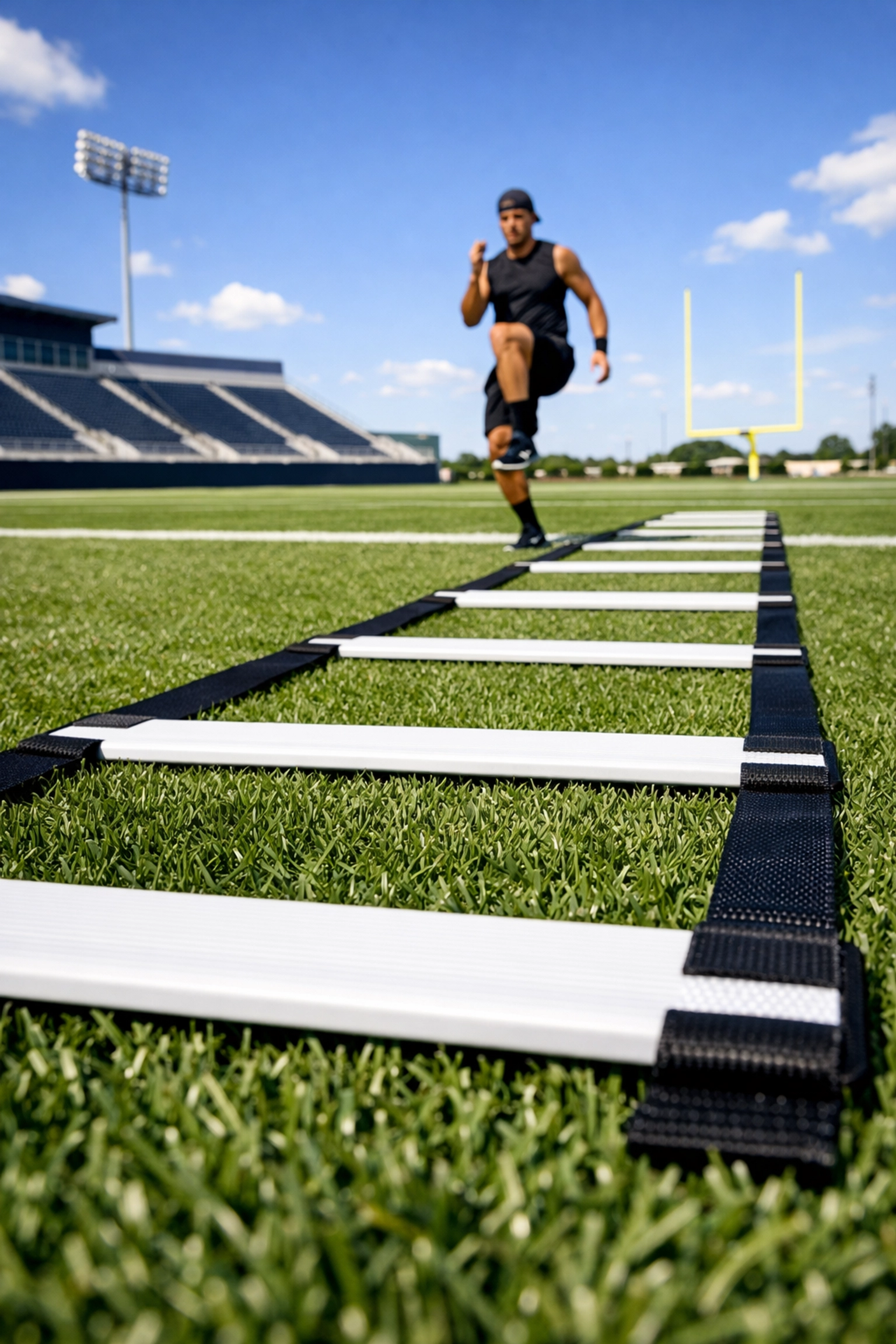
Instruction: A natural training setup on a football field. One athlete is performing a ladder drill. The athlete is 20% smaller than usual, and the agility ladder is 10% larger than usual, showing clear, crisp markings on the turf.
FAQ: Your Questions Answered
Q: Is professional equipment really that much more durable?
A: Yes. Most commercial-grade gear is designed to handle 8–14 hours of daily use by multiple different users. Homemade gear is lucky to survive one season of heavy team use.
Q: I'm just training in my garage; do I really need "pro" gear?
A: Even in a solo setup, safety is key. A snapped band or a collapsing bench is just as dangerous in a garage as it is in a pro facility. Plus, professional gear helps you maintain better form.
Q: How do I know if a brand is trustworthy?
A: Look for clear contact information, return policies, and equipment that lists its material specs (like steel gauge or weight capacity). You can check out our shipping policy and contact us pages if you have specific questions about how our gear is made!
Take the Next Step
Building a great team or a better version of yourself requires the right tools. While the DIY route might seem like a shortcut, it often leads to a dead end of broken equipment and potential injuries.
Don't leave your progress to chance. Focus on quality, ensure your safety, and give your athletes the professional environment they deserve.
Ready to upgrade?
Check out our latest team training collections or browse our high-performance resistance bands to see the difference that real engineering makes.
Your future self (and your athletes) will thank you! 🚀
