

If you’re new to the world of coaching, or even if you’ve been on the sidelines for years, there is one thing that probably keeps you up at night: injuries. We’ve all been there, watching a star player go down or seeing a simple drill turn into a twisted ankle. It’s stressful, but here is the good news: you are not alone, and a lot of these mishaps are preventable with the right gear and a solid plan.
At Rapid Sports, we believe that coaching isn't just about strategy and winning; it’s about stewardship. Your athletes are your most valuable assets, and keeping them on the field starts with the equipment you choose. In this guide, we’re going to break down the essential injury-prevention gear every coach needs in their kit. We’ll keep it simple, actionable, and focused on keeping your team healthy and ready to play. 🛡️
1. The Front Line: Personal Protective Equipment (PPE)
When we talk about "coaches sports equipment," we aren't just talking about whistles. We’re talking about the gear your players wear that you are responsible for checking. Even if parents buy the gear, as the coach, you are the last line of defense to ensure it’s safe.
Helmets and Headguards
For collision sports like football, hockey, or lacrosse, the helmet is the most critical piece of kit. It protects against concussions and more severe traumatic brain injuries.
- Check for Certification: Ensure all helmets meet NOCSAE standards. If a helmet is cracked or the internal padding is compressed, it’s a "red flag." 🚩
- The Fit Test: A helmet shouldn't wobble. If it shifts more than an inch when the player moves their head, it’s too big.
Mouthguards
You’d be surprised how many dental injuries happen in "non-contact" sports. A good mouthguard doesn't just protect teeth; it can help cushion the jaw during impact. Encourage your players to use them during every practice, not just game day.
Limb and Joint Protection
- Shin Guards: For soccer, these are non-negotiable. Look for guards made from high-impact materials like polypropylene.
- Knee and Elbow Pads: Essential for basketball, volleyball, or any sport where floor contact is common. They prevent "strawberry" burns and more serious bursitis.
- Ankle Braces: If you have an athlete prone to rolling their ankles, a properly fitted brace can provide that extra 10-20% of stability they need to stay confident on the court.
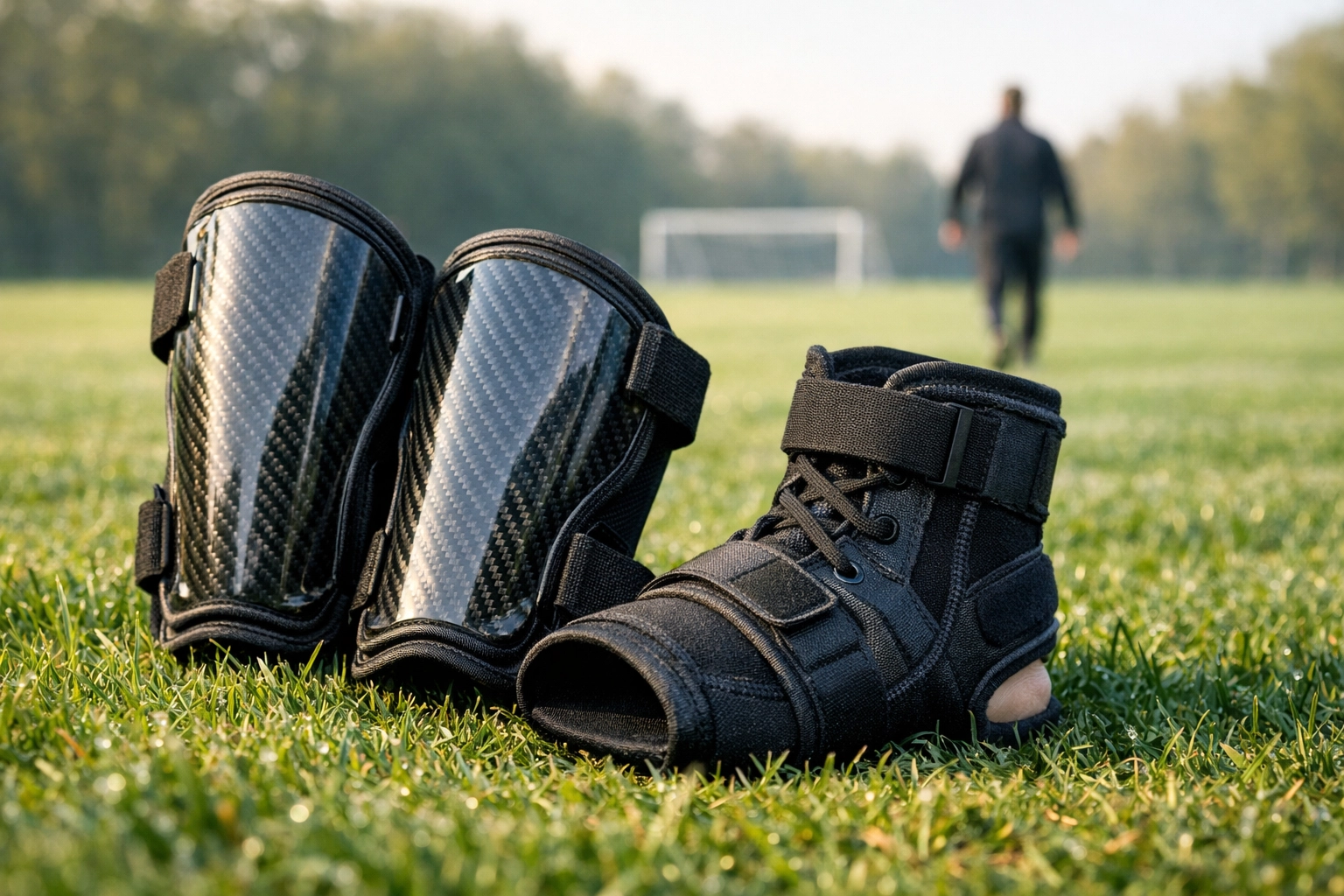
Visual: A close-up of high-quality shin guards and an ankle brace resting on a natural grass field, with a coach's shadow in the background.
2. The Coach’s Sideline Arsenal: The First Aid Kit
Every coach needs a "go-bag" that stays within arm’s reach during every session. If an injury does happen, those first 60 seconds are crucial. You don't need to be a doctor, but you do need to be prepared.
Essential Checklist for Your Kit:
- Instant Ice Packs: These are a lifesaver for immediate swelling control. 🧊
- Antiseptic Wipes & Bandages: For the inevitable scrapes and cuts.
- Adhesive Tape & Pre-wrap: For quick stabilization of joints.
- Sterile Gauze Pads: For larger abrasions.
- Emergency Contact Cards: Keep a physical copy of every player’s medical info and emergency contacts.
- Gloves and CPR Mask: Safety first for you, too!
Pro Tip: Check your first aid kit every 2-3 months. Sterile wipes dry out, and bandages lose their stickiness over time.
3. Proactive Prevention: Training for Stability
The best way to handle an injury is to make sure it never happens. This is where specialized training equipment comes in. By building "functional strength" and "proprioception" (your body’s ability to sense movement and position), you can bulletproof your athletes.
Agility Ladders for Footwork
Many ankle and knee injuries happen because of poor foot placement. Using a speed training ladder helps athletes develop the "fast feet" needed to navigate high-pressure situations without tripping over themselves.
- The Drill: Have athletes run through 3-4 sets of "Ickey Shuffles" or "In-and-Outs" at the start of practice. Focus on 10-15 minutes of quality movement over raw speed.
Resistance Bands for Joint Health
Resistance training isn't just for bodybuilders. For athletes, resistance bands are perfect for warming up the smaller, stabilizing muscles around the rotator cuff, hips, and knees.
- The Move: Lateral band walks. Have your players place a band around their ankles and take 10-20 controlled steps to each side. This activates the gluteus medius, which is key for preventing ACL tears.
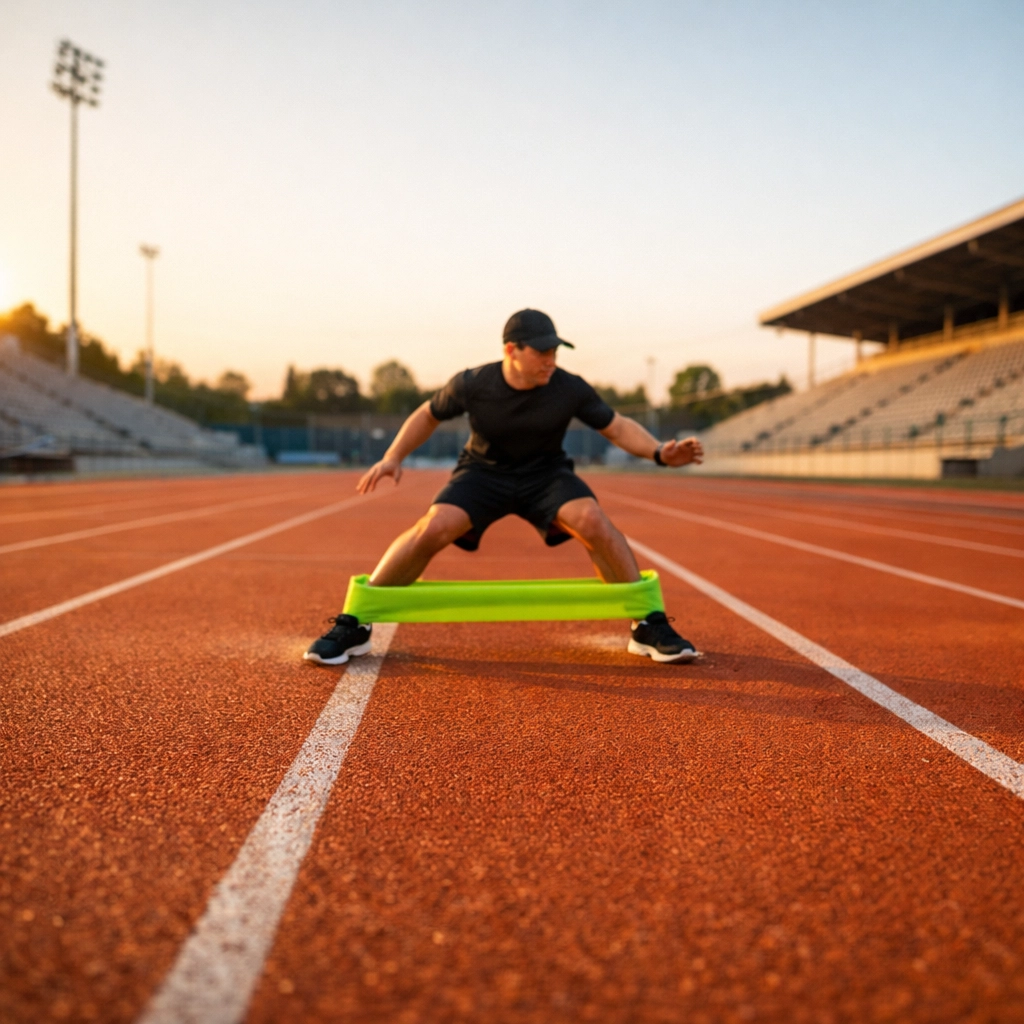
Visual: A single athlete performing lateral band walks with a bright green resistance band, the band looking slightly larger than scale to highlight the tension.
4. Proper Footwear and Surface Safety
As a coach, you need to be an amateur groundkeeper. The interface between the foot and the ground is where most lower-limb injuries originate.
- Cleat Selection: Make sure your players are using the right studs for the surface. Long studs on a hard, dry pitch are a recipe for an ACL twist.
- Traction Check: If the soles of their shoes are worn flat, they’re going to slide. Slipping leads to pulled groins and strained hamstrings.
- Surface Inspection: Before any drill, walk the area. Look for "pot-holes," loose turf, or wet spots on the gym floor. It takes two minutes but can save a season.
If you’re training indoors, consider using items from our gym collection to ensure the floor remains a safe, controlled environment for high-intensity movements.
5. Maintenance and "The Fit"
The best gear in the world won't help if it doesn't fit or is falling apart. We recommend a "Gear Audit" at the beginning, middle, and end of every season.
How to Check Your Gear:
- Elasticity: If the straps on your catcher’s gear or shoulder pads are stretched out and loose, the pads will shift upon impact. Replace them immediately.
- Shell Integrity: Look for hairline fractures in plastic components. A small crack today is a shattered guard tomorrow.
- Inflation: For sports involving balls, ensure they are inflated to the manufacturer’s specifications. An over-inflated ball is harder on the wrists and ankles than a properly inflated one.
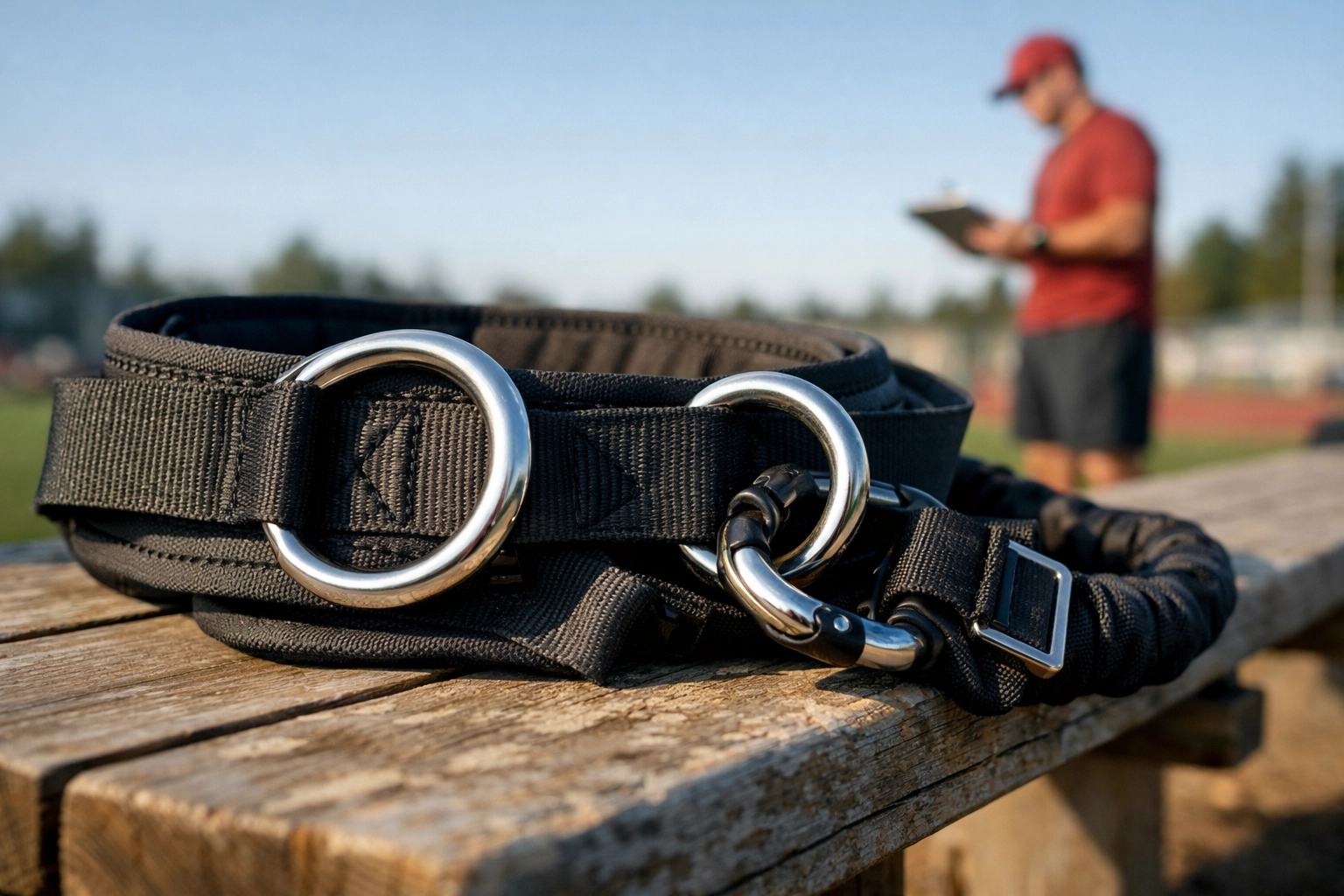
Visual: A coach inspecting the straps of a training harness on a sideline bench, with the harness clearly visible in the foreground.
Common Mistakes Coaches Make (And How to Avoid Them)
- Mistake #1: Skipping the Warm-up. We get it, practice time is limited. But a 10-minute dynamic warm-up is your #1 injury prevention tool. Use agility training gear to make it fun.
- Mistake #2: Ignoring "Minor" Pain. If a player says their shin or heel hurts, listen. "Running it off" can turn a minor stress reaction into a full fracture.
- Mistake #3: Outdated Gear. Using 10-year-old pads because they were "donated" is risky. Materials degrade over time.
FAQ: Injury Prevention
Q: How often should I replace my team's training gear?
A: High-impact gear like helmets should be inspected annually. Items like resistance bands or skipping ropes should be replaced as soon as you see fraying or "nicking" in the material to prevent snapping.
Q: Can gear actually prevent concussions?
A: No gear can 100% prevent a concussion, but high-quality, properly fitted helmets and mouthguards significantly reduce the risk and severity of head impacts.
Q: Is it okay to use gear from other sports?
A: Generally, no. Each piece of gear is engineered for specific impact types. A bike helmet isn't a substitute for a batting helmet.
Next Steps for Every Coach
Ready to make your practices safer? Here is your "Monday Morning" checklist:
- Audit the Bag: Open your first aid kit and check the expiration dates.
- Walk the Field: Spend 5 minutes checking your training area for hazards.
- Check the Tension: Grab a few heavy resistance bands and incorporate a 5-minute activation routine into your next warm-up.
- Educate the Parents: Send a quick note about proper footwear for the upcoming season’s surface.
Coaching is a rewarding journey, and your commitment to safety builds trust with your players and their families. When the team feels safe, they play harder, learn faster, and have way more fun.
If you need to stock up on the basics or want to level up your training sessions, check out our full range of team training equipment. Let's keep the squad healthy and on the winning track! 🚀
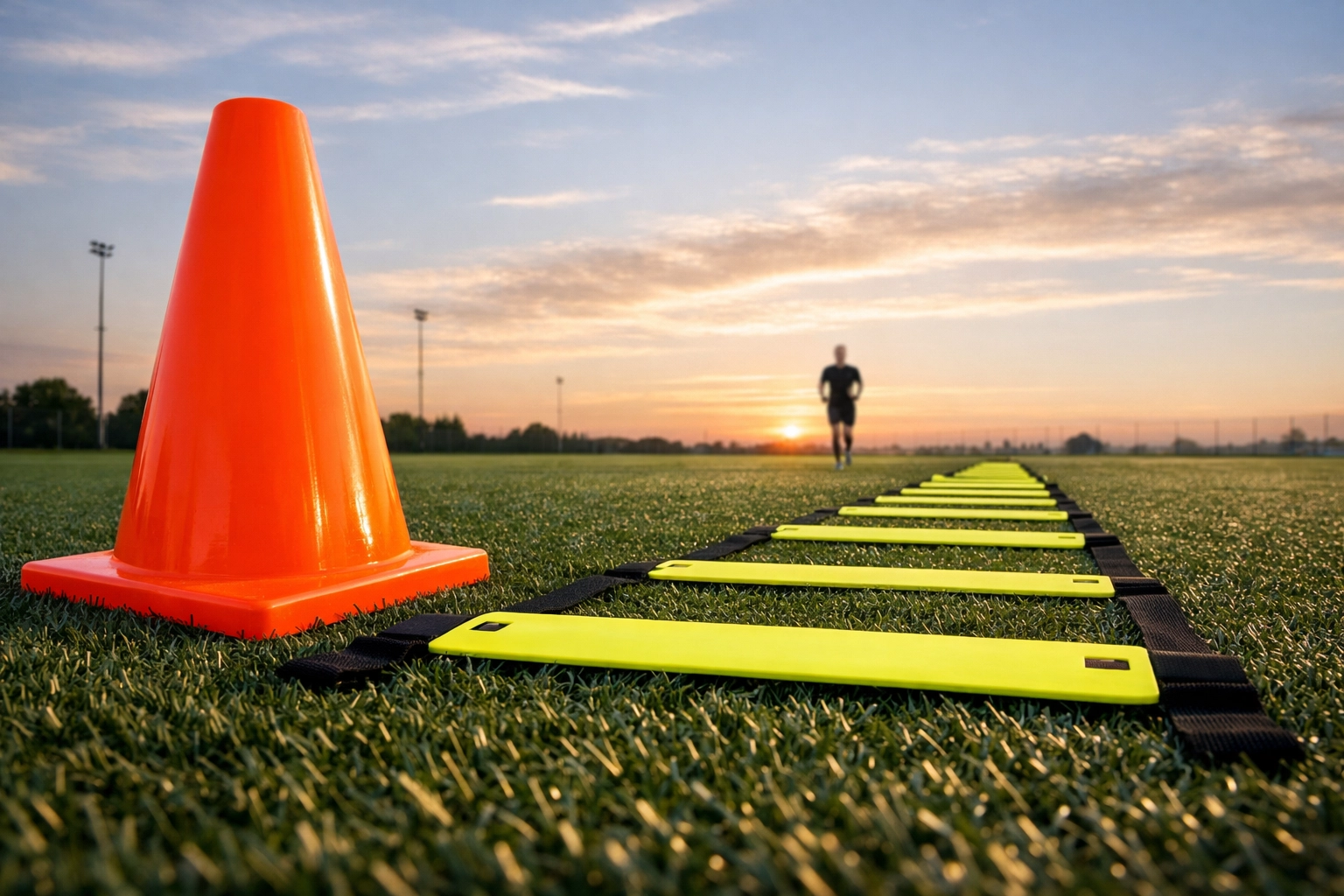
Visual: A single training cone and a speed ladder laid out on a clean training surface, with a coach's clipboard visible, emphasizing organization and safety.


