

If you’re a coach heading into the preseason, you’re probably feeling that familiar mix of excitement and "oh no, where did the summer go?" 😅 You’re not alone. Every coach, from local youth teams to high-level academy scouts, feels the pressure to get their athletes game-ready in a short window of time.
The preseason is your laboratory. It’s where you take a group of players, some who haven’t touched a ball or run a sprint in months, and turn them into a fast, cohesive unit. But to do that effectively, you need more than just a whistle and a clipboard. You need the right coaches sports equipment to maximize every minute on the grass.
In this guide, we’re breaking down the absolute essentials for speed and agility training. We’ll focus on gear that is versatile, easy to set up, and, most importantly, delivers results that translate to the scoreboard.
1. The "Core Four" Speed Essentials
Before we get into the high-tech gadgets, every coach needs a solid foundation. These four items are the "Swiss Army Knives" of sports equipment. If you’re just starting out or working with a tight budget, focus your energy here first.
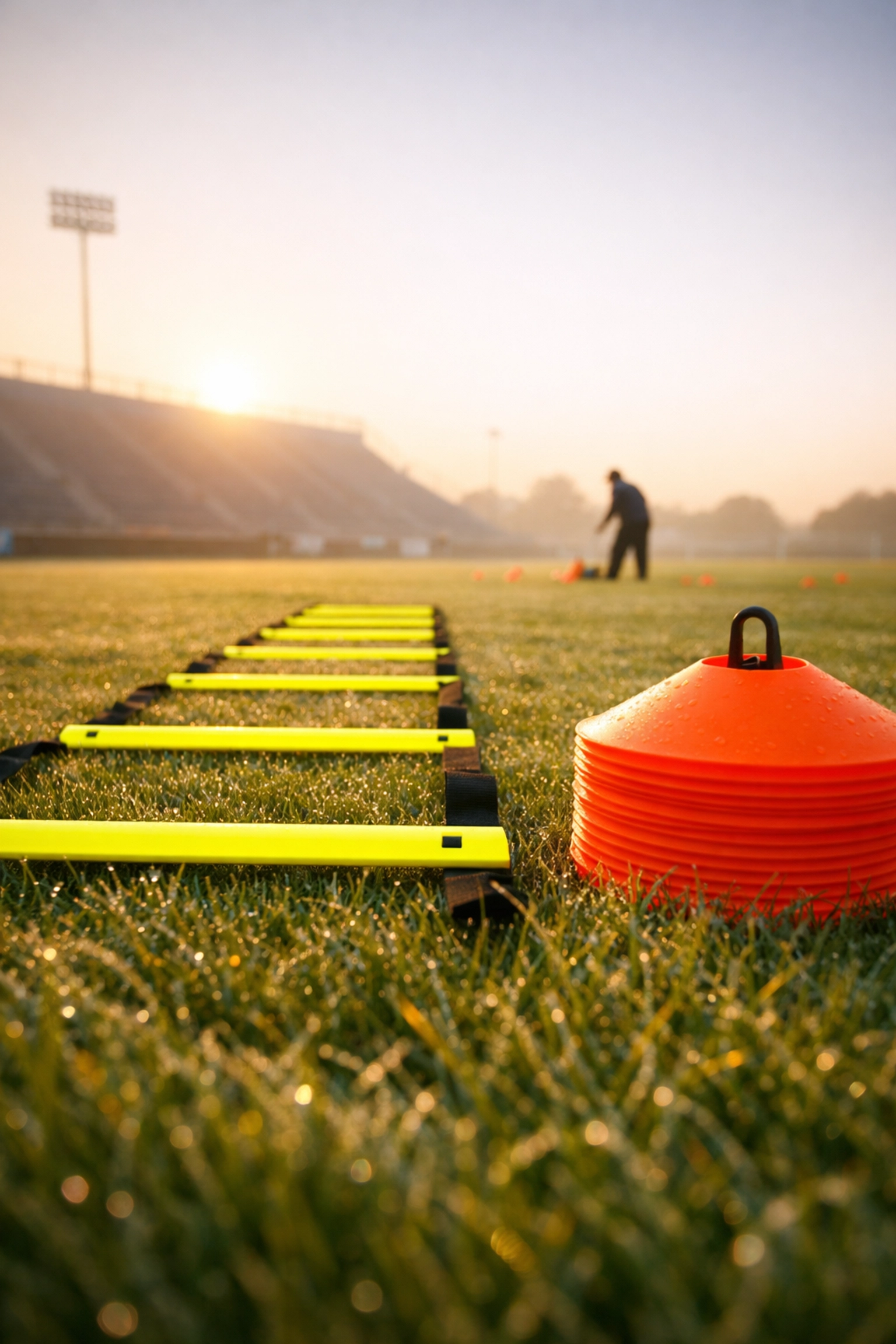
Agility Ladders: The Footwork King
Agility ladders are foundational for a reason. They aren't just about moving fast; they are about teaching the brain to talk to the feet more efficiently.
- Why they work: They improve "neuromuscular coordination." Think of it like teaching your players to dance through a defense.
- The Drill: Have your players perform the "Ickey Shuffle" or "In-and-Outs."
- Pro Tip: Focus on "quiet feet." If the ladder is rattling and moving everywhere, the player is landing too heavy. Aim for light, rhythmic taps.
Training Cones: The Ultimate Boundary
You can never have enough cones. Whether you prefer the classic "witches hat" or the low-profile flat discs, these are essential for mapping out your field.
- Versatility: Use them for marking boundaries, setting up weaving drills, or creating "reaction gates."
- Pro Tip: Use different colors to signify different actions. "Run to the blue cone, shuffle to the yellow." This builds cognitive reaction time alongside physical speed.
Speed Hurdles: Building Explosive Power
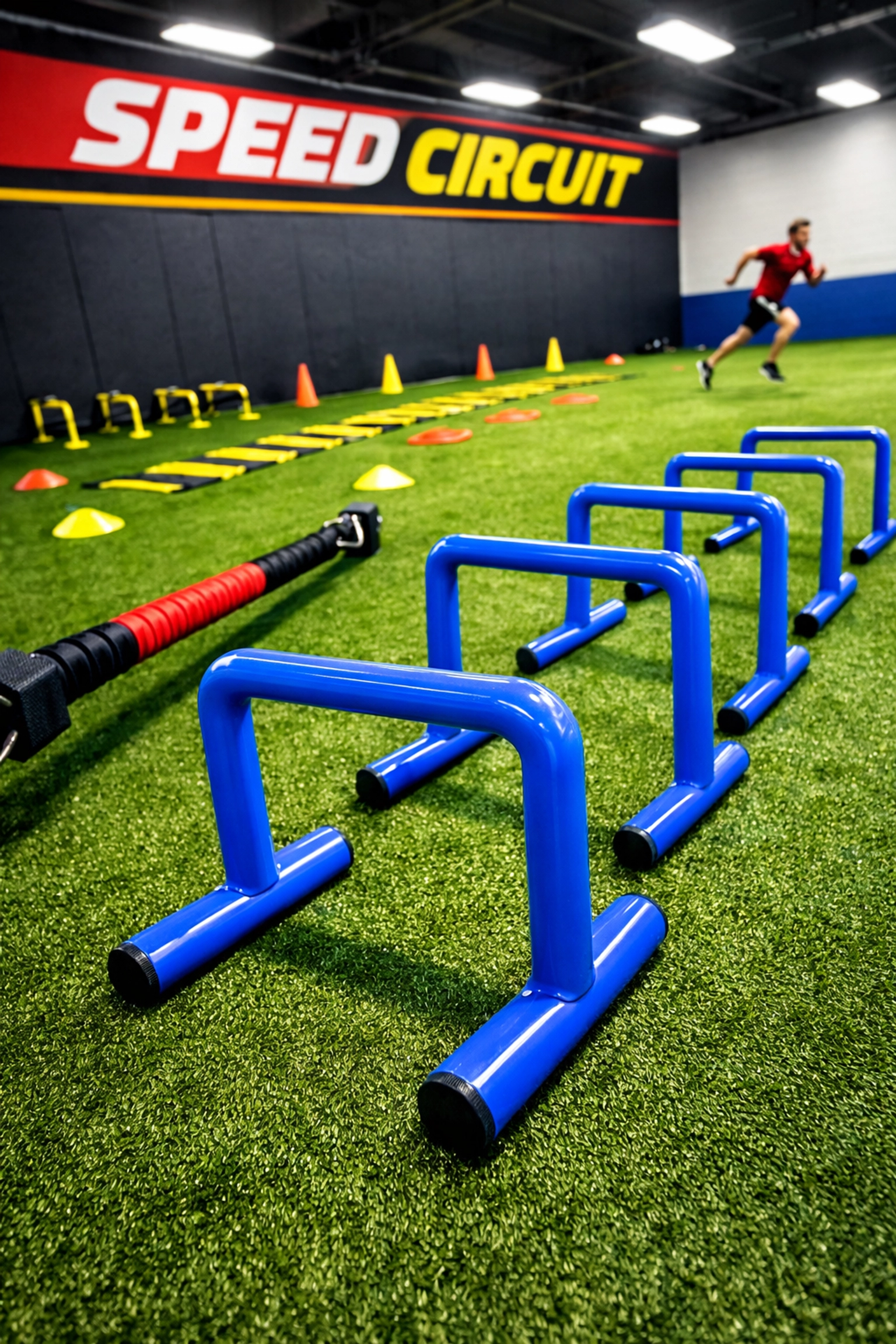
If you want your players to have a "second gear," they need hurdles. Hurdles force a higher knee drive and better hip mobility.
- Height Matters: Start with 6-inch hurdles for quick footwork and move up to 12-inch hurdles for plyometric power.
- The Goal: Ensure players aren't "jumping" over them with both feet like a bunny. They should be "flowing" over them with high knees, maintaining a forward-leaning sprint posture.
Jump Ropes: The Secret Weapon
Often overlooked, the jump rope is one of the cheapest and most effective tools for building ankle stiffness and springiness.
- Timing: 2–3 sets of 60 seconds as part of a warmup.
- Benefit: It strengthens the calves and feet, reducing the risk of common preseason injuries like shin splints.
2. Taking it to the Next Level: Resistance Gear
Once your players have mastered their footwork, it’s time to add some "load." Resistance training is how you turn a "quick" player into an "explosive" player. You can find many of these tools in our agility training collection.
Speed Chutes and Resistance Bands
Running against resistance forces the body to work harder to produce force. When the resistance is removed, the athlete feels "weightless" and moves significantly faster.
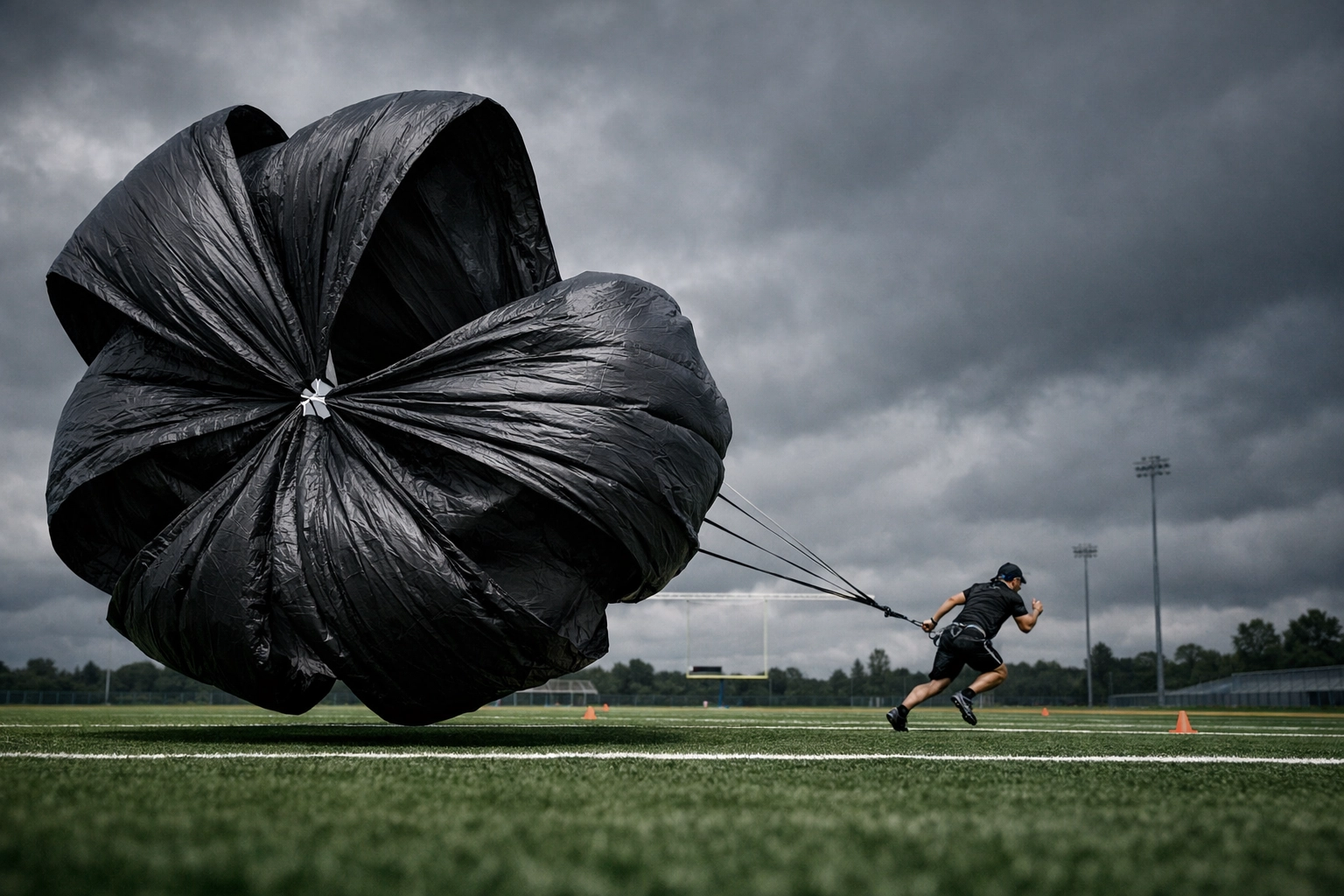
- Speed Chutes: Great for solo work or long-distance sprints (30–40 meters). They provide progressive resistance, the faster the athlete runs, the harder the chute pulls.
- Resistance Bands: Perfect for short-burst acceleration. A partner holds the back of the band while the athlete tries to sprint forward for 5–10 meters. Check out our resistance bands collection for durable options that can survive the rigors of a wet preseason field.
Weight Sleds
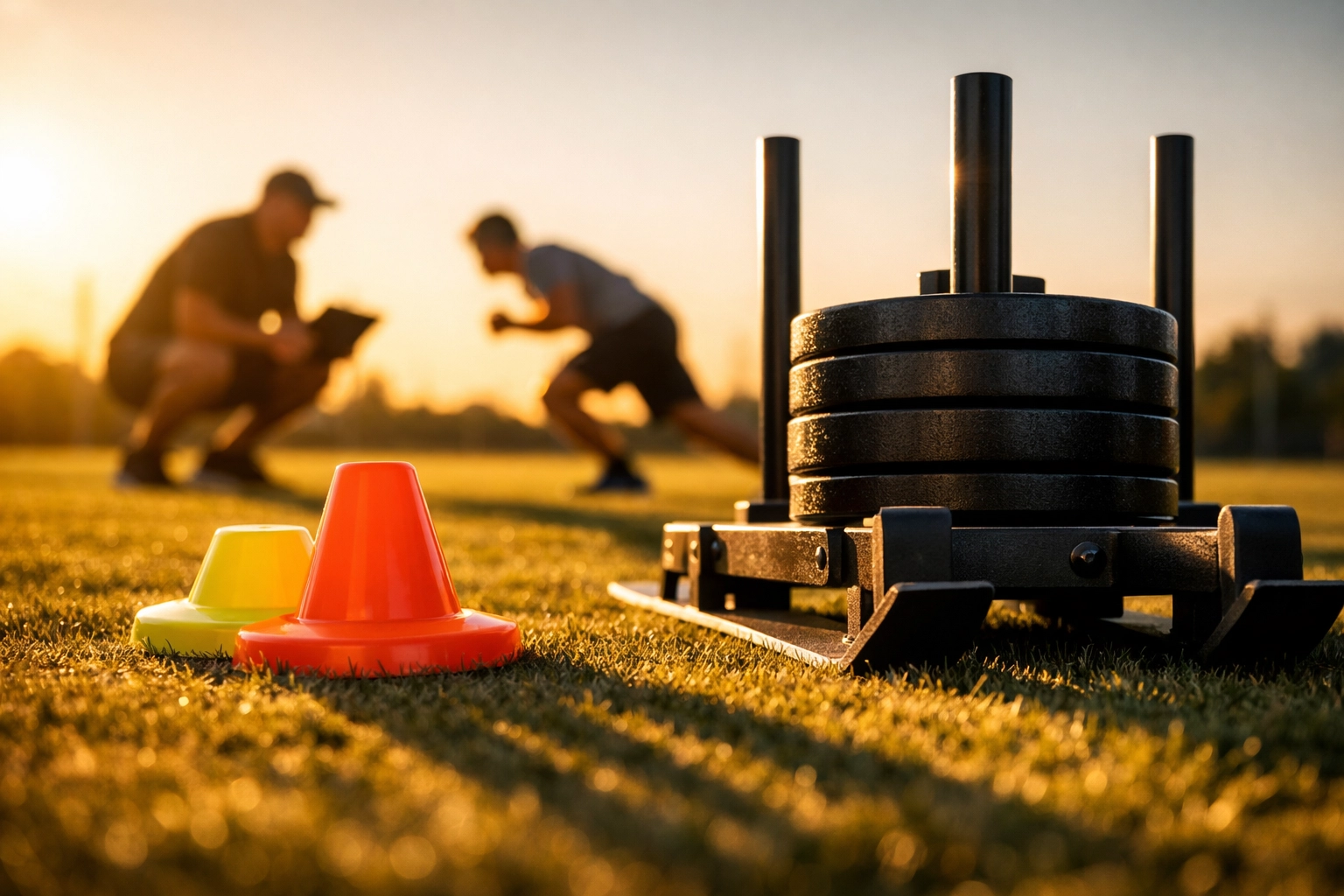
Sleds are the gold standard for developing "drive phase" power. This is the first 10 meters of a sprint where the player is leaning forward at a 45-degree angle.
- The Math: Don't overload the sled! For speed development, keep the weight around 10-15% of the athlete's body weight. If they are struggling to move it, they are building strength, not speed.
3. Designing a 20-Minute Preseason Speed Circuit
As a coach, your biggest enemy is time. You have a lot to cover, tactics, fitness, set pieces. You can’t spend two hours on speed alone. Here is a sample circuit you can run with 15–20 players using minimal gear:
| Station | Equipment | Action | Duration/Reps |
|---|---|---|---|
| 1. The Ladder | Agility Ladder | Lateral shuffle + 5m sprint | 3 reps per player |
| 2. The Gate | 4 Cones | "Z-Drill" (Crossover steps) | 3 reps per player |
| 3. Power Hops | 5 Hurdles | Linear knee drive hops | 4 reps per player |
| 4. The Launch | Resistance Band | 5m resisted sprint into 5m free sprint | 2 reps per player |
Instructions for Coaches:
- Warmup first: Never do speed work on cold muscles. Ensure a 10-minute dynamic warmup.
- Focus on Quality: Speed training is not conditioning. If the players are gasping for air and moving slowly, they aren't getting faster; they’re just getting tired.
- Rest periods: Give them 30–60 seconds of rest between reps. They need a full "recharge" to move at 100% effort.
4. Safety Considerations & Red Flags 🚩
Preseason is the highest-risk time for injuries. Players are coming off a break and their bodies aren't yet calloused to high-intensity movements.
- Watch the Surface: Ensure the grass or turf is even. A hidden hole or a slippery patch can turn a routine cone drill into a rolled ankle.
- The "Hamstring Check": If a player mentions tightness in the back of their leg, stop them immediately. High-speed sprinting is the most common cause of hamstring tears. It’s better they miss one drill than the first four games of the season.
- Progression is Key: Don't start on Day 1 with weighted sled sprints. Spend the first week on footwork and technique, then add resistance in Week 2 or 3.
- Hydration: It sounds basic, but "speed fatigue" often looks like poor coordination. Usually, it’s just dehydration. Ensure water breaks every 15–20 minutes.
5. Common Coaching Mistakes to Avoid
Even the best coaches fall into these traps during the preseason rush.
- Over-complicating Drills: If it takes you 5 minutes to explain a drill, it's too complicated. Keep the patterns simple so the players can focus on speed, not thinking.
- Using Speed Drills as Punishment: "Missed a goal? Do the ladder!" This creates a negative mental association with speed work. Speed work should be the most exciting part of the session.
- Ignoring the "Arm Drive": Many coaches focus only on the feet. Remind your players that "hands go from hip to chin." Fast arms lead to fast feet!
- Neglecting Recovery: Speed is taxing on the Central Nervous System (CNS). Don't do heavy speed work two days in a row.
Frequently Asked Questions (FAQ)
Q: How many times a week should we do speed training in preseason?
A: 2 to 3 times a week is the sweet spot. This allows for 48 hours of recovery between sessions.
Q: Can I use these drills for all ages?
A: Yes! For younger kids (under 10), focus more on fun and "game-like" drills using cones. For teenagers and adults, you can introduce more technical equipment like resistance bands and hurdles.
Q: What is the most important piece of gear for a coach on a budget?
A: Cones. You can replicate almost any drill with just cones if you’re creative enough. Check out our football training gear for budget-friendly bundles.
Q: Is speed training different for different sports?
A: The fundamentals (acceleration, deceleration, change of direction) are the same across soccer, football, rugby, and basketball. The only difference is the distance of the sprints and the type of movement (lateral vs. linear).
Ready to Level Up Your Season?
The preseason passes in the blink of an eye. By investing in the right tools and having a clear plan, you aren't just "running" your players: you’re building them.
Remember, speed is a skill. It can be taught, it can be practiced, and it can be won. Grab your gear, set out your cones, and let’s get to work! 🏃💨
Next Steps for Coaches:
- Audit your kit bag: See what’s broken or missing from last season.
- Pick 3 drills: Master them before your first session so you can explain them in 30 seconds.
- Check out our latest gear: Browse the Rapid Sports Team Collection to stock up for the season.
- Stay safe: Always prioritize technique over raw speed in the first week.
Good luck out there, Coach! You’ve got this.


