

If you’ve ever woken up the day after a heavy session feeling like your legs are made of lead, you are not alone. Whether you are sprinting on the track, hitting the pitch, or lifting in the gym, pushing your body to the limit is only half of the equation. The other half: the part that actually makes you faster and stronger: is how you recover.
Many athletes focus entirely on the "work" and treat recovery as an afterthought. But if you’re serious about your performance, you need a dedicated mobility kit. You don’t need a clinical setup or a personal physiotherapist to see results. You just need a few key tools and a consistent routine.
In this guide, we’re breaking down the five essential recovery tools every athlete should have in their bag to stay supple, injury-free, and ready for the next session.
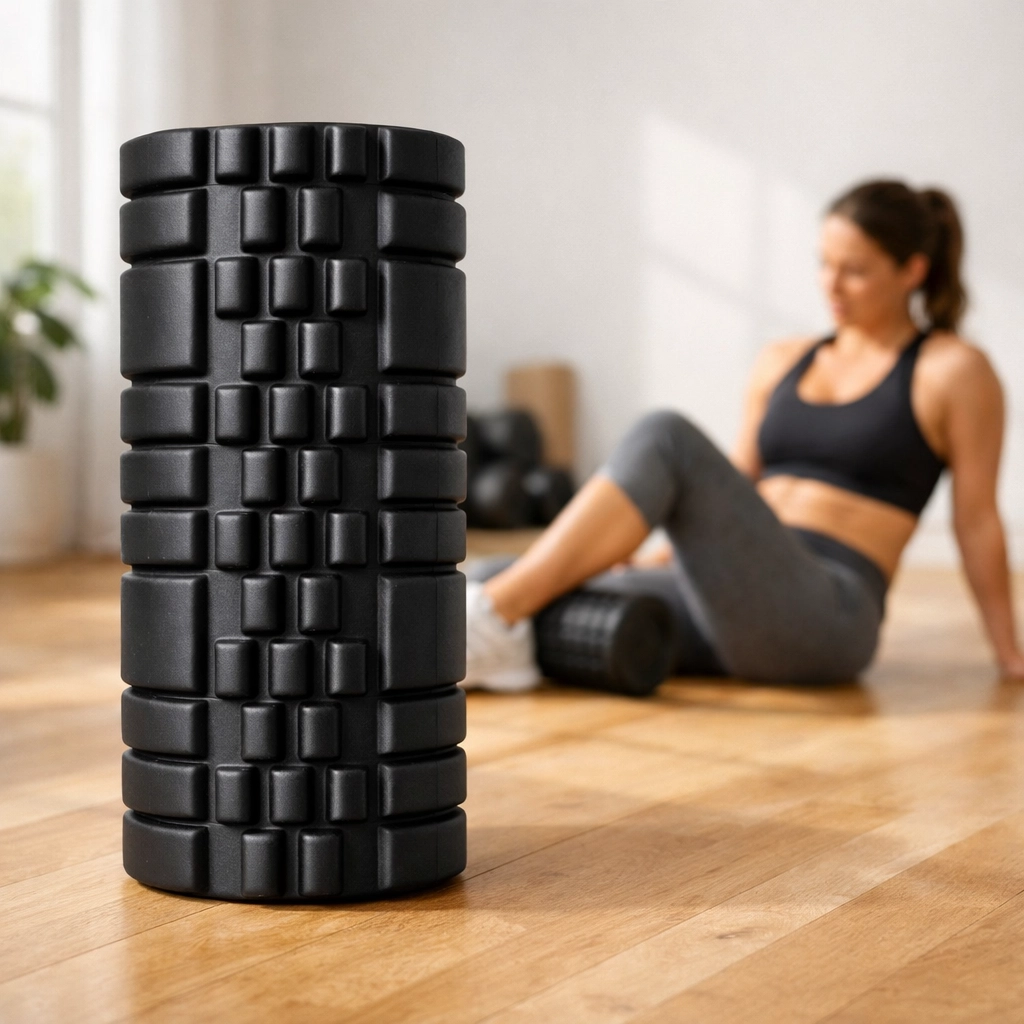
1. Foam Rollers and Massage Balls: The DIY Massage
If you’re new to the world of mobility, the foam roller is your best starting point. Think of it as a way to "brush" your muscles. Just like you brush your teeth to keep them clean, you roll your muscles to keep them moving smoothly.
Foam rolling: often called self-myofascial release: helps break up tight spots in your fascia (the connective tissue surrounding your muscles). When these spots get "glued" together from hard training, it limits your range of motion and slows down your recovery.
How to use it:
- Target the big groups: Focus on your quads, hamstrings, and upper back.
- Move slowly: This isn't a race. Spend about 30–60 seconds on each muscle group.
- Breathe: If it feels tight, don’t hold your breath. Steady breathing helps the muscle relax under the pressure.
- Use massage balls for precision: For smaller spots like the arches of your feet or your glutes, a firm massage ball is much more effective than a large roller.
You can find a variety of rolling tools in our gym collection to get your baseline kit started.
2. Massage Guns: Precision Percussion Therapy
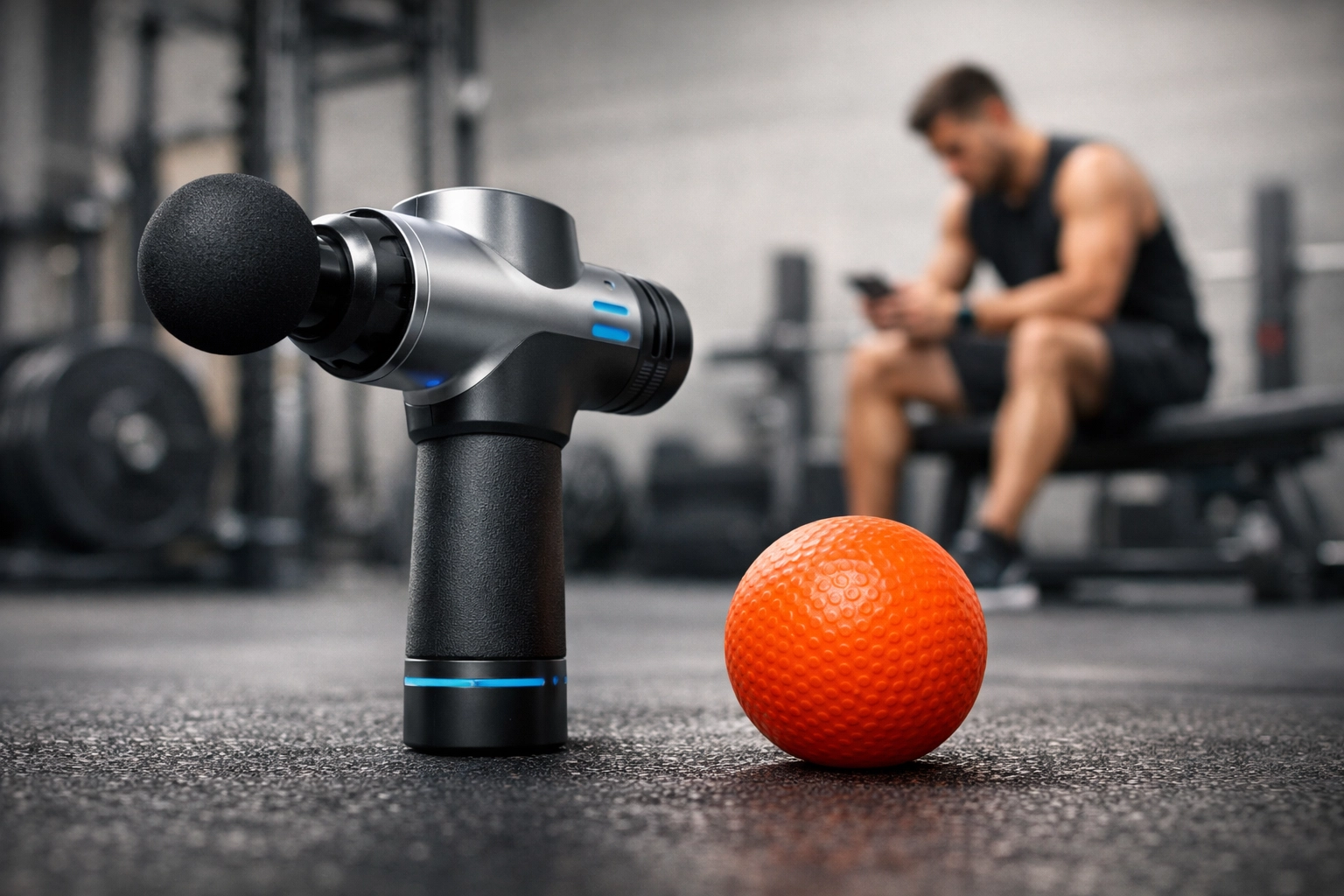
Massage guns have become a staple on every professional sideline, and for good reason. They use percussive therapy: fast, rhythmic pulses: to reach deep into the muscle tissue. This boosts blood flow and sends signals to your brain to tell the muscle to relax.
The best part? They are incredibly fast. While a foam roller might take ten minutes to cover your whole body, a massage gun can provide relief in just a couple of minutes.
Actionable tips:
- Don't overdo it: You only need 30 to 120 seconds per muscle area. Using it for longer doesn't actually provide more benefit and can leave the area feeling bruised.
- Warm up with it: Use it on a lower setting for 30 seconds on your target muscles before a workout to "wake them up" and increase blood flow.
- Avoid bone: Never use a massage gun directly on a joint or bone. Stay on the "meaty" part of the muscle.
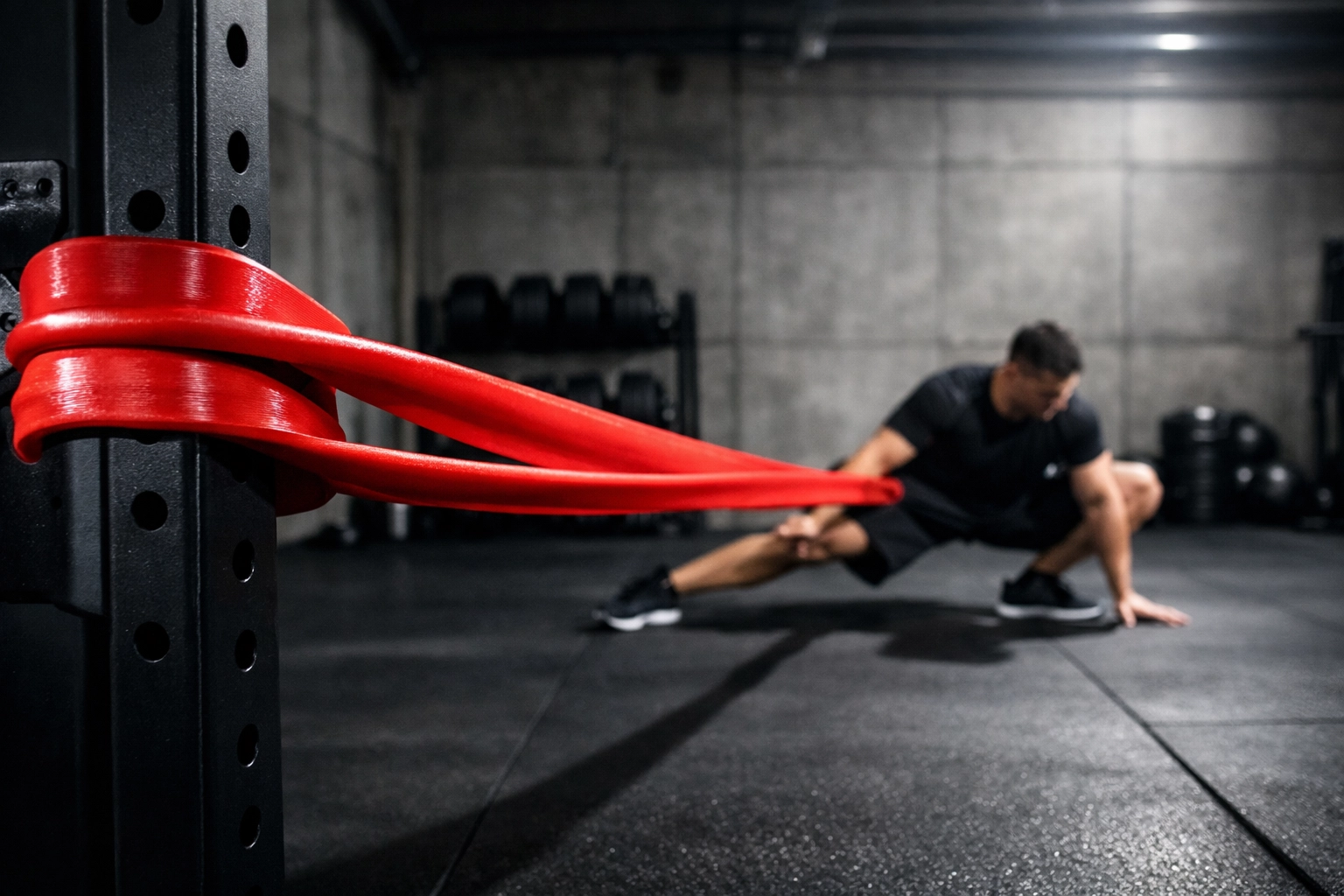
3. Resistance Bands: Active Loading and Mobility
Most people think of resistance bands as just for strength training, but they are secret weapons for mobility.
While foam rolling relaxes the muscle, resistance bands help you build active mobility. This means you aren't just flexible; you are strong throughout your entire range of motion. This is the key to preventing injuries like pulled hamstrings or rolled ankles.
Key mobility drills:
- Banded Hip Distraction: Loop a heavy band around a sturdy post and your hip to "pull" the joint open while you stretch.
- Ankle Flossing: Use a light band to add tension while doing ankle circles to improve your squat depth.
- Shoulder Pass-Throughs: Hold a light band with a wide grip and move your arms from your hips to your lower back to keep your shoulders healthy.
If you’re looking for a structured way to improve your movement, check out our training ebooks for specific mobility routines.
4. Compression Gear: Managing Fluid and Fatigue
After a long run or a heavy leg day, your limbs can feel swollen and heavy. This is often due to metabolic byproducts and fluid pooling in your extremities. Compression gear: whether it’s simple sleeves or high-tech pneumatic boots: uses pressure to help push that fluid back toward your heart.
Why it works:
- Improved Circulation: By squeezing the limbs, compression tools encourage blood flow, which brings fresh oxygen to tired muscles.
- Reduced Soreness: Studies show that wearing compression gear post-workout can reduce the severity of Delayed Onset Muscle Soreness (DOMS).
- Passive Recovery: This is the easiest form of recovery. You can wear compression socks or sleeves while traveling or sitting at a desk.
Pro Tip: If you use compression boots, aim for a session of 15–20 minutes after your hardest training day of the week.
5. Temperature Therapy: Cold and Heat
The debate between ice and heat is as old as sports itself, but the reality is that both have a place in a serious athlete's kit.
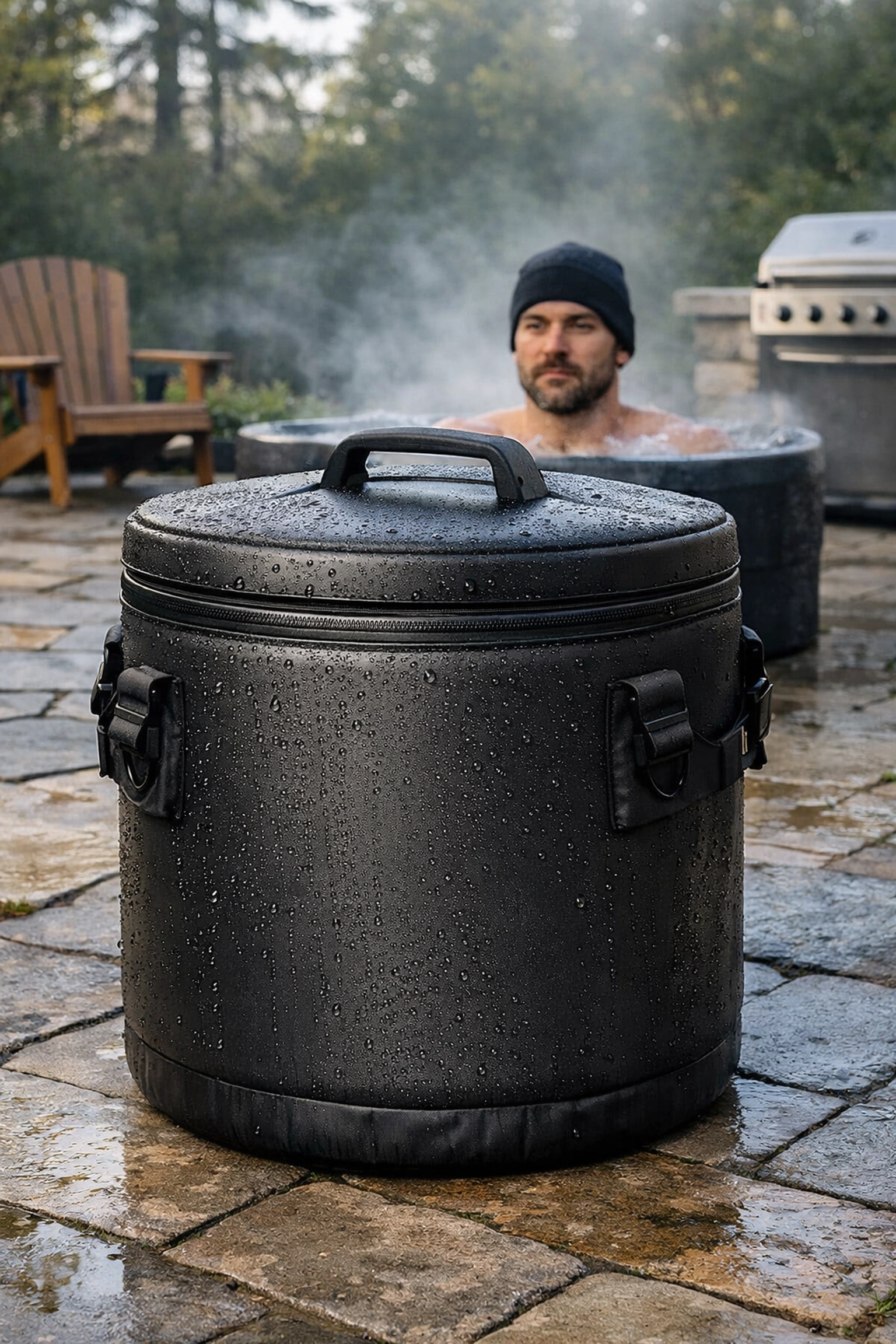
Cold Therapy (The Ice Pod)
Cold therapy is fantastic for reducing acute inflammation and "numbing" soreness after a high-impact session.
- When to use: Immediately after a game or a high-intensity interval session.
- Duration: 10–12 minutes is usually the sweet spot for a cold soak.
Heat Therapy
Heat is better for chronic stiffness and preparing your body for movement. It relaxes the tissues and increases elasticity.
- When to use: In the morning if you feel stiff, or 20 minutes before a session to loosen up.
Common Recovery Mistakes to Avoid
Even with the best gear, you can still get it wrong. Here are a few "red flags" to watch out for:
- Chasing Pain: Recovery should feel like "productive discomfort," not sharp pain. If you are wincing or tensing up while foam rolling, you are pressing too hard.
- Replacing Sleep: No massage gun or ice bath can replace 8 hours of quality sleep. Tools are the "extra 10%," but sleep is the foundation.
- Ignoring Consistency: Rolling once a month won't do much. Aim for 2-3 short sessions a week to see a real difference in how you move.
- Static Stretching While Cold: Avoid long, static stretches before you’ve warmed up. Use your mobility tools to get the blood flowing first.
Building Your Personal Mobility Kit
You don't need to buy everything at once. If you’re building your kit from scratch, follow this "level up" approach:
- Level 1 (The Essentials): A medium-density foam roller and a set of resistance bands. This covers 80% of your needs.
- Level 2 (The Performance Pack): Add a massage gun for quick sessions and a massage ball for foot/glute work.
- Level 3 (The Pro Setup): Incorporate compression boots and an ice pod for high-volume training phases.
Your 10-Minute Daily Routine
If you’re short on time, do this every night before bed:
- 2 mins: Foam roll quads and upper back.
- 2 mins: Massage gun on calves and glutes.
- 3 mins: Banded hip stretches.
- 3 mins: Deep breathing in a squat position.
Ready to Move Better?
Performance isn't just about how hard you can push; it’s about how quickly you can bounce back. By investing in a few simple tools and a consistent routine, you’ll find that those "heavy leg" days happen less often, and your top speed stays within reach.
If you have questions about which gear is right for your specific sport, feel free to reach out to us on our contact page. We’re here to help you get the most out of every training session.
Next Step: Pick one tool this week: whether it’s a roller or a band: and commit to using it for 5 minutes a day. Your body will thank you by the time the weekend game rolls around!
FAQ
Q: Can I use these tools if I have an active injury?
A: Always consult a professional first. While mobility tools help with "soreness," they can sometimes aggravate a tear or a strain if used incorrectly.
Q: Do I need the most expensive massage gun?
A: Not necessarily. While high-end models have more settings, a basic percussion tool will still provide significant benefits for most athletes.
Q: How often should I replace my resistance bands?
A: Check them weekly for small nicks or "whiteness" in the rubber. If you see a tear, replace them immediately to avoid injury. Most heavy-use bands last 6–12 months.
Explore our full range of agility and performance gear to complement your new recovery routine!


