

If you coach any sport that involves running, football, rugby, basketball, track, you already know this: the first three steps win games. The athlete who explodes off the line first gets to the ball first, makes the tackle, beats the defender. It's that simple.
But here's the problem most coaches face: teaching explosive starts is really hard. You can tell an athlete to "push harder" or "drive forward" all day long, but without the right resistance, their body doesn't learn what max power actually feels like.
That's where speed sleds come in. And no, we're not talking about fancy equipment that sits in the corner collecting dust. We're talking about must-have sports equipment for coaches who want real, measurable improvements in their athletes' acceleration.
Why Starting Speed Changes Everything
Think about it, most plays in sport happen in the first 10-20 meters. Your striker doesn't need to run a marathon. They need to beat their marker in three explosive steps. Your defensive back needs to close a gap in under two seconds.
Traditional sprint training helps, sure. But it's missing something crucial: resistance at the exact moment power matters most, that first push off the ground.
Speed sleds fix this by creating instant resistance the second your athlete moves. Their nervous system immediately learns: "I need to fire harder, faster, and with better mechanics to overcome this load."
What Sleds Actually Do to Your Athletes' Bodies
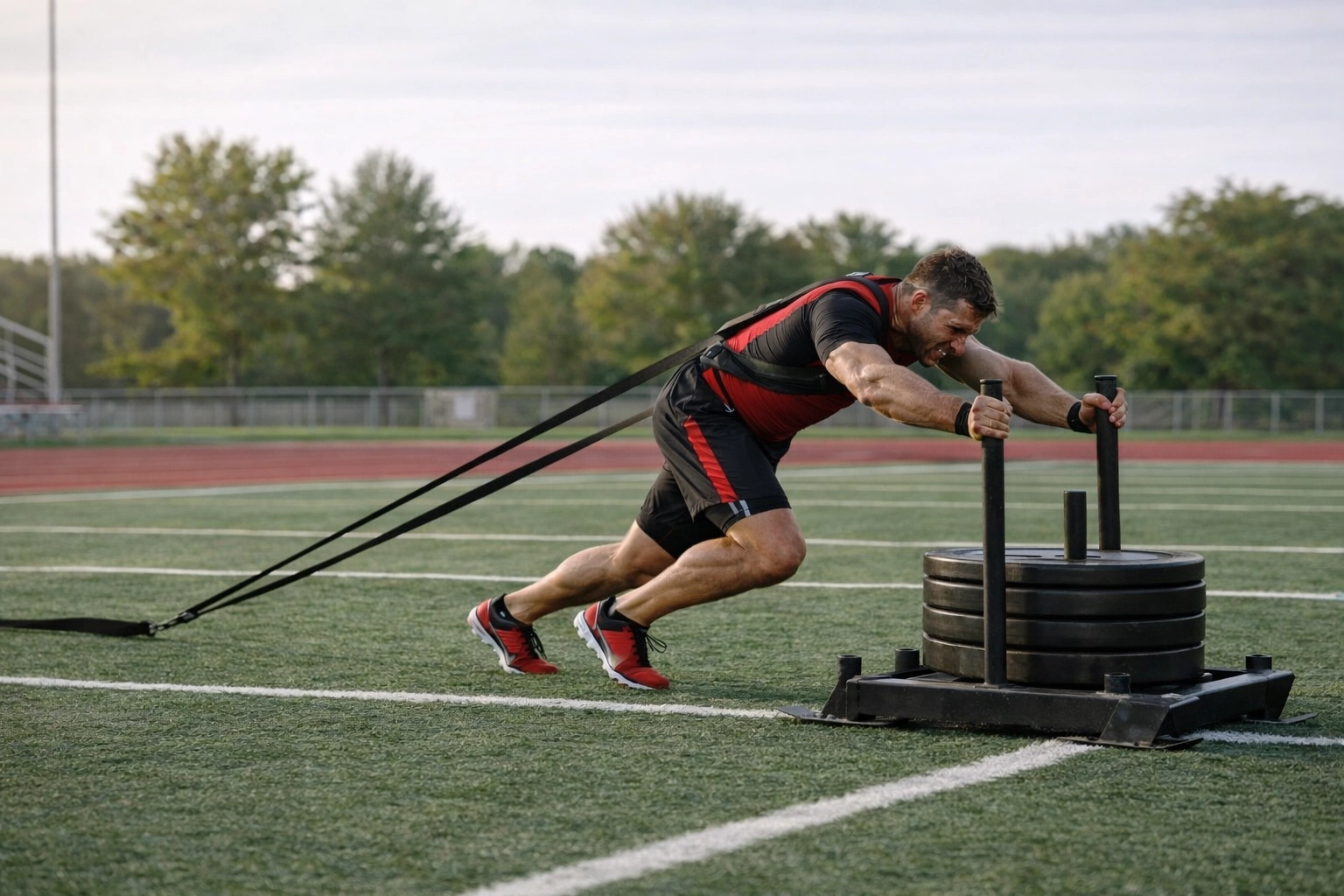
Here's the simple science: when you attach a sled to your athlete, their body has no choice but to recruit more muscle fibers on every single step. The resistance forces them to:
Generate more horizontal force – Instead of popping straight up (which wastes energy), they drive forward with purpose. The sled teaches proper forward lean without you having to explain physics.
Fire their nervous system harder – Over time, through what researchers call "contrast training", alternating sled sprints with unloaded sprints, the athlete's nervous system "up-regulates." Translation? They maintain that powerful firing pattern even when the sled comes off.
Build concentric power – Unlike hill sprints or other resistance methods, sleds are almost entirely concentric movement (pushing, not landing). This means less muscle damage, less soreness, and faster recovery. Your athletes can train sled work 2-3 times a week without burning out.
The Real Numbers: What Studies Actually Show
You're probably thinking, "Sounds great in theory, but does it actually work?" Fair question. Let's look at the research.
Study #1: The 6-Week Game Changer
Harrison and Bourke had athletes perform six 20-meter sled sprints twice weekly for six weeks. The load? Just 13% of their bodyweight. Results? Significant improvements in acceleration tests measuring time to 5 meters. We're talking measurable differences in their explosive first steps.
Study #2: High School Athletes See Real Gains
A 2019 study tracked 50 high school athletes over 8 weeks. They used loaded sleds twice a week, heavy loads pushed for short distances. After 8 weeks, sprint performance improved across the board. The athletes who worked with heavier loads on shorter distances saw the greatest improvements.
The takeaway? This isn't elite-only equipment. Regular athletes, trained consistently with proper loads, get faster. Period.
Why Sleds Beat Other Acceleration Tools
You've got options, parachutes, bands, hills, manual resistance. So why are sleds the go-to for coaching starts?
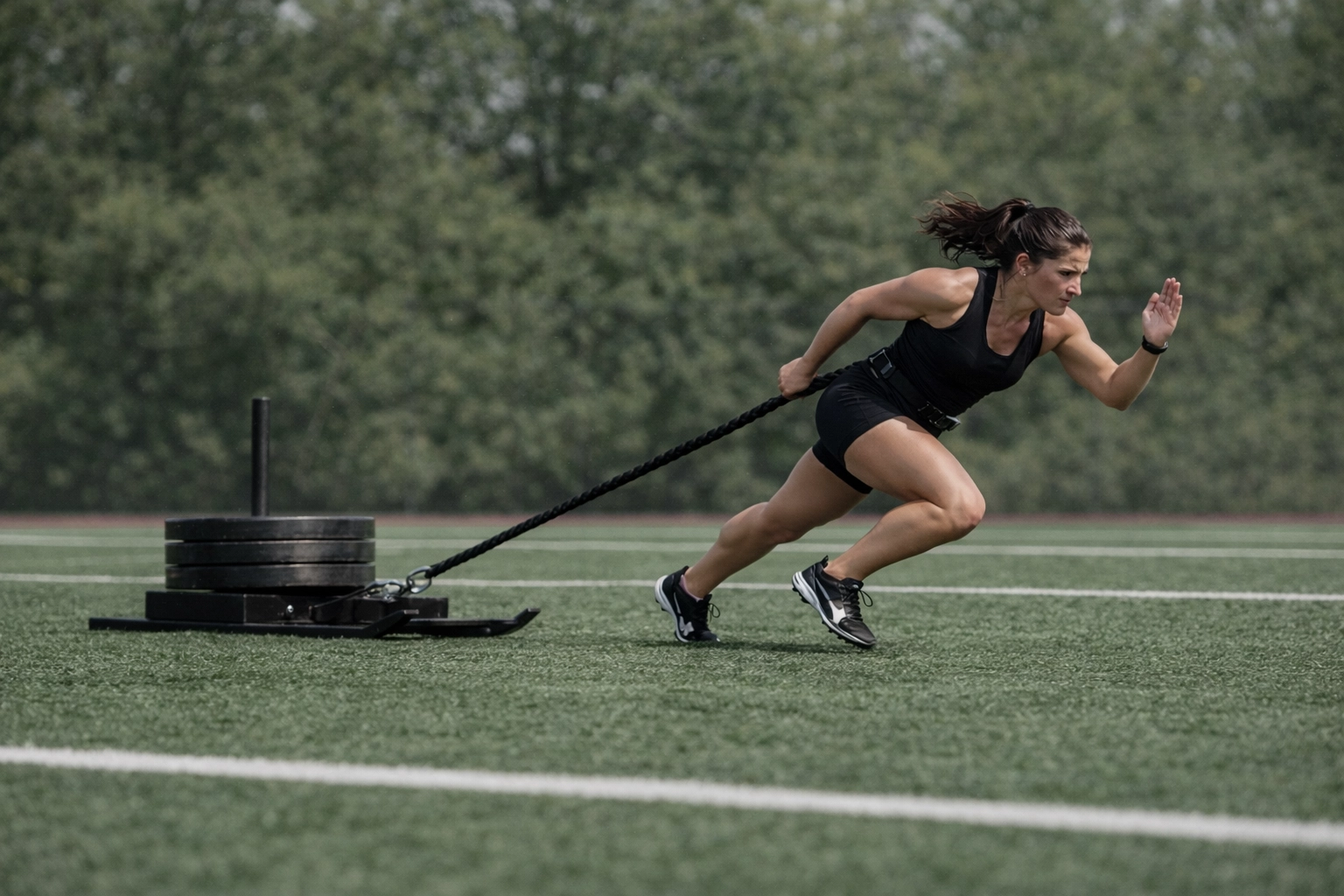
Consistent resistance – Unlike parachutes that catch wind inconsistently, or bands that change tension, sleds provide steady, predictable resistance every single rep.
Instant feedback – When your athlete's mechanics break down, the sled won't move properly. It's a built-in coaching cue you don't have to verbalize.
Safer than hills – Hills teach forward lean, yes. But they also change foot strike patterns and can increase injury risk. Sleds keep athletes on flat ground with controlled resistance.
Less eccentric damage – Comparing to resisted bands or overspeed training, sleds cause significantly less muscle soreness. This means you can integrate them into weekly training without compromising game-day performance.
Scalable for every athlete – Got a 14-year-old and a 24-year-old pro? Same sled, different loads. Simple.
If you're building a complete training toolkit, pairing sled work with equipment like resistance bands or harness systems gives you maximum flexibility for different training phases.
How to Actually Use Speed Sleds (The Practical Guide)
Alright, enough theory. Here's how to implement sled training this week:
Step 1: Calculate the Right Load
Start with 12-13% of your athlete's bodyweight. Yes, this seems light. That's the point. You're training speed, not max strength. A 70kg athlete should pull roughly 9kg.
For younger or newer athletes, start at 10% and work up.
Step 2: Keep Distances Short
Focus on 5-20 meters max. Remember, you're targeting explosive starts, not endurance. The critical acceleration phase happens in the first 8 steps: that's your training zone.
Step 3: Volume and Rest
- 4-10 sprints per session depending on athlete experience
- 1-4 minutes rest between sprints – full recovery is non-negotiable
- 2-3 sessions per week – typically early in the week when athletes are fresh
Step 4: Use Contrast Training
This is where magic happens. Have your athlete perform:
- 2-3 sled sprints (loaded)
- Immediately followed by 2-3 unloaded sprints
Their nervous system stays "turned up" from the sled work, but now without resistance. Many athletes report feeling lighter and faster on unloaded sprints: this is the training effect taking hold.
Common Mistakes (And How to Avoid Them)
Even with simple equipment, coaches make predictable errors:
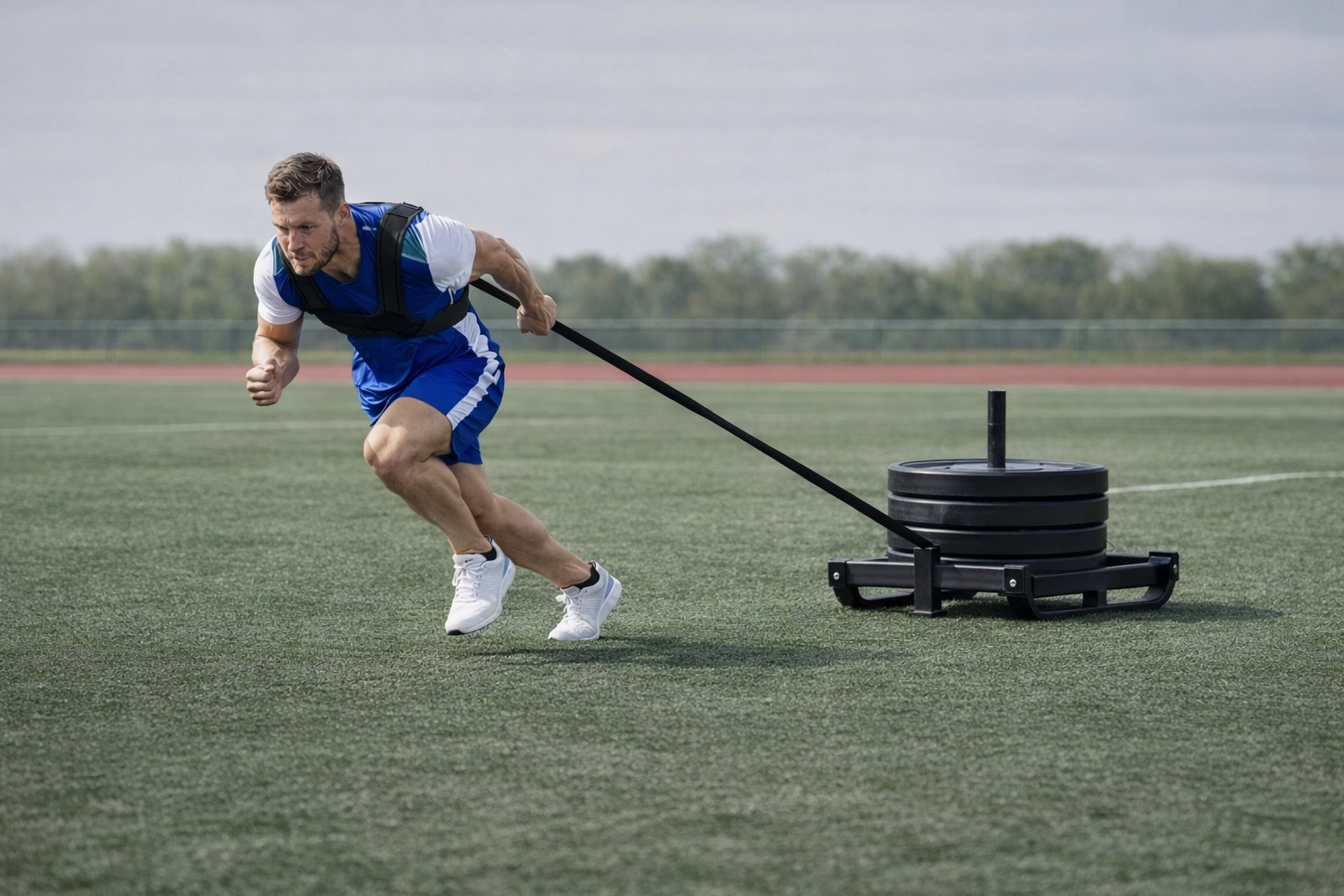
❌ Using too much weight – "More is better" doesn't apply here. If your athlete's sprint mechanics completely change or their time increases by more than 10%, the load is too heavy.
❌ Training too long – A 40-meter sled sprint isn't acceleration training anymore. It's conditioning. Different goal, different adaptation.
❌ Skipping the warm-up – Sleds demand max effort from step one. Dynamic warm-ups aren't optional. Budget 10-15 minutes before sled work.
❌ Training when fatigued – Sled work is neural, not metabolic. If your athlete is tired from yesterday's match, skip it. Quality over quantity always wins with speed training.
Red Flags to Watch For
Stop the session if you see:
- Athlete's head drops (sign of fatigue or too much load)
- Steps getting choppy or shortened significantly
- Lower back rounding (load is too heavy)
- Athlete can't maintain effort across sets (they're not recovered)
Getting Started: Your First Sled Session
If you're new to sled training, here's a plug-and-play first workout:
Warm-up (10 minutes):
- Light jogging
- Dynamic stretches (leg swings, lunges)
- 3-4 build-up sprints (50-75% effort)
Main Work (20 minutes):
- 3 x 10m sled sprints @ 10% bodyweight (1-2 min rest)
- 3 x 10m unloaded sprints (1-2 min rest)
- 3 x 15m sled sprints @ 12% bodyweight (2 min rest)
- 3 x 15m unloaded sprints (2 min rest)
Cool-down (5 minutes):
- Easy jogging
- Static stretching
That's it. Simple, effective, repeatable.
Why This Matters for Your Coaching
Here's the bottom line: speed sleds aren't just another piece of equipment to clutter your storage. They're a teaching tool that provides what verbal cues can't: instant, measurable resistance that forces athletes to generate real power.
You'll see improvements in:
- First-step explosiveness (the game-changer)
- Forward lean mechanics
- Ground contact power
- Overall acceleration times
And because recovery is faster than other resistance methods, you can train frequently without overloading your athletes.
If you're serious about developing faster athletes: whether you're coaching youth teams or competitive squads: speed sleds deserve a spot in your essential gear. Start with 10% bodyweight, keep distances short, and focus on quality reps.
Your athletes will feel the difference in weeks. You'll see it in their game-day performance. That's the science of starts, made simple.
Want to build out your complete speed training system? Check out our full range of coaching equipment at Rapid Sports to give your athletes every advantage.


