

If you're looking to get faster and more agile, you're not alone. Whether you're a weekend warrior trying to keep up with younger players or a serious athlete chasing personal bests, the right equipment can make all the difference. But with so many options out there, it's easy to feel overwhelmed.
Don't worry - we've got you covered. This guide breaks down everything you need to know about cross-training equipment that actually works for building speed and agility. No fluff, just the gear that delivers results.
1. Agility Ladders: Your Foundation for Quick Feet
Let's start with the basics. Agility ladders are the Swiss Army knife of speed training - versatile, affordable, and incredibly effective for developing footwork patterns that translate to real-world performance.

Why They Work
Agility ladders force your brain and feet to work together at high speed. Every step requires precision, coordination, and rapid-fire decision making. This combination develops:
• Faster foot turnover - the key to acceleration
• Better body control - essential for changing direction quickly
• Improved coordination - your brain learns to fire movement patterns faster
• Enhanced proprioception - knowing exactly where your body is in space
What to Look For
Not all ladders are created equal. Here's what separates the good from the great:
• Flat, wide rungs - 15-20 inches wide gives you room to work • Adjustable spacing - lets you customize drills for different goals • Durable materials - look for heavy-duty webbing that won't tear • Proper length - 15-20 feet is perfect for most training
Pro Tip: Start with basic two-foot hops and progress to single-leg patterns. Master the fundamentals before getting fancy with lateral shuffles and crossover steps.
2. Resistance Training Equipment: Building Explosive Power
Speed isn't just about moving your legs fast - it's about generating maximum force in minimal time. That's where resistance training equipment comes in.
Speed Chutes and Parachutes
Think of these as your personal headwind machine. Speed chutes add drag during sprinting, forcing you to drive harder with each step.
Key Benefits: • Develops explosive starts and acceleration • Improves running form under resistance • Builds sport-specific power patterns • Easy to use anywhere with open space
Training Tip: Use chutes for 20-30 meter sprints, then immediately do the same distance without resistance. Your body will feel like it's flying.
Weight Sleds and Resistance Trainers
These bad boys are game-changers for building raw pulling and pushing power. Whether you're dragging weight behind you or pushing it forward, sleds work your entire kinetic chain.
• Sled pulls: Build posterior chain strength and acceleration mechanics • Sled pushes: Develop forward drive and leg power • Lateral drags: Target the muscles used in cutting and direction changes
Safety Note: Start with 10-15% of your body weight and focus on maintaining good form. It's better to move lighter weight perfectly than heavy weight poorly.
3. Plyometric Equipment: Unleashing Your Inner Spring
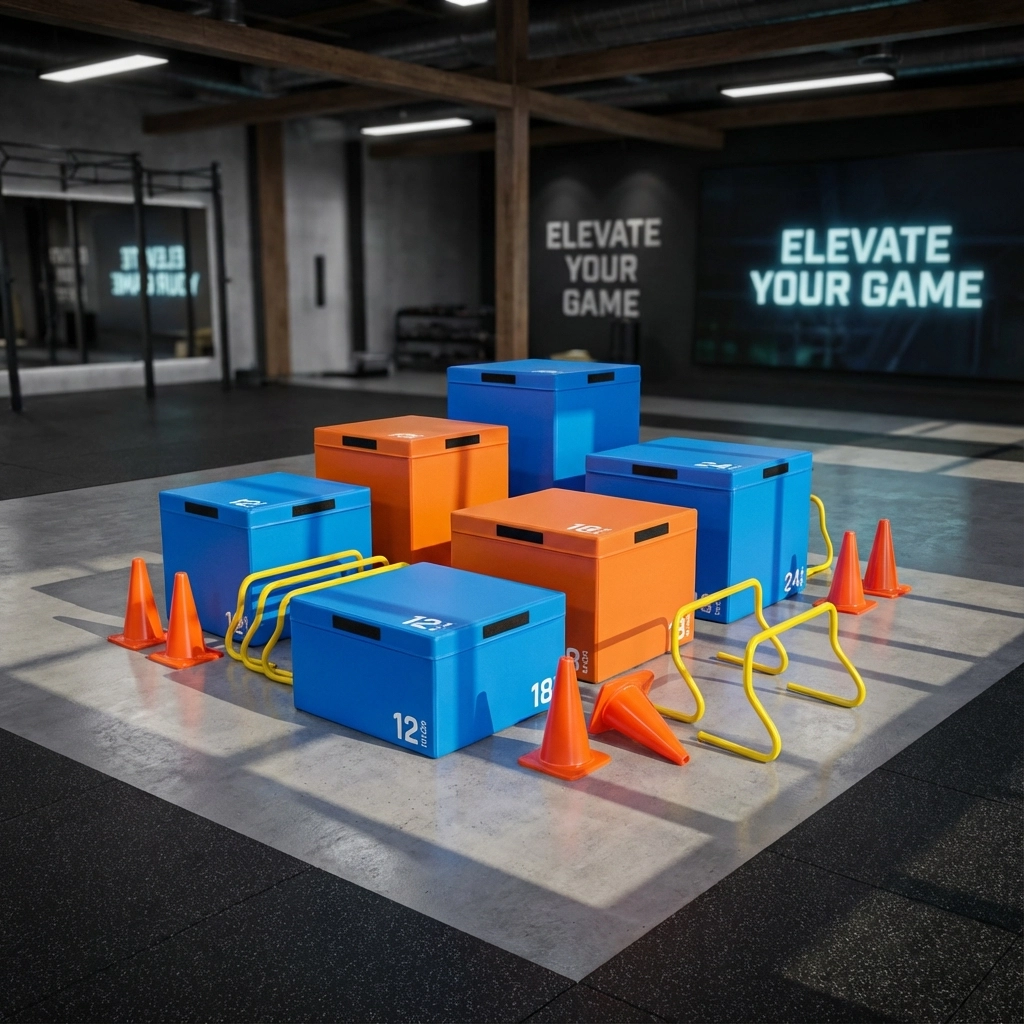
Plyometric training is all about teaching your muscles to contract explosively. The right equipment makes these exercises safer and more effective.
Plyometric Boxes
These aren't just for CrossFit athletes. Plyo boxes develop the explosive power that separates good athletes from great ones.
Essential Exercises: • Box jumps for vertical power • Depth jumps for reactive strength • Lateral bounds for cutting power • Step-ups for single-leg strength
Box Height Guide:
• Beginners: 12-18 inches
• Intermediate: 18-24 inches
• Advanced: 24-30+ inches
Speed Hurdles
Speed hurdles force you to lift your knees higher and cycle your legs faster - exactly what you need for improved running mechanics.
• 6-inch hurdles: Perfect for beginners and speed endurance work • 12-inch hurdles: Standard height for most agility training • 18+ inch hurdles: Advanced athletes working on stride length
4. Support Equipment: The Finishing Touches
Agility Cones and Markers
Simple but essential. Cones create the framework for virtually every agility drill. Get the bright orange ones - you want to see them clearly during high-speed movements.
Must-Have Cone Drills: • 5-10-5 shuttle for acceleration and deceleration • T-drill for multi-directional movement • Box drill for tight turning radius
Resistance Bands
Resistance bands are perfect for dynamic warm-ups and strength work that directly transfers to speed and agility.
• Mini bands: Hip activation and lateral movement patterns
• Power bands: Assisted jumping and overspeed training
• Tube bands: Sport-specific movement patterns
5. How to Choose Equipment for Your Goals
Not sure where to start? Here's how to prioritize based on what you're trying to achieve:
For Pure Speed Development:
- Agility ladder
- Speed chute
- Resistance bands
- Cones for shuttle runs
For Multi-Sport Agility:
- Speed hurdles
- Agility ladder
- Plyometric boxes
- Cone set for cutting drills
For Power Development:
- Weight sled
- Plyometric boxes
- Resistance bands
- Medicine ball (if budget allows)
6. Building Your Training Setup
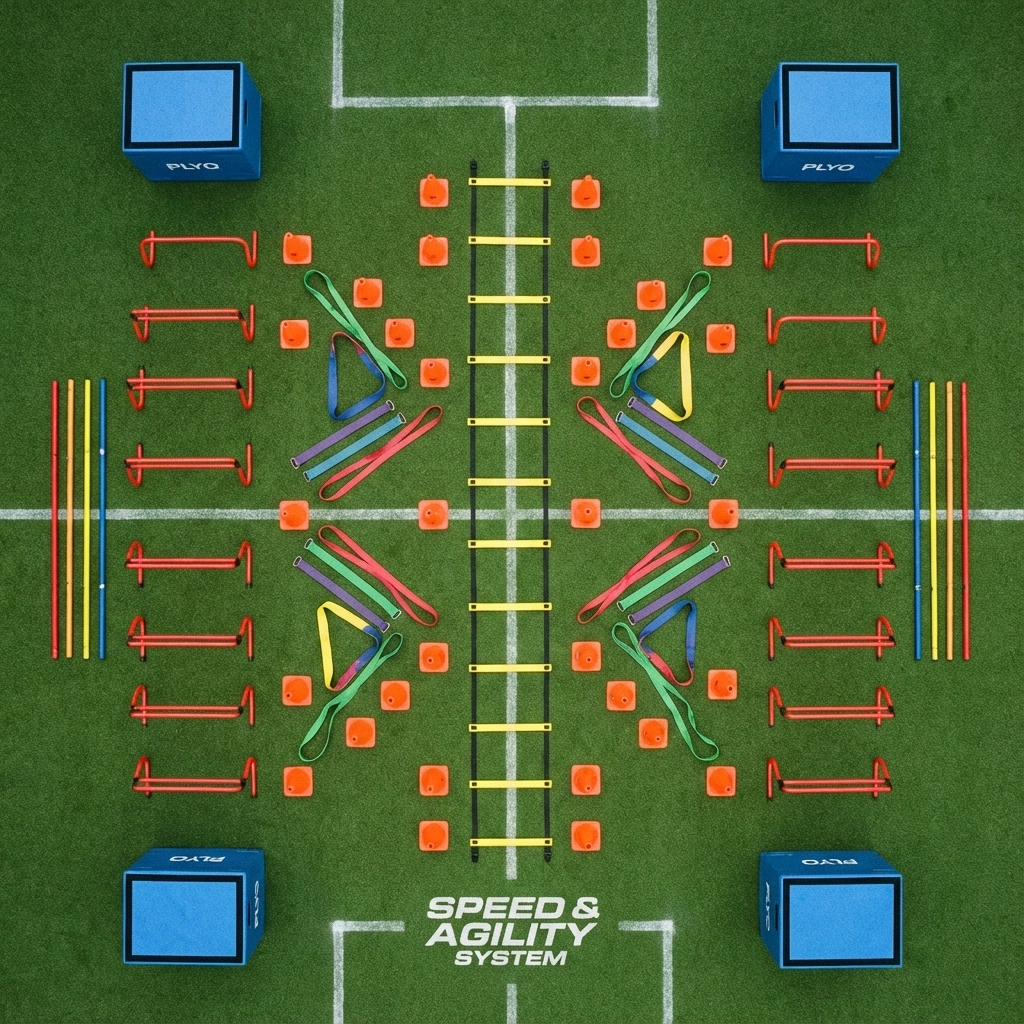
Space Requirements: You need about 30-40 meters of clear space for most drills. A football field, park, or large gym works perfectly.
Budget-Friendly Starter Pack ($100-150):
• Basic agility ladder
• Set of 6 cones
• Mini resistance band set
• Single plyo box or step
Complete Training Setup ($300-500): Check out options like the FH Speed Agility Athlete Training Set that includes multiple pieces of equipment designed to work together.
7. Common Mistakes to Avoid
Mistake #1: Going Too Fast Too Soon Master the movement pattern first, then add speed. Sloppy fast is just sloppy.
Mistake #2: Ignoring Recovery High-intensity agility work is demanding. Take 2-3 minutes between sets to maintain quality.
Mistake #3: Forgetting Sport-Specific Training Generic agility is good, but sport-specific patterns are better. Soccer players need different footwork than basketball players.
Mistake #4: Skipping the Warm-Up Cold muscles and explosive movements don't mix. Always warm up thoroughly before intense agility work.
Getting Started: Your Next Steps
Ready to take your speed and agility to the next level? Here's your action plan:
- Start with the basics - Get an agility ladder and set of cones
- Master fundamental patterns - Focus on quality over quantity
- Add resistance gradually - Introduce speed chutes or bands after 2-3 weeks
- Track your progress - Time yourself in standard drills to measure improvement
- Stay consistent - 2-3 sessions per week will show results in 4-6 weeks
Remember, the best equipment in the world won't help if it's sitting in your garage. Start simple, stay consistent, and gradually build up your arsenal as you progress.
Your faster, more agile self is waiting. The only question is: are you ready to put in the work to get there?
For a complete selection of speed and agility training equipment, check out our agility training collection and start building the athletic performance you've always wanted.


