

Speed training can feel like a mystery. You're putting in the work, sweating through sessions, but somehow you're not getting faster. If you're frustrated with your progress, you're not alone – most athletes make the same critical mistakes that cap their potential.
The good news? These mistakes are totally fixable. Let's dive into the seven biggest speed training errors and exactly how to correct them so you can finally break through to your next level.
1. Skipping Your Warm-Up (Or Doing It Wrong)
Here's the truth: jumping straight into sprints is like flooring your car when the engine's still cold. Your muscles, joints, and nervous system need time to wake up and get ready for explosive movement.
Yet countless athletes either skip warm-ups entirely or do a quick jog and call it good. This isn't just ineffective – it's setting you up for injury and poor performance.
The Fix: Dedicate 10-15 minutes to a proper dynamic warm-up before every speed session. Your warm-up should include:
• Light jogging (2-3 minutes) • Leg swings (forward/back and side to side) • High knees • Butt kicks
• A-skips • Walking lunges with a twist
Think of your warm-up like tuning an instrument before a concert. Skip it, and everything that follows will be off-key.

2. Terrible Sprint Form That's Holding You Back
Poor sprinting technique is like driving with the handbrake on. You might be working harder, but you're not going anywhere fast.
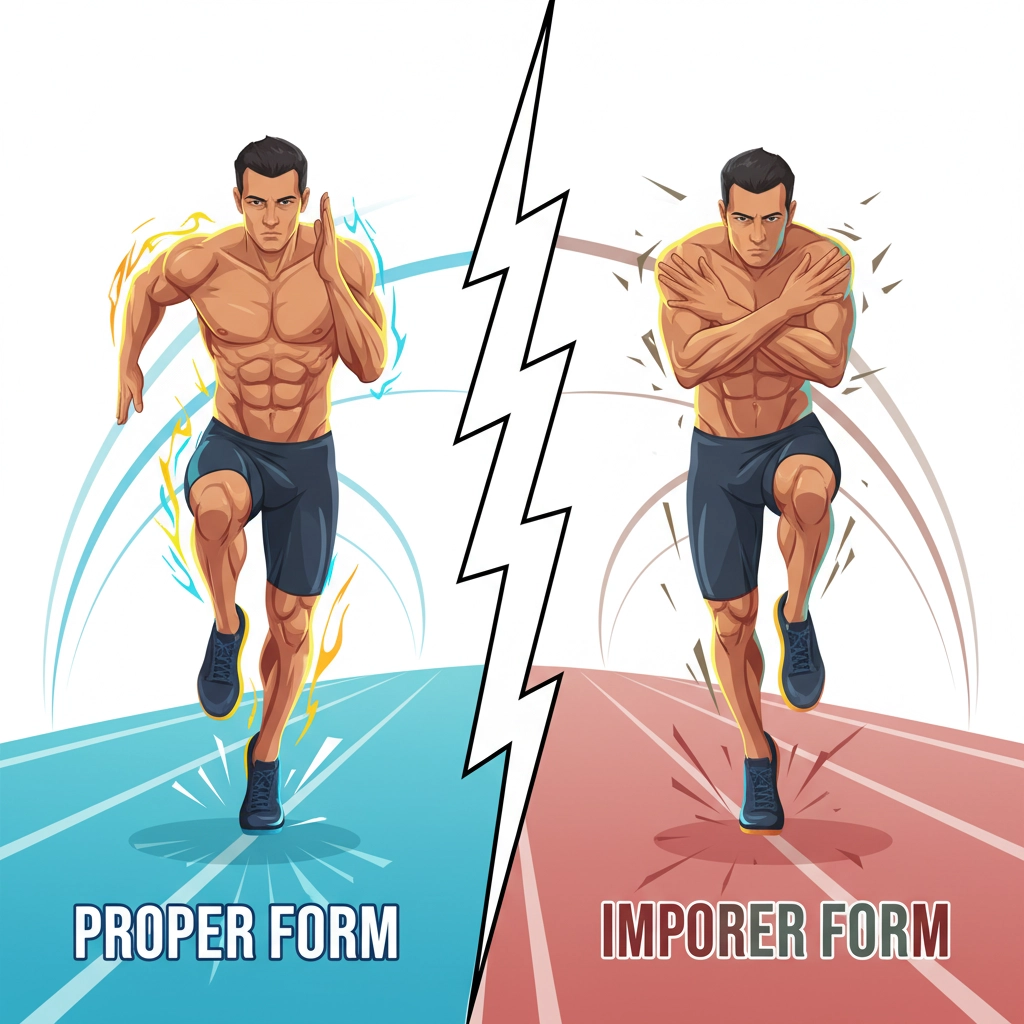
Common form breakdowns include: • Leaning too far forward or backward • Arms crossing over your body • Heel striking when you should be on your forefoot • Taking huge strides instead of quick, efficient ones • Looking down instead of ahead
The Fix: Film yourself sprinting from the side and compare it to proper technique. Focus on:
• Keeping your torso slightly forward but upright • Pumping your arms straight back and forward (not across your body) • Landing on the balls of your feet • Taking quick, light steps rather than long, heavy ones • Keeping your eyes focused 10-20 meters ahead
Consider working with sprint drills like high knees and A-skips to build proper movement patterns. Remember: better technique always beats more effort.
3. Overtraining Without Giving Your Body Time to Adapt
Speed training hammers your central nervous system harder than almost any other type of exercise. Yet many athletes treat it like a cardio workout – more must be better, right?
Wrong. When you're constantly fatigued, your sprint times get slower, not faster. Your body needs recovery to adapt and improve.
The Fix: Train for speed 2-3 times per week maximum, with at least 48 hours between sessions. Quality beats quantity every time.
Watch for these warning signs of overtraining: • Feeling mentally drained before workouts • Times getting slower instead of faster • Lingering muscle soreness • Trouble sleeping • Loss of motivation
If you're experiencing any of these, take an extra rest day. Your future PR will thank you.
4. Confusing Speed Training with Conditioning
This might be the biggest mistake of all. Running sprints when you're tired teaches your body to run slowly when fatigued – the exact opposite of what you want.
Those end-of-practice "gassers" where everyone lines up and runs sprint after sprint? That's conditioning, not speed training. It has its place, but it won't make you faster.
The Fix: Treat speed work and conditioning as completely separate training goals:
Speed Training: • Fresh legs only • 2-4 minutes rest between sprints • Focus on maximum effort • Stop when your times start dropping
Conditioning: • Can be done when fatigued • Shorter rest periods • Focus on maintaining pace under fatigue • Push through tiredness
Think of speed training like practicing a golf swing – you want perfect technique every rep, which means being fresh enough to execute properly.
5. Ignoring Strength Training (Or Overdoing It)
Some athletes skip strength training entirely, thinking running fast is enough. Others live in the weight room but never actually practice sprinting. Both approaches limit your speed potential.
Strength provides the foundation for speed, but it's not the whole building. You need both force production and the ability to apply that force quickly in the right direction.
The Fix: Include 2-3 strength sessions per week, focusing on:
• Posterior chain exercises (deadlifts, hip thrusts, hamstring curls) • Single-leg work (Bulgarian split squats, step-ups) • Explosive movements (jump squats, medicine ball throws) • Core stability
But don't let strength training dominate your program. If you can squat 2x your bodyweight but your 40-yard dash time hasn't improved in months, you need more actual sprint practice.
The sweet spot? About 60% speed/agility work and 40% strength training during speed-focused phases.
6. Skipping Sprint Drills and Mechanics Work
Many athletes want to jump straight to the fun stuff – full sprints. But skipping fundamental movement drills is like trying to play piano without learning scales first.
Sprint drills teach your nervous system proper movement patterns at a manageable intensity. Without them, you're reinforcing poor habits every time you run fast.
The Fix: Start every speed session with 5-10 minutes of sprint drills:
• A-skips: High knee marching with opposite arm drive • B-skips: Add a leg extension at the top • Wall drills: Practice sprint arm action against a wall • High knees: Quick, light steps in place • Butt kicks: Heel to glute contact
These might look basic, but they're building the neuromuscular patterns you need for efficient sprinting. Master the drills, and your sprints will naturally improve.
If you're looking for structured drill progressions, check out our speed training guides for detailed breakdowns.
7. Never Training Your Top Speed
Most athletes spend all their time working on acceleration – those first 10-20 meters out of the blocks or starting position. But what about your maximum velocity?
If you never practice running at your absolute fastest, you'll plateau quickly. Top speed training improves stride frequency and efficiency at high velocities.
The Fix: Include flying sprints 1-2 times per week:
• Build up gradually over 30-40 meters • Hit maximum speed for 20-30 meters
• Allow 3-5 minutes recovery between reps • Focus on relaxation and efficiency, not tension
Flying sprints feel different from acceleration work – you should feel smooth and controlled, not like you're fighting for every step.
For athletes working on acceleration specifically, tools like speed chutes and resistance bands can help build that explosive first step.

Putting It All Together: Your Speed Training Action Plan
Now that you know what not to do, here's how to structure effective speed sessions:
Session Structure (45-60 minutes total):
- Dynamic warm-up (10-15 minutes)
- Sprint drills (5-10 minutes)
- Main speed work (15-20 minutes)
- Cool-down and stretching (10-15 minutes)
Weekly Schedule: • Monday: Speed session + upper body strength • Tuesday: Recovery or easy conditioning • Wednesday: Speed session + lower body strength
• Thursday: Recovery or skill work • Friday: Speed session (lighter volume) • Weekend: Rest or cross-training
Progressive Loading: Start with 4-6 quality sprints per session and gradually build to 8-12 as your fitness improves. Always prioritize quality over quantity.
The Bottom Line
Speed training isn't about running until you're exhausted or copying what you see other athletes do on social media. It's about smart, systematic practice that builds both the physical and neurological adaptations needed to run faster.
Fix these seven mistakes, and you'll be amazed how quickly your times start dropping. Remember – every elite sprinter started by mastering the basics. Your speed breakthrough is waiting on the other side of better training habits.
Ready to put these fixes into action? Your next PR is closer than you think.


