

If you're a PE teacher or sports coach working with tight budgets, you're not alone. Building a comprehensive speed and agility training programme for your school doesn't have to break the bank. With the right equipment choices and smart purchasing decisions, you can create engaging, effective training sessions that boost student fitness and athletic performance.
Let's dive into the most cost-effective options for UK schools, focusing on equipment that delivers maximum value while standing up to heavy classroom use.
Why Speed and Agility Training Matters in Schools
Before we explore equipment options, it's worth noting why this investment pays off. Speed and agility training improves coordination, reaction time, and overall athleticism across all sports. For students who aren't naturally athletic, these drills build confidence and fundamental movement skills that benefit them far beyond PE lessons.
The key is choosing versatile equipment that works for multiple age groups and fitness levels, giving you the best return on your investment.
Essential Equipment Every School Needs
1. Speed Training Ladders - Your Foundation Tool
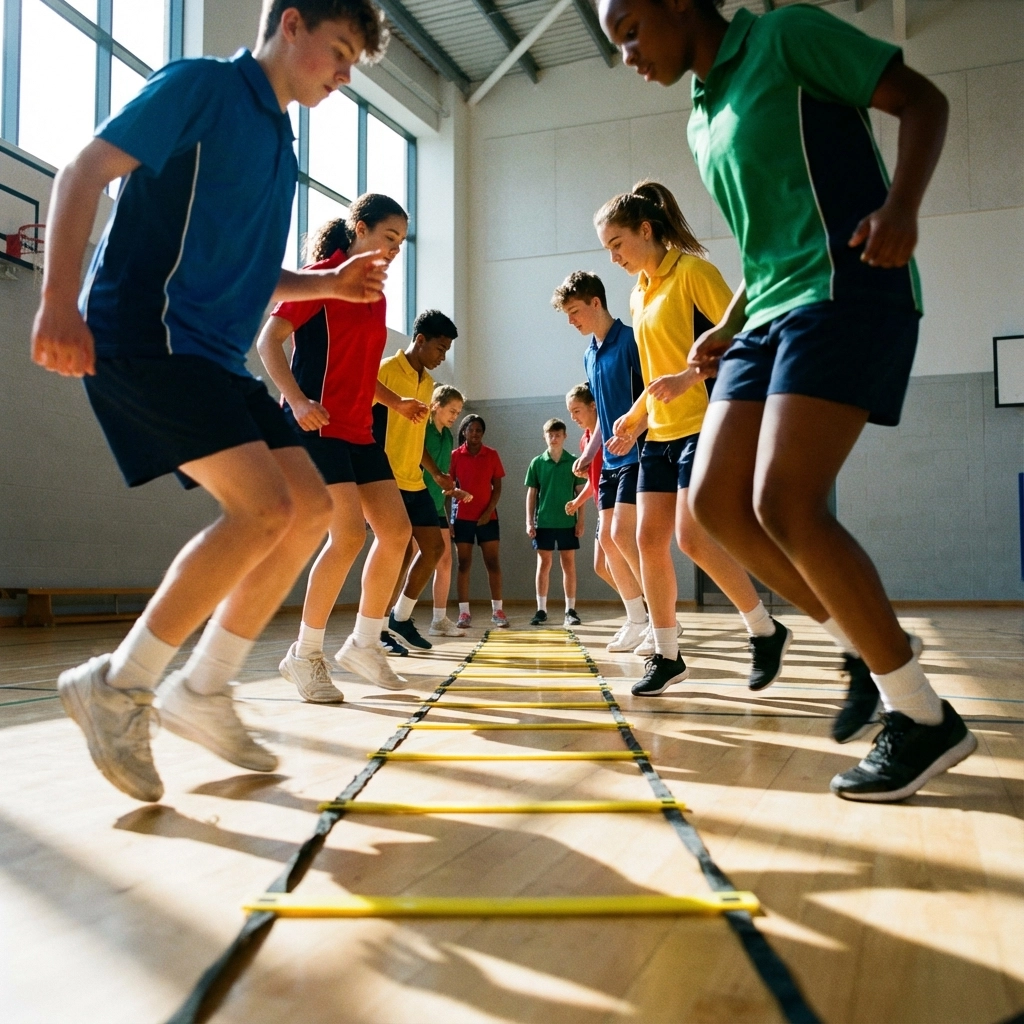
A quality speed training ladder forms the backbone of any agility programme. Look for adjustable models with flat rungs that won't roll when stepped on - this prevents injuries and maintains training flow.
What to look for:
- Adjustable length (ideally 4+ metres)
- Flat, flexible rungs
- Durable connecting straps
- Lightweight for easy storage
Budget tip: Start with one high-quality ladder rather than multiple cheap ones. A single good ladder can accommodate 2-3 students simultaneously for most drills.
2. Agility Cones and Markers
Mini marker cones are incredibly versatile and budget-friendly. A set of 60 mixed-colour markers typically costs under £30 and creates endless drill possibilities.
Key benefits:
- Define training zones
- Create slalom courses
- Mark sprint start/finish lines
- Build reaction drills with colour coding
Space-saving alternative: Flat disc markers store easily and won't trip students walking nearby.
3. Resistance Training Equipment
Adding resistance to speed training builds power and strength. For schools, choose equipment that's safe, versatile, and stores compactly.
Top picks:
- Resistance bands for partner drills
- Speed parachutes for sprint training
- Training harnesses for resisted running
Budget consideration: Resistance bands offer the most versatility per pound spent. A single set supports strength training, partner-assisted sprints, and injury prevention exercises.
Building Your School's Agility Kit on a Budget
Starter Kit Option 1: Essential Basics (Under £60)
For schools just beginning their agility training journey:
- 1 x adjustable speed ladder (£15-25)
- 1 x set of 24 disc markers (£12-18)
- 2 x resistance bands (£15-20)
- Storage bag (£8-12)
This basic kit supports fundamental footwork drills, sprint training, and flexibility work for up to 30 students.
Starter Kit Option 2: Complete Circuit Training (£80-120)
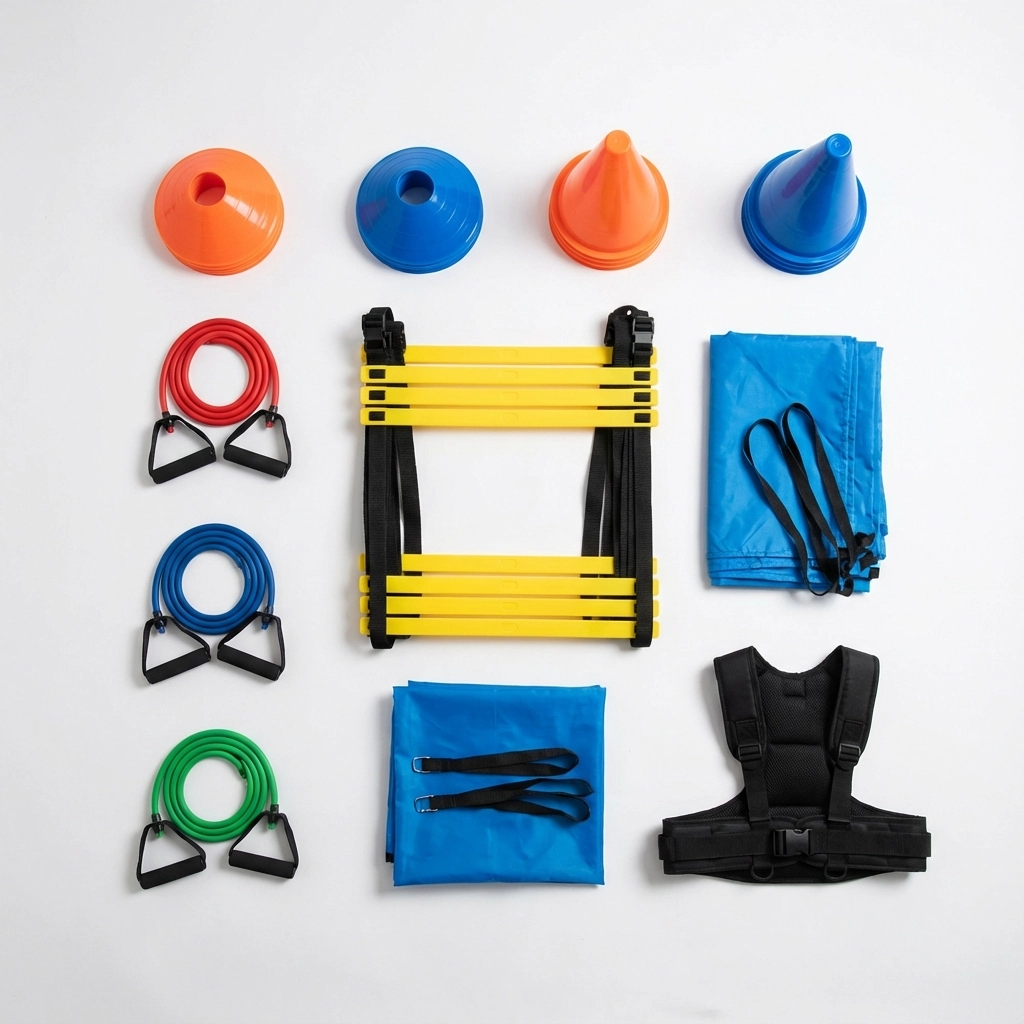
For schools wanting comprehensive training options:
- 2 x speed ladders
- Set of slalom poles
- 60 x mixed marker cones
- Speed parachute
- Resistance harness set
- Skipping ropes (pack of 10)
This setup allows circuit training where multiple groups work simultaneously, maximising lesson time and student engagement.
Space-Saving Solutions for Small School Gyms
Many UK schools face space constraints, especially during winter months when outdoor training isn't practical. Focus on equipment that packs small but delivers big results.
Compact Equipment Priorities:
Suspension training systems: A wall-mounted hook and ankle straps create resistance training options in minimal space.
Foldable agility tools: Look for equipment that collapses or stacks efficiently. Flat markers, adjustable hurdles, and resistance bands store in surprisingly small spaces.
Multi-purpose items: Choose equipment serving multiple training goals. Cones work for agility drills, goal markers, and teaching spatial awareness.
Durability Considerations for School Use
School equipment faces heavy use across multiple year groups daily. Invest in durability to avoid constant replacements.
What to Prioritise:
Heavy-duty materials: Look for equipment rated for commercial or educational use. The initial cost difference is minimal compared to replacement expenses.
Weather resistance: If you plan outdoor use, ensure equipment handles UK weather conditions. UV-resistant plastics and rust-proof metals extend lifespan significantly.
Easy maintenance: Choose equipment requiring minimal upkeep. Complex mechanisms break more frequently in school environments.
Student-proof design: Avoid equipment with small parts that can be lost or sharp edges that pose safety risks.
Setting Up Effective Training Circuits
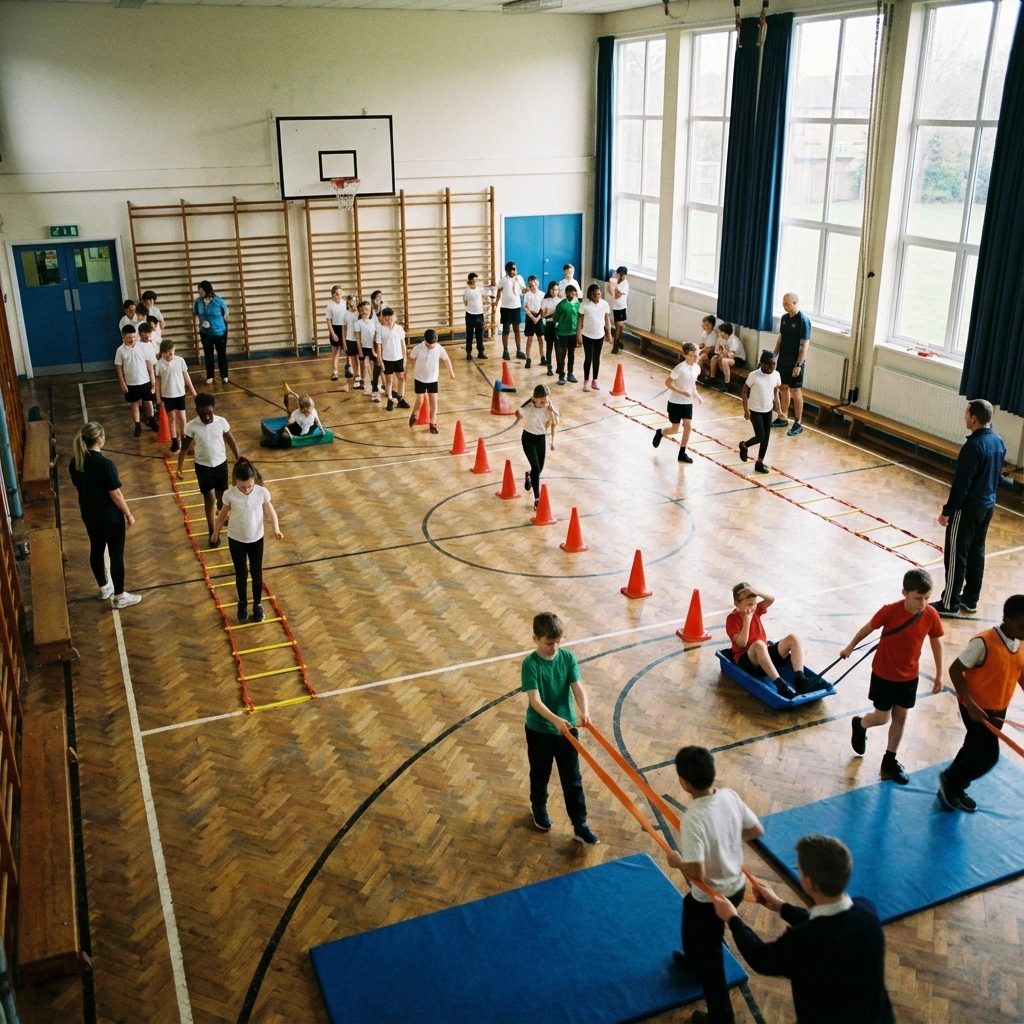
Maximise your equipment investment by creating rotational circuits. This approach keeps students engaged while accommodating different fitness levels within the same lesson.
Sample 4-Station Circuit (20-25 students):
Station 1: Ladder drills (footwork and coordination)
Station 2: Cone slalom course (change of direction)
Station 3: Resistance running with harness or bands
Station 4: Sprint intervals with markers
Pro tip: Use colour-coded zones to help students rotate efficiently. Assign each group a colour that matches their starting station markers.
Adapting for Different Age Groups:
Years 7-9: Focus on fun, game-like activities with basic movement patterns
Years 10-11: Introduce sport-specific movements and competitive timing
Sixth form: Advanced training with power development and performance tracking
Tips for Maximising Your Equipment Investment
1. Start Small, Expand Gradually
Don't feel pressured to buy everything at once. Begin with core items (ladder, cones, resistance bands) and add specialist equipment as budget allows and needs become clear.
2. Leverage Bulk Purchasing
Many suppliers offer educational discounts or bulk pricing for schools. Consider coordinating purchases with nearby schools to increase order sizes and reduce per-unit costs.
3. Cross-Curricular Use
Agility equipment isn't just for PE. Use cones and markers for mathematics lessons (geometry, measurements), science demonstrations (physics concepts), and even drama classes (spatial awareness exercises).
4. Maintenance Extends Lifespan
Create simple equipment checks as part of your routine:
- Wipe down equipment after use
- Store indoors when possible
- Check for wear regularly
- Repair minor damage immediately
5. Student Leadership Opportunities
Train older students as equipment monitors. This reduces setup/pack-down time while developing leadership skills and ensuring proper equipment care.
Getting the Most from Limited Budgets
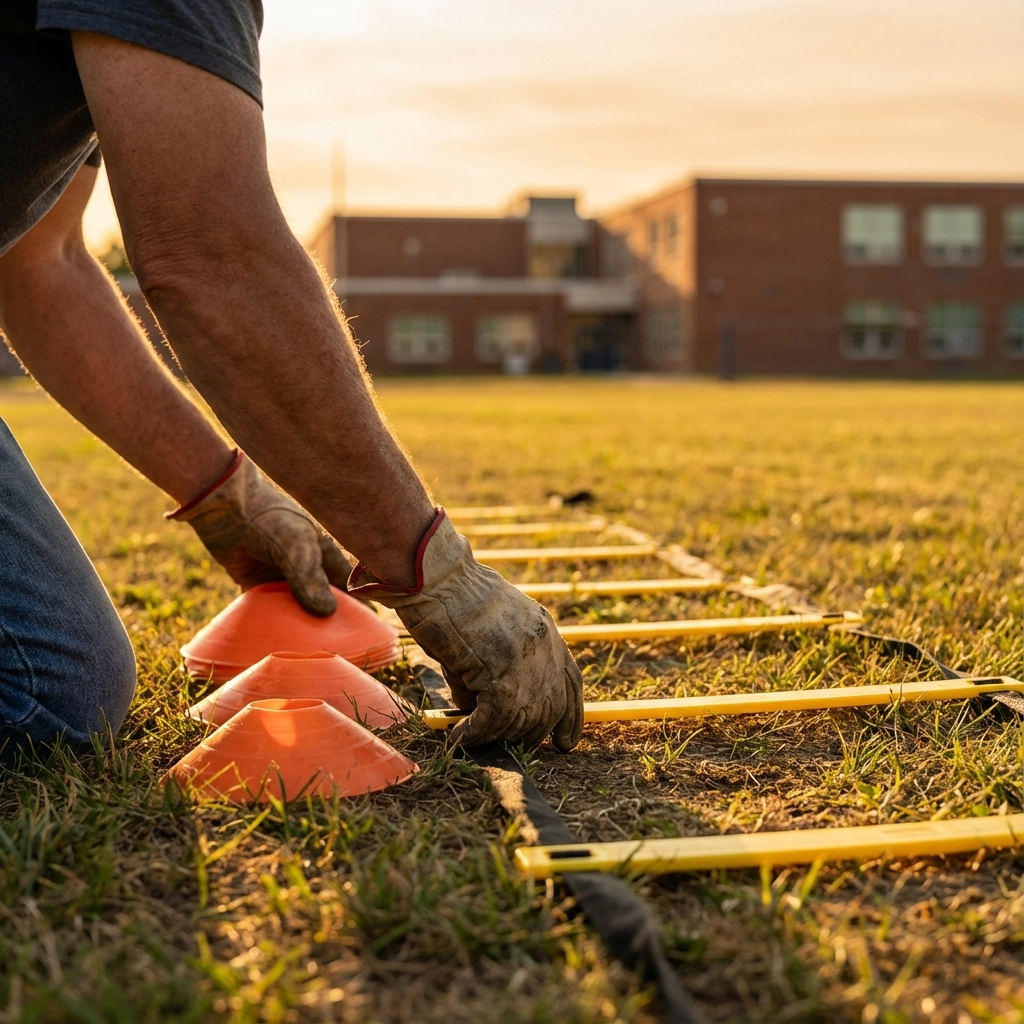
If budget constraints are severe, consider these creative approaches:
DIY alternatives: Create marker cones from plastic bottles, use chalk for temporary court markings, or make resistance bands from bicycle inner tubes.
Community partnerships: Local sports clubs often have surplus equipment they're happy to donate or loan to schools.
Grant opportunities: Many educational trusts and sports organisations offer small grants for PE equipment. The application effort often pays off significantly.
Shared resources: Partner with neighbouring schools to share expensive items like timing equipment or specialist training tools.
Safety First: Essential Considerations
When selecting affordable speed agility training equipment for UK schools, never compromise on safety:
- Ensure all equipment meets British safety standards
- Check weight limits and age recommendations
- Inspect equipment regularly for wear and damage
- Maintain clear spaces around training areas
- Establish clear safety protocols for each equipment type
Red flags to avoid:
- Equipment without proper safety certifications
- Items with sharp edges or unstable bases
- Resistance equipment that can't be quickly released
- Second-hand electrical timing equipment without recent testing
Making It Work: Actionable Next Steps
Ready to build your school's agility training programme? Here's your roadmap:
-
Assess your space: Measure available indoor and outdoor areas to determine equipment size constraints
-
Survey your colleagues: Ask other PE teachers what equipment they find most valuable in similar schools
-
Start with essentials: Order a basic kit including ladder, cones, and resistance bands
-
Plan your lessons: Design 2-3 circuit training sessions using your new equipment before it arrives
-
Train your students: Teach proper equipment use and safety procedures from day one
-
Track your results: Monitor student engagement and fitness improvements to justify future equipment investments
Remember, the most expensive equipment isn't always the best choice for schools. Focus on versatile, durable options that support multiple training objectives and age groups. With thoughtful purchasing decisions and creative lesson planning, you can create an engaging speed and agility programme that transforms your students' athletic development without breaking your budget.
Your students deserve quality PE experiences, and with these affordable equipment solutions, you can deliver exactly that while staying within realistic budget constraints.


