
Beyond Linear Speed: Using Agility Hexagons for Multi-Directional Quickness
by Paul Harwood
·
If you're coaching athletes who can run like the wind in a straight line but look clumsy the second they need to change direction, you're not alone. Traditional sprint training builds incredible forward speed, but game situations rarely happen in straight lines. That's where hexagon agility drills come in: and they might be the missing piece in your training kit.
Why Multi-Directional Speed Actually Matters
Think about it: how often does a footballer sprint 40 meters without adjusting their path? How many basketball players only move forward and backward? Real athletic performance happens in multiple planes of motion: side-to-side, diagonal cuts, pivots, and rapid repositioning.
Hexagon drills force your athletes to navigate a six-sided shape, which naturally incorporates movement in directions that linear sprints completely miss. You're training:
- Lateral quickness for defensive positioning
- Diagonal cutting for evading opponents
- Rapid directional changes without losing momentum
- 360-degree body awareness under pressure
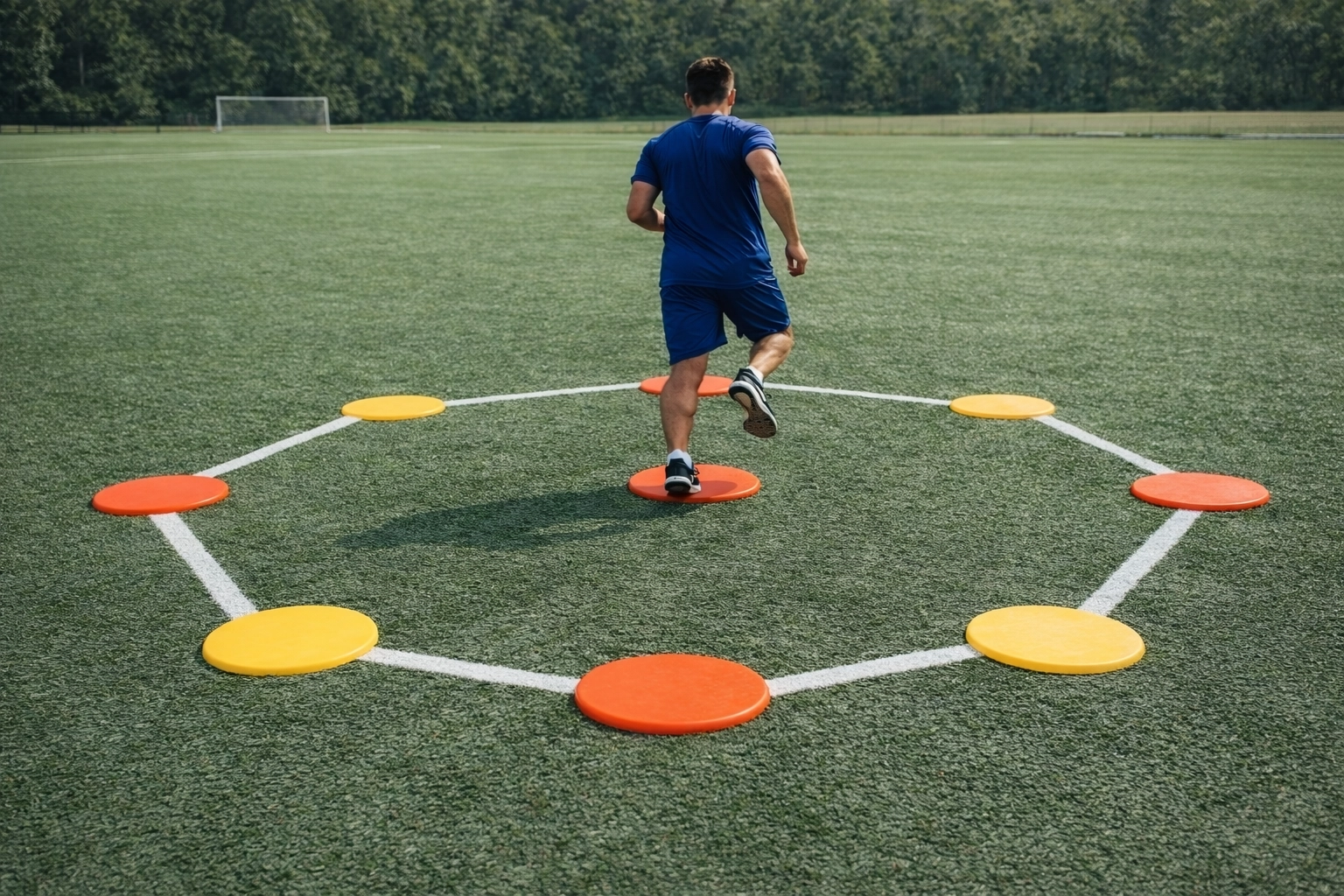
The best part? You don't need fancy equipment. A simple hexagon pattern made with flat disc markers or tape on the ground will do the job.

What Hexagon Drills Actually Train (Beyond Just "Footwork")
Here's what makes hexagon drills special: they develop several interconnected capabilities that you can't get from cones in a straight line.
Body Control and Center of Gravity
When your athletes navigate the hexagon at maximum speed, they're forced to stay low and anticipate the next move. This tests and improves their center of gravity awareness in ways that straight-line sprints never will. They learn to generate force through their hips in multiple planes of motion: not just forward and backward.
Weight Shifting and Stability
Each directional change requires controlled weight transfer across the lower body. Your athletes shift from one leg to the other while maintaining stability and firing their feet explosively. This controlled chaos is exactly what happens during game situations when they need to react and redirect quickly.
Shin Angles and Hip Control
Advanced variations challenge your athletes to manage shin angles and hip control when touching markers in different directions. This prevents momentum loss during turns and ensures explosive acceleration through directional transitions. You'll notice the difference when they can cut without that awkward stutter-step.
Setting Up Your First Hexagon Drill
Creating a hexagon is simpler than you think. Here's the straightforward approach:
Basic Setup:
- Use 6 markers to create a hexagon shape
- Each side should be about 60cm (roughly 2 feet) long
- Make sure the shape is reasonably symmetrical
- Athletes start in the center, facing one side
Space Requirements:
You only need about 2 meters of clear space. This makes hexagon drills perfect for indoor training when weather doesn't cooperate or space is limited.
The Core Hexagon Drill (Master This First)
Before jumping into fancy variations, nail the basic pattern:
- Start Position: Athlete stands in the center, facing side 1
- Movement: Jump forward over side 1, immediately jump backward into the center
- Progression: Quickly pivot to face side 2, repeat the jump out and back
- Continue: Move around all 6 sides without stopping
- Goal: Complete 3 full rotations as fast as possible without touching the lines
What to Watch For:
- Athletes should stay on the balls of their feet
- Hips stay low (imagine sitting in a chair)
- Eyes up, not looking down at the markers
- Minimal ground contact time: quick, explosive jumps
- Controlled landings, not crashing
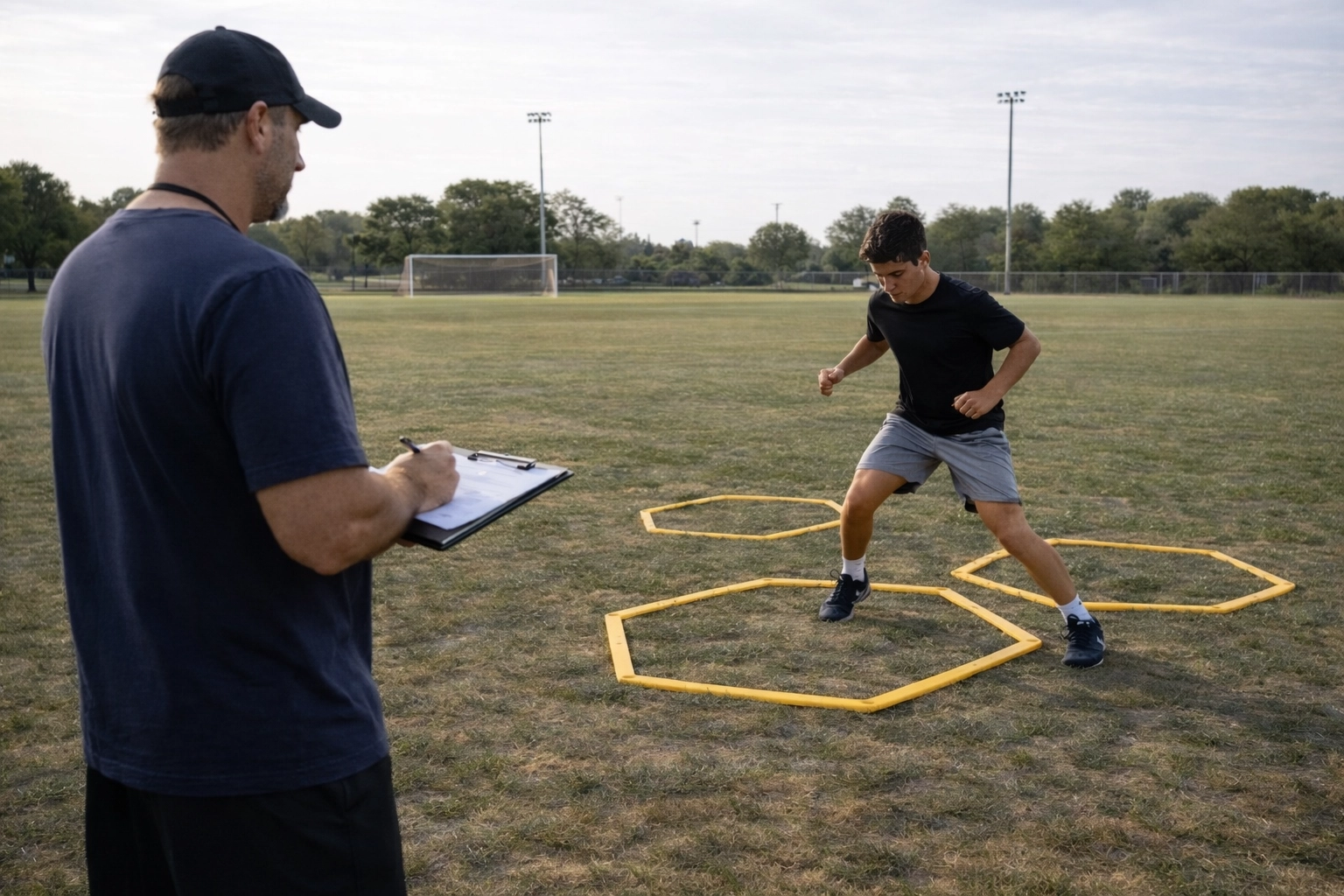
Time your athletes and track their progress. Most beginners complete 3 rotations in 15-20 seconds. After a few weeks of consistent practice, you should see that drop to 12-15 seconds.
Four Hexagon Variations to Build Elite Quickness
Once your athletes have the basic pattern down, these variations will take their multi-directional speed to another level.
1. Single-Leg Hexagon Hops
Same pattern as the basic drill, but athletes hop on one leg only. This builds serious ankle stability and single-leg power. Switch legs after each full rotation.
Coaching Tip: This one is brutal. Start with just 1 rotation per leg and build up gradually. Your athletes' calves will be screaming.
2. Touch-and-Go Hexagon
Athletes jump to each side but must touch the ground outside the hexagon with their hand before returning to center. This adds a hip hinge component and teaches them to get low quickly while maintaining foot speed.
3. Reactive Hexagon
Call out random numbers (1-6) representing different sides. Athletes must react and jump to that specific side, then return to center and wait for your next call. This builds decision-making speed along with physical quickness.
4. Lateral Shuffle Hexagon
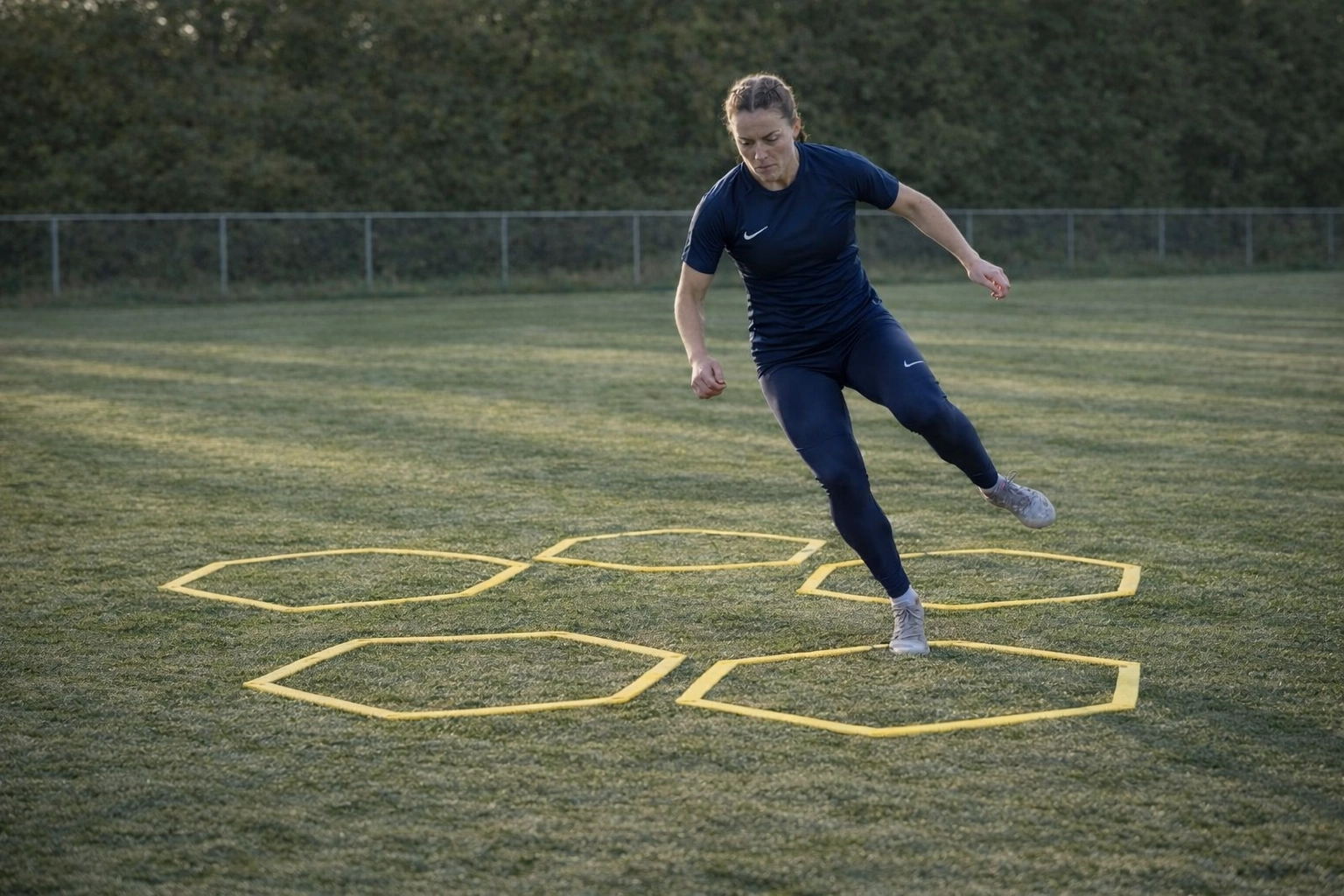
Instead of jumping, athletes perform a lateral shuffle to each side marker, touching it with their outside hand, then shuffling back to center. This variation emphasizes controlled weight transfer and builds lateral power specific to defensive movements.
Common Mistakes (And How to Fix Them)
Problem: Athletes stand up too tall between jumps
Fix: Use the cue "load the spring" to remind them to stay in an athletic position with bent knees
Problem: Sloppy footwork with feet landing in different positions
Fix: Have them practice landing in the same spot in the center each time. Use a small marker as a target
Problem: Touching or stepping on the hexagon lines
Fix: Make the hexagon slightly larger. It's better to build good habits with a bigger hexagon than reinforce bad patterns
Problem: Rushing and losing control
Fix: Slow it down. Do 2 rotations at 75% speed focusing on perfect form, then 1 rotation at max effort
How to Program Hexagon Drills Into Your Training
Hexagon work fits beautifully into your warm-up or as part of your speed and agility block. Here's a simple framework:
Frequency: 2-3 times per week
Timing: After your dynamic warm-up, before strength work
Volume: Start with 3-4 sets of 2 rotations, rest 45-60 seconds between sets
Week-by-Week Progression:
- Weeks 1-2: Basic drill, focus on form (2 rotations × 4 sets)
- Weeks 3-4: Basic drill for speed (3 rotations × 3 sets)
- Weeks 5-6: Introduce one variation (2 rotations basic + 1 rotation variation × 3 sets)
- Weeks 7+: Mix multiple variations, add reactive elements
Pair hexagon drills with other agility tools like speed ladders or marker cones for a complete footwork circuit.
When to Progress (And When to Pump the Brakes)
Your athletes are ready to increase difficulty when they can:
✅ Complete 3 rotations with zero line touches
✅ Maintain low hip position throughout
✅ Land in the same center spot consistently
✅ Keep their time within 1-2 seconds across multiple sets
They need more practice at the current level if:
❌ They're stepping on lines more than once per rotation
❌ They stand up tall between jumps
❌ Their times vary wildly set to set
❌ They're breathing so hard they can't maintain form
Making It Competitive (Because Athletes Love Competition)
Turn hexagon drills into challenges to boost engagement:
- Time Trials: Who can complete 3 rotations fastest?
- Endurance Challenge: How many perfect rotations can they complete in 60 seconds?
- Team Relay: Athletes tag in after each rotation
- Beat Your Best: Track personal records and celebrate improvements
Just remember: form comes before speed. A sloppy fast time teaches bad habits.
The Real-World Carryover
After 4-6 weeks of consistent hexagon training, you'll notice your athletes:
- Cut more explosively without that telltale stutter-step
- Recover faster after directional changes
- Show better balance during contested movements
- Display improved foot speed in reactive situations
One coach told us his football defenders suddenly looked "glued" to opposing forwards after adding hexagon drills twice weekly. That's the power of training movement in all directions, not just forward.
Your Next Steps
Start simple. Set up a basic hexagon this week using whatever markers you have lying around. Run your athletes through 2-3 sets of the basic pattern and watch what happens. You'll immediately see who has solid multi-directional control and who needs work.
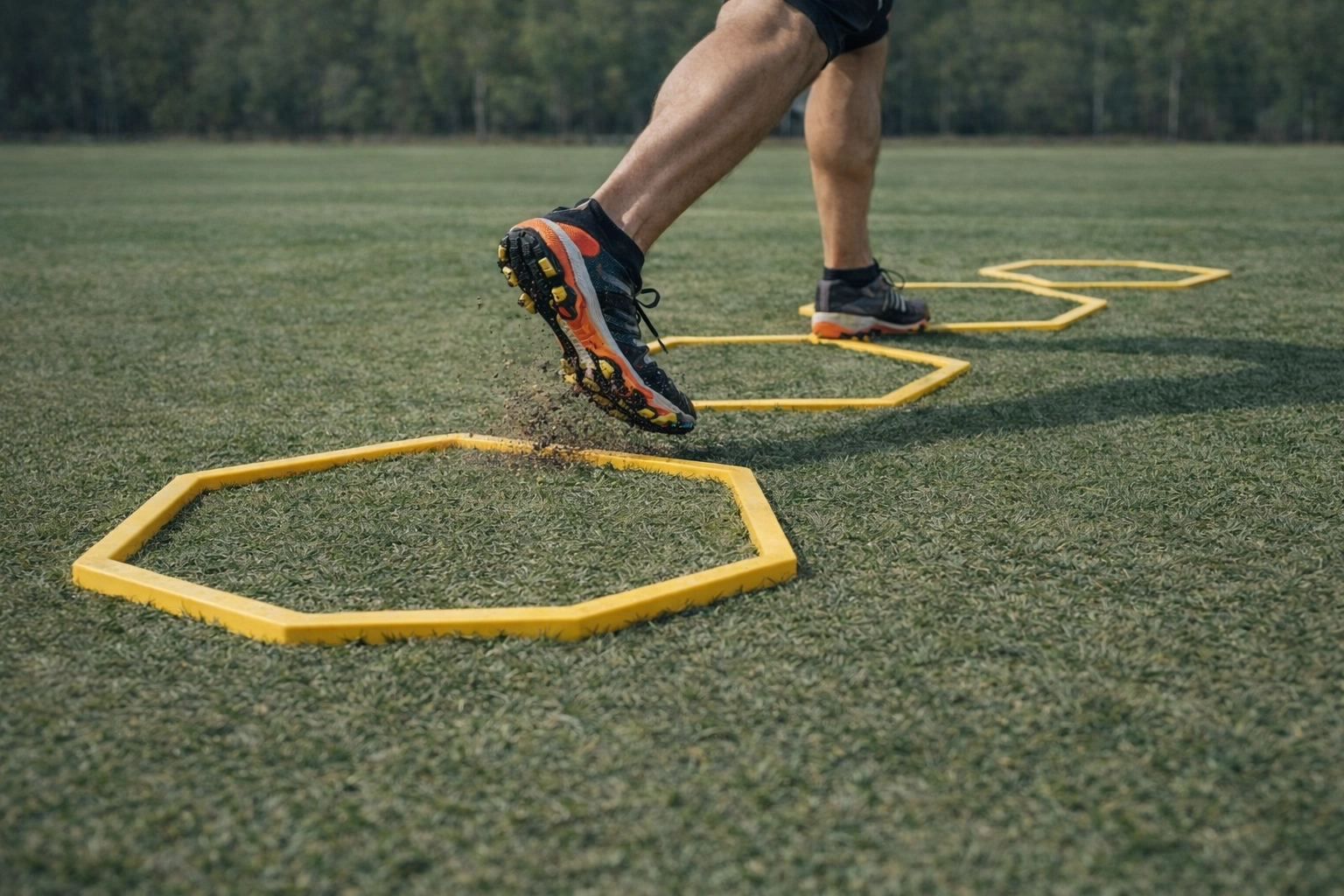
The beautiful thing about hexagon drills? They're self-correcting. Athletes get instant feedback when they touch a line or lose balance. You don't need to over-coach: the drill does the teaching.
Multi-directional quickness isn't optional in modern sports. It's the difference between getting beaten and making the play. Your hexagon is waiting.
