

If you're tired of staring at screens and swiping through reaction training apps, you're not alone. While technology has its place, some of the most effective reaction training, speed training, and agility training happens away from your phone or tablet. These seven proven hacks require minimal equipment and can be done anywhere – your backyard, local park, or even your living room – and they build real-world quickness, acceleration, and change-of-direction (COD) skills.
The best part? You'll actually see faster improvements in reaction time, agility, and quickness because these methods engage multiple senses simultaneously, creating neuromuscular pathways and sport-specific motor learning that apps simply can't replicate.
Why Ditch the Apps for Real-World Training?
Apps train your finger-tap reflexes, but sports demand full-body reaction speed and SAQ (speed, agility, quickness). When you're on the field, court, or track, you need to coordinate your eyes, brain, and muscles with efficient footwork, acceleration, and deceleration mechanics in ways that screen-based training just can't match. Real-world reaction training builds the kind of lightning-fast responses and change-of-direction performance that actually transfer to your sport.
Let's dive into seven game-changing techniques you can start using today.
1. The Classic Ball Drop Test (But Make It Harder)
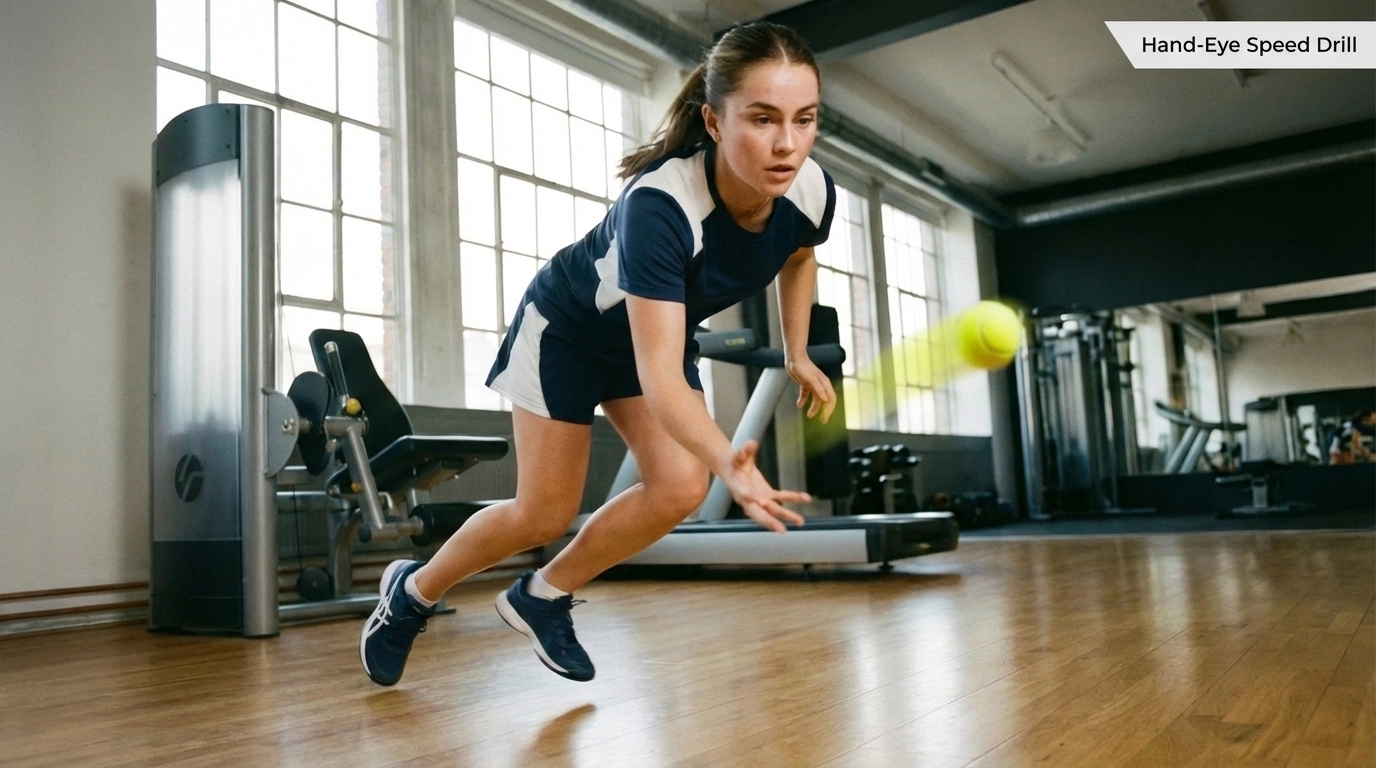
What it is: Have a training partner hold a tennis ball or ruler at shoulder height, then drop it without warning. Your job? Catch it as fast as possible to train hand speed and reaction time.
Why it works: This drill trains your visual tracking speed and hand-eye coordination simultaneously. Your brain learns to process falling objects and trigger neuromuscular responses in milliseconds for quicker starts and better first-step quickness.
How to progress:
- Start with basic catches using both hands
- Progress to single-hand catches
- Add balance challenges by standing on one leg
- Increase difficulty by varying drop heights (shoulder, head, waist level)
- Try catching while moving laterally or backward
Pro tip: Track your catch height on a ruler drop. Most people start catching around the 6-inch mark but can improve to 3-4 inches with consistent practice over 2-3 weeks.
2. Auditory Response Drills That Actually Work
What it is: Combine listening tasks with physical movements to build cognitive agility and decision speed. Have someone randomly call out numbers, colors, or directions while you perform another activity.
Setup examples:
- Dribble a basketball while responding to color calls (red = stop, blue = change direction/COD)
- Practice agility ladder or cone footwork patterns while reacting to number sequences
- Juggle while responding to verbal commands for coordination and reaction speed
Why it's effective: This dual-tasking approach mimics real sports situations where you process multiple inputs simultaneously – like hearing a coach's call while tracking an opponent's movement – and boosts SAQ by linking cognitive processing with movement.
Safety note: Start slowly and build complexity gradually. Don't attempt difficult physical skills until the auditory responses become automatic.
3. Juggling: The Neuroscience-Backed Secret Weapon
Here's something that might surprise you – juggling has been extensively studied by neuroscientists and consistently shows remarkable brain training benefits. Participants in research studies showed significant improvements in reaction time after just 3 months of practice.
Why juggling works:
- Visual processing speed increases dramatically
- Hand-eye coordination becomes razor-sharp
- Predictive timing improves as you learn to anticipate ball trajectories
- Bilateral brain coordination develops through cross-body movements
Getting started progression:
- Week 1-2: Master the single ball toss (throw from right hand to left hand at eye level)
- Week 3-4: Add the second ball (throw, throw, catch, catch pattern)
- Week 5+: Attempt continuous three-ball juggling
Even if you never become a juggling master, the neural benefits kick in quickly. Aim for 10-15 minutes of practice, 3-4 times per week.
4. Lateral Shuffle and Agility Sequences
The setup: Create an agility ladder pattern on any flat surface using tape, chalk, or even imaginary lines. If you have access to actual agility training equipment for footwork, speed, and quickness, even better.
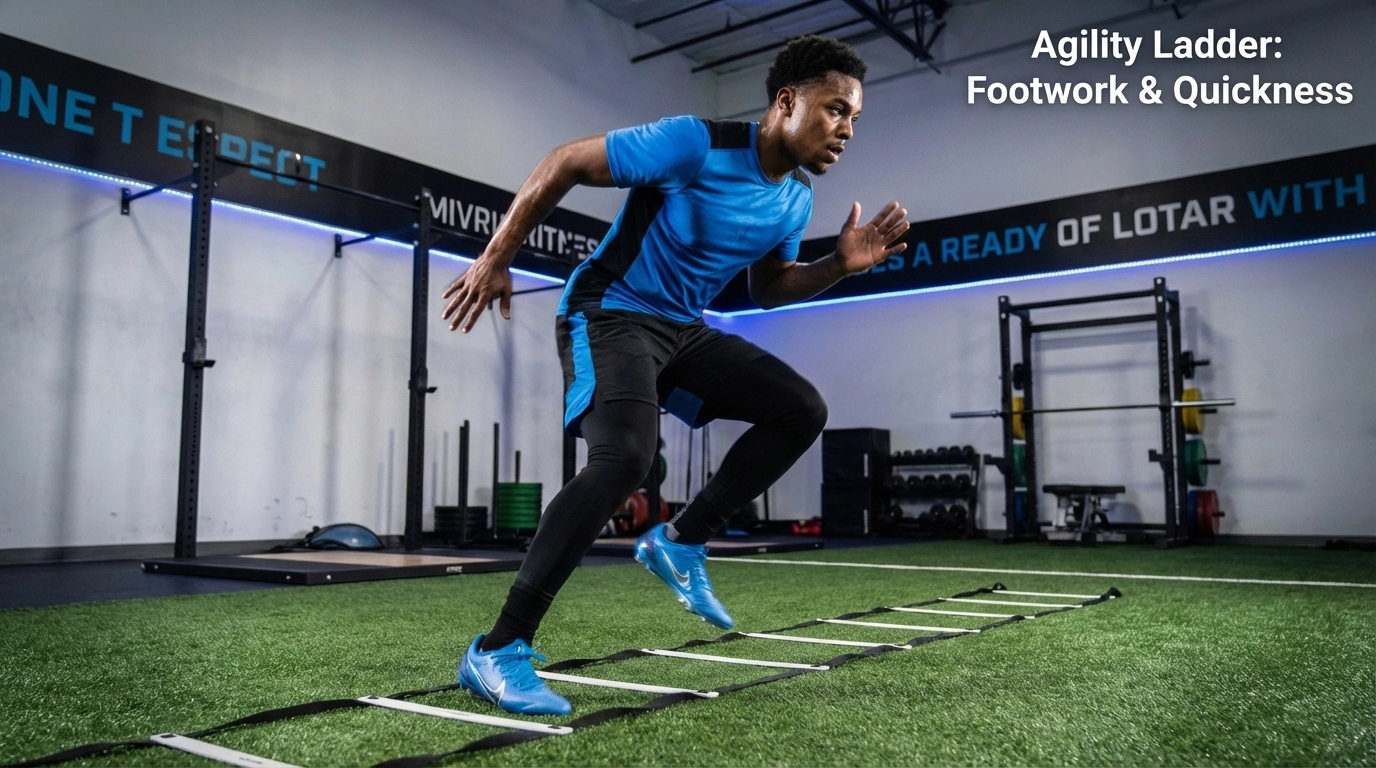
Key drill progressions:
Basic lateral shuffle:
- Start in athletic position (knees bent, chest up)
- Step laterally 10-12 feet in each direction
- Focus on quick, controlled steps without crossing feet
- Aim for 30-second intervals with 30-second rest
Advanced variations:
- Add direction changes on verbal cues
- Include forward/backward movements
- Incorporate sport-specific movements (basketball defensive slides, soccer cuts)
- Practice with eyes closed for 5-10 seconds to challenge proprioception
Measuring progress: Count your steps per 30-second interval to track lateral quickness. Most beginners start around 60-70 steps but can reach 90+ with consistent training.
5. Cone Touch Sequences for Visual Processing
What you need: 4-6 cones, water bottles, or any visible markers in different colors (agility cones are ideal for speed training)
The drill: Set up cones in a semicircle about 3-4 feet apart. Have a partner call out colors in random sequence while you sprint to touch each cone and return to center, focusing on acceleration, efficient deceleration, and quick COD.
Progression levels:
Beginner (Week 1-2):
- 3 cones maximum
- 1-second pause between calls
- Walk to each cone
Intermediate (Week 3-4):
- 4-5 cones
- Immediate sequential calls
- Sprint to cones with proper deceleration
Advanced (Week 5+):
- 6+ cones
- Complex sequences ("blue, red, blue" without returning to center)
- Add physical challenges like burpees at each cone
Key coaching points:
- Maintain athletic position throughout
- Focus on efficient deceleration and direction changes (COD)
- Keep head up to process visual information quickly
6. Meditation and Mindfulness for Mental Clarity
This might seem counterintuitive, but mental calmness directly improves reaction speed. When your nervous system is calm and focused, it processes information faster and eliminates hesitation for quicker decisions in game-speed situations.
Simple 5-minute routine:
- Minutes 1-2: Focus on deep breathing (4 counts in, 4 counts hold, 4 counts out)
- Minutes 3-4: Practice body awareness (notice tension, consciously relax)
- Minute 5: Visualize perfect reactions in your specific sport
When to practice:
- 10 minutes before training sessions
- As part of your warm-up routine
- During rest periods between intense drills
Why it works: Meditation reduces cortisol (stress hormone) levels, improves focus, and enhances reaction speed. Athletes who practice mindfulness show 15-20% faster decision-making in pressure situations.
7. Uneven Terrain Training for Real-World Reactions
The concept: Train on unpredictable surfaces that force constant micro-adjustments, reactive agility, and rapid responses to changing conditions while improving balance and dynamic stability.
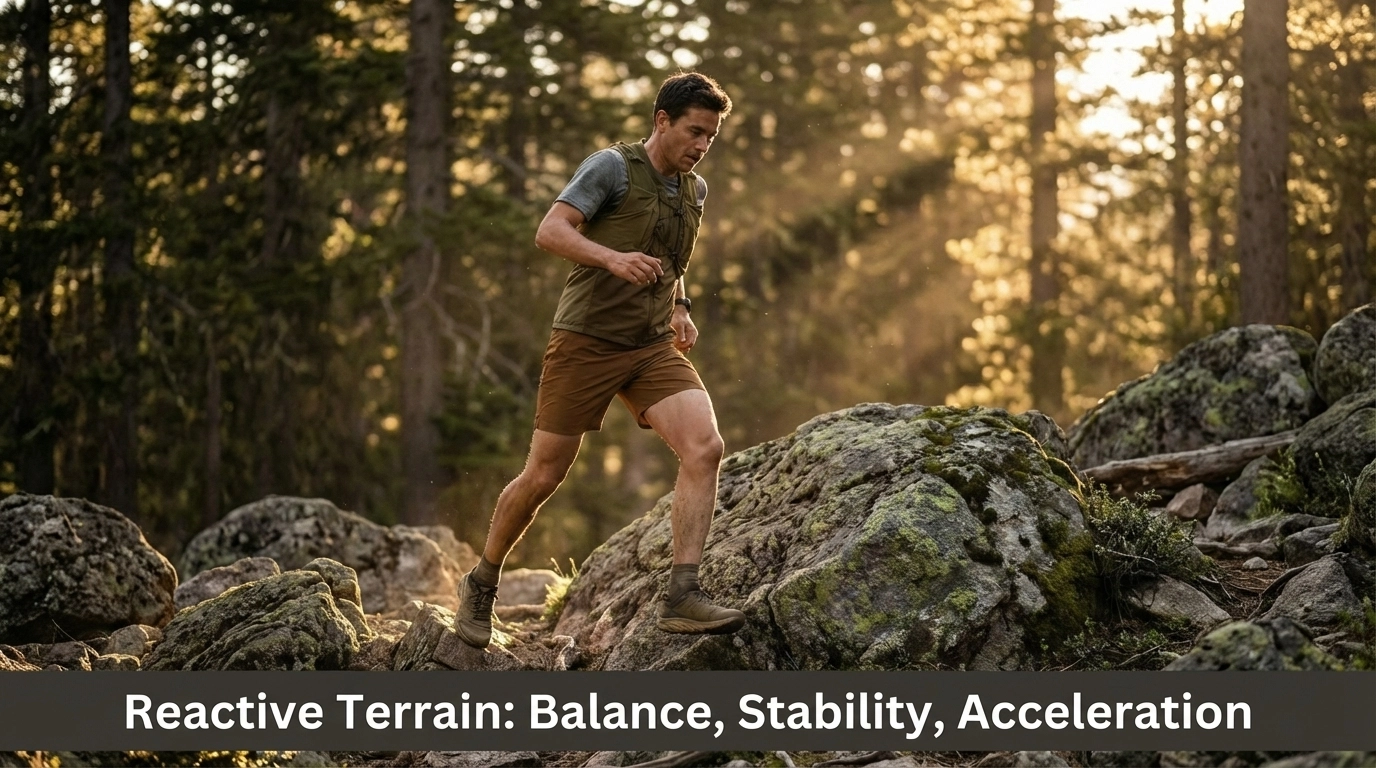
Ideal training surfaces:
- Trail running paths with roots, rocks, and elevation changes
- Sand or beach training for unstable surface challenges
- Grass fields with natural dips and bumps
- Playground areas with varied terrain features
Sample workout:
- 15-20 minutes of varied-pace movement
- Include forward runs, lateral movements, and backward shuffles
- Focus on maintaining balance while reacting to terrain changes
- End with 5-10 explosive direction changes on the most challenging surface for COD speed
Safety first: Start conservatively and build intensity gradually. Proper footwear with good traction is essential, and avoid training in conditions with poor visibility.
Putting It All Together: Your 4-Week Progressive Plan
Week 1-2: Foundation Building
- Ball drop test: 3 sets of 10 catches, daily
- Basic juggling practice: 10 minutes, 4x per week
- Simple auditory drills: 2-3 times per week
- Mindfulness: 5 minutes daily
Week 3-4: Complexity Addition
- Advanced ball drop variations
- Cone touch sequences: 3 sets of 8-10 touches
- Lateral shuffle training: 20 minutes, 3x per week
- Uneven terrain sessions: 1-2 times per week
Measuring Your Progress
Track these specific metrics to see real improvement:
- Ball drop catch height (measure in inches on ruler drop)
- Cone touch sequence speed (time to complete 10-touch sequence/COD time)
- Lateral shuffle step count per 30-second interval (lateral quickness)
- Juggling consecutive catches (aim for personal records in coordination and timing)
Most athletes see measurable improvements within 2-3 weeks of consistent practice. The key is regularity – 15-20 minutes of focused training beats one hour of sporadic effort.
Your Next Steps
Pick 2-3 drills that appeal to you most and commit to practicing them for the next two weeks. Don't try to master everything at once. Quality practice with proper focus beats rushing through all seven techniques.
Remember, these reaction training hacks work because they engage your entire neuromuscular system, not just your fingertips. You're building real athletic reactions, speed, and agility that transfer directly to your sport performance.
Start today, stay consistent, and prepare to surprise yourself with how much faster you can get – no apps required, with real speed and agility gains.


