
Top Budget Coaches Sports Equipment: Building Your Professional Kit on a Dime
by Paul Harwood
·
If you’re a new coach or a veteran looking to refresh your gear without breaking the bank, you’re not alone. We’ve all been there: standing on a field, looking at a limited budget, and wondering how to give your athletes a professional experience without a professional-level bank account.
The good news? You don't need a million-dollar facility to produce elite results. In fact, some of the most effective coaches sports equipment fits right in the trunk of a small car and costs less than a fancy dinner out.
At Rapid Sports, we believe that great coaching is about the person, not the price tag. In this guide, we’re going to show you exactly how to build a high-performance training kit on a dime. Let's get to work! 🏃♂️💨
1. The Foundation: Essential Organization Gear
Before we get into the high-intensity drills, every coach needs the basics to keep a session running smoothly. If your practice is disorganized, your athletes will lose focus.
The Humble Marker Cone
Cones are the bread and butter of coaches sports equipment. They are incredibly cheap but offer endless possibilities.
- Disc Cones: These are flat and won't trip up your players. Aim for a pack of 50 in bright, contrasting colors (orange, yellow, and blue).
- Tall Cones: Great for marking boundaries or targets for passing drills.
- Usage Tip: Use different colors to represent different "zones" or rules in a drill (e.g., "Red cones mean speed, blue cones mean agility").
The Whistle and Stopwatch
You might be tempted to use your phone, but a dedicated whistle and a simple stopwatch are game-changers.
- Communication: A loud, crisp whistle saves your voice, especially on windy days.
- Precision: Timing a 40-yard dash or a 10-meter sprint is much easier with a physical button than a touchscreen.
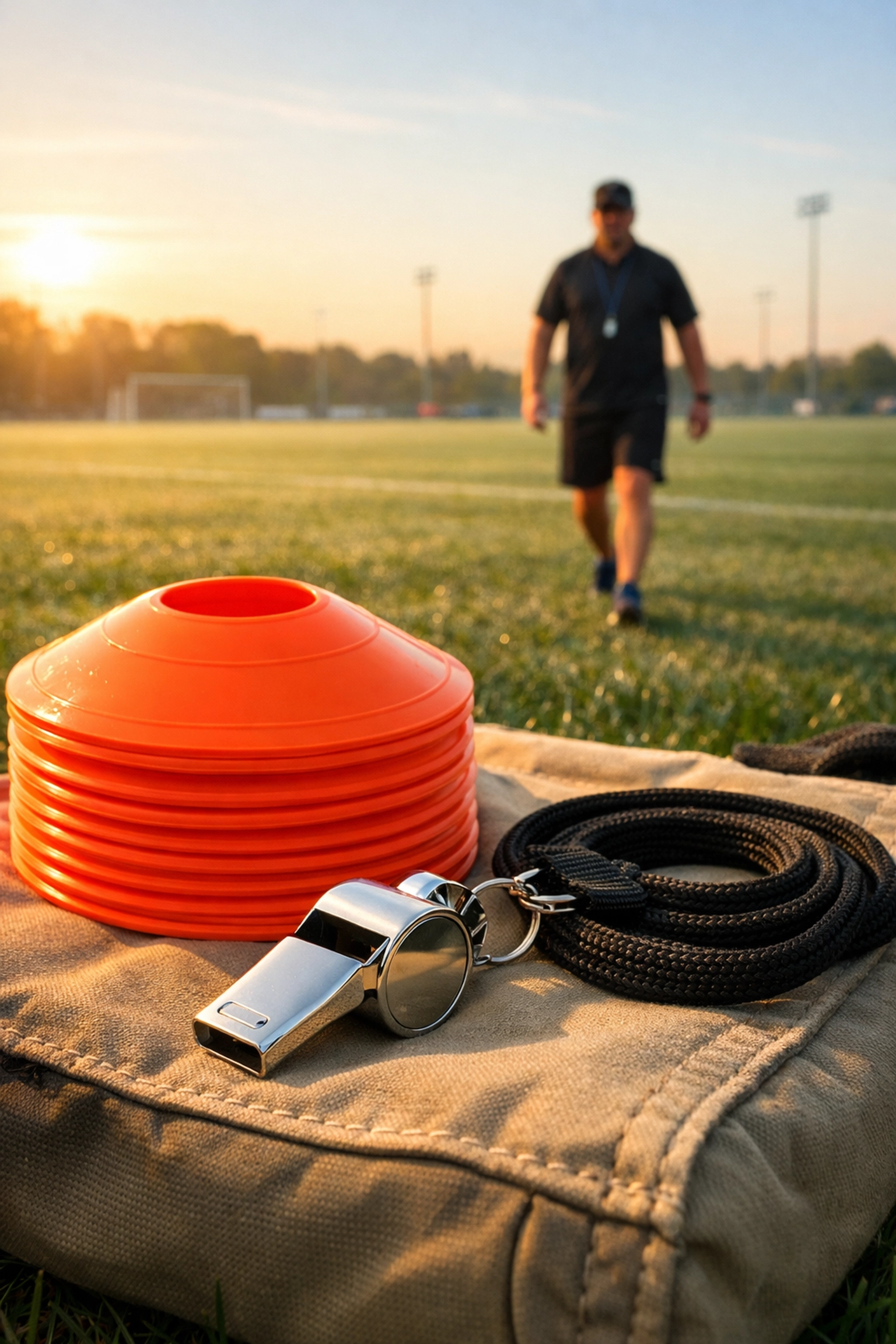 Image Prompt: A real grass training field with a bright orange set of disc cones and a classic metal whistle resting on a green equipment bag. One coach is visible in the background, 20% smaller than usual. The cones and whistle are 10% larger than life, making them the clear focus.
2. Speed and Agility on a Budget
If you want your players to be "game-ready," you have to work on their footwork. You can find high-quality agility training gear that doesn't cost a fortune.
The Agility Ladder
An agility ladder is arguably the most versatile piece of coaches sports equipment you can own. It helps with coordination, balance, and fast-twitch muscle response.
- Price Point: You can usually find a solid 15-foot ladder for under $20.
- Drills: Start with simple "two-feet-in" patterns and progress to "Ickey Shuffles."
- Pro Tip: If you're just starting, check out our guide on how to use a speed ladder to get the most out of your purchase.
Speed Hurdles
You don't need the expensive, adjustable metal hurdles. Small, plastic "banana hurdles" are perfect for plyometric work.
- Measurement: 6-inch hurdles are great for beginners, while 12-inch hurdles help with high-knee drive.
- Variation: If hurdles are out of the budget, you can even use your disc cones as low-level obstacles for players to hop over.
3. The Power of Resistance
Strength training doesn't have to mean a $2,000 squat rack. For many team sports, bodyweight resistance combined with simple tools is more than enough.
Resistance Bands
These are the ultimate "gym in a pocket." Resistance bands are incredibly affordable and allow you to add load to almost any movement.
- Mini-Bands: Perfect for lateral walks and glute activation.
- Long Power Bands: Great for assisted pull-ups or "tethered" running drills where one player holds back another.
- Safety First: Always inspect your bands for small tears before use. A snapped band is no fun for anyone!
Speed Chutes
If you want to work on explosive acceleration, a speed chute is a low-cost alternative to weighted sleds.
- How they work: The chute opens as the player runs, creating air resistance.
- Benefit: It forces the athlete to maintain a good forward lean and high knee drive.
- Learn More: Check out our deep dive on speed chute training.
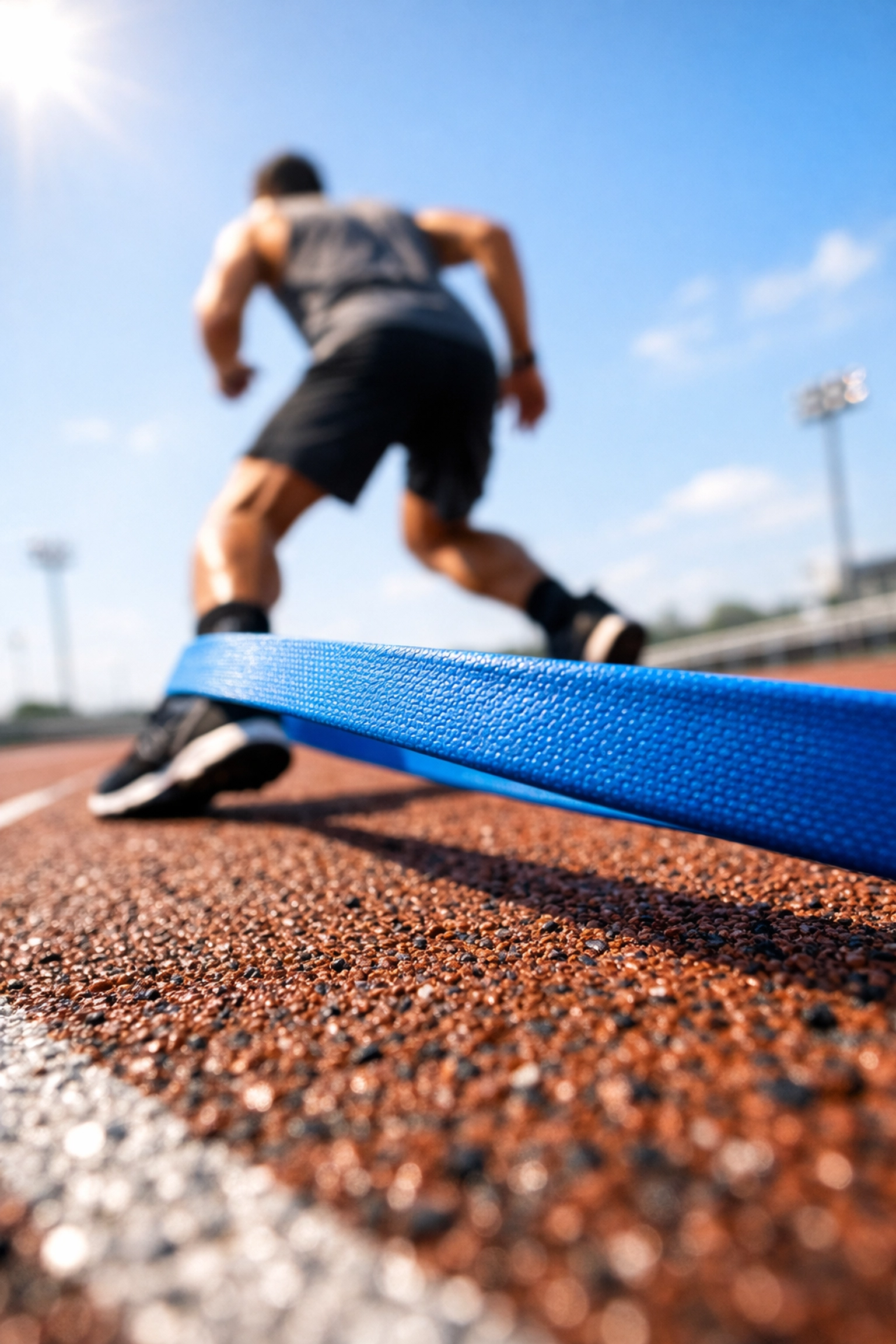 Image Prompt: A close-up of a player's legs mid-stride on a track, with a resistance band looped around their ankles. The player is small in the frame, while the texture of the resistance band and the track surface are highly detailed and slightly enlarged.
4. Tactics and Strategy Tools
Great coaching is 50% physical and 50% mental. You need a way to communicate your vision to the team.
The Tactical Whiteboard
Don't rely on drawing in the dirt with a stick! A small, portable whiteboard allows you to:
- Sketch out plays during time-outs.
- Explain positioning for corner kicks or set pieces.
- Budget Hack: A simple clipboard with a plastic sleeve and a dry-erase marker works just as well as an expensive magnetic board.
Digital Resources & Ebooks
Sometimes the best coaches sports equipment isn't physical gear: it's knowledge. Instead of buying expensive coaching clinics, look into training ebooks. These provide structured plans that you can follow on your phone or print out.
5. Ball Management and Team Gear
If you’re coaching a sport like football, soccer, or basketball, managing the balls is half the battle.
Ball Bags and Mesh Sacks
Nothing says "amateur" like a coach chasing loose balls across a parking lot. A simple mesh ball bag that holds 10-15 balls is a lifesaver. Look for bags with a shoulder strap to make the trek from the car to the field easier.
Training Bibs (Pinnies)
You need a way to split your team into "offense vs. defense" or "starters vs. subs."
- Quantity: Get at least two different colors (e.g., 10 neon green and 10 neon pink).
- Size: Buy "Large" or "Adult" sizes; they’ll hang loose on smaller kids but will fit everyone as they grow.
- Maintenance: Wash them once a week! Smelly bibs are the fastest way to lose the respect of your players (and their parents).
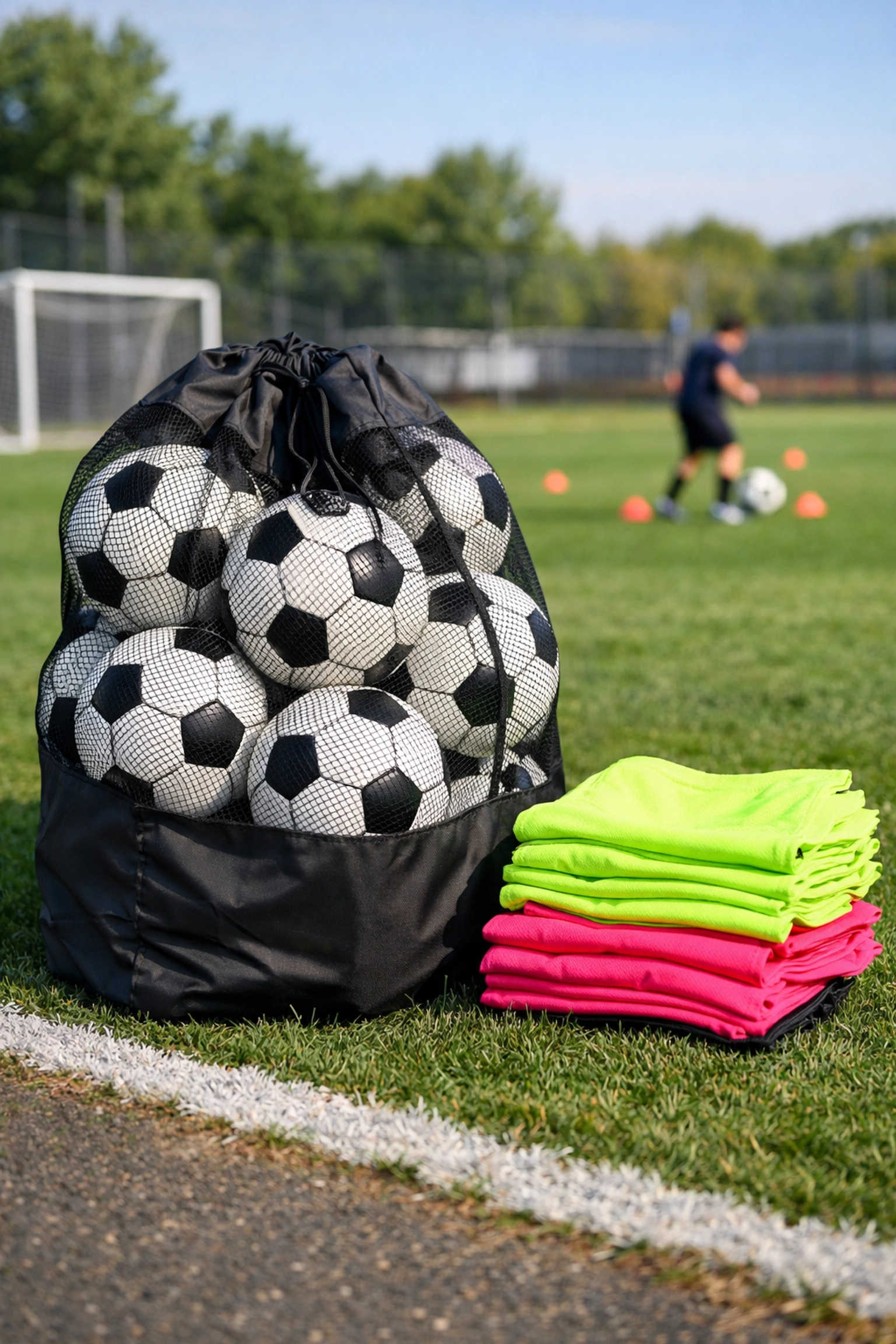 Image Prompt: A mesh bag overflowing with footballs sitting next to a stack of neon training bibs. The equipment is the focal point, with a blurred natural park background and a single player walking in the distance.
6. Smart Tech on a Budget
In 2026, technology is more accessible than ever. You don't need a professional film crew to analyze your team's performance.
Smartphone Tripods
A $15 tripod for your phone allows you to record drills and review them with your players instantly.
- Visual Learning: Showing a player their footwork on video is 10x more effective than just telling them what they're doing wrong.
- AI Integration: Many coaches are now using simple AI tools to analyze speed. Read about AI training plans vs. traditional coaching to see how tech is changing the game.
7. Safety and Red Flags: When Not to Go Cheap
While we love a good bargain, there are a few areas where "cheap" can become "dangerous."
- Footwear: Never encourage athletes to use sub-par footwear for high-intensity agility drills. Proper grip is essential to prevent ankle rolls.
- First Aid: Your first aid kit should be high-quality. Ensure it includes instant ice packs, antiseptic wipes, and plenty of athletic tape.
- Weather Awareness: If you're training in the heat, always have extra water and a way to provide shade.
Summary: Your "Starter Kit" Shopping List
Ready to build your kit? Here is a checklist of the essential coaches sports equipment to get you started for under $150 total:
- 50 Disc Cones (~$20)
- 1 Agility Ladder (~$20)
- 1 Whistle & Stopwatch (~$15)
- Set of 10-20 Training Bibs (~$30)
- Set of 5 Resistance Bands (~$25)
- Mesh Ball Bag (~$15)
- Clipboard & Dry Erase Marker (~$10)
Frequently Asked Questions
Q: Where is the best place to find deals on gear? A: Check out specialized team training collections first. Often, buying in "bundles" or "packs" is significantly cheaper than buying individual items.
Q: How often should I replace my equipment? A: Plastic items like cones and ladders can last years if stored out of direct sunlight. Resistance bands should be replaced every 6-12 months depending on use, as the rubber can degrade.
Q: Can I make my own equipment? A: Absolutely! PVC pipes can be turned into hurdles, and old tennis balls can serve as markers in a pinch. However, for professional-looking sessions, spending a few dollars on real gear is usually worth it.
Next Steps for Coaches
Building a professional kit is a journey, not a sprint. Start with the basics: cones and a whistle: and add a new piece of gear each month as your coaching practice grows.
If you're ready to take your team's speed to the next level, head over to our football training collection to see some of our favorite budget-friendly tools in action.
Remember, Coach: It’s not about the gear you have; it’s about how you use it. Now get out there and make an impact! 📈🏆
