

Ever watched a goalkeeper make an impossible save or a tennis player return a blistering serve? That split-second reaction didn't happen by accident. It was trained. And one of the simplest, most effective tools for building lightning-fast reflexes is something you might not have heard of: the reaction ball.
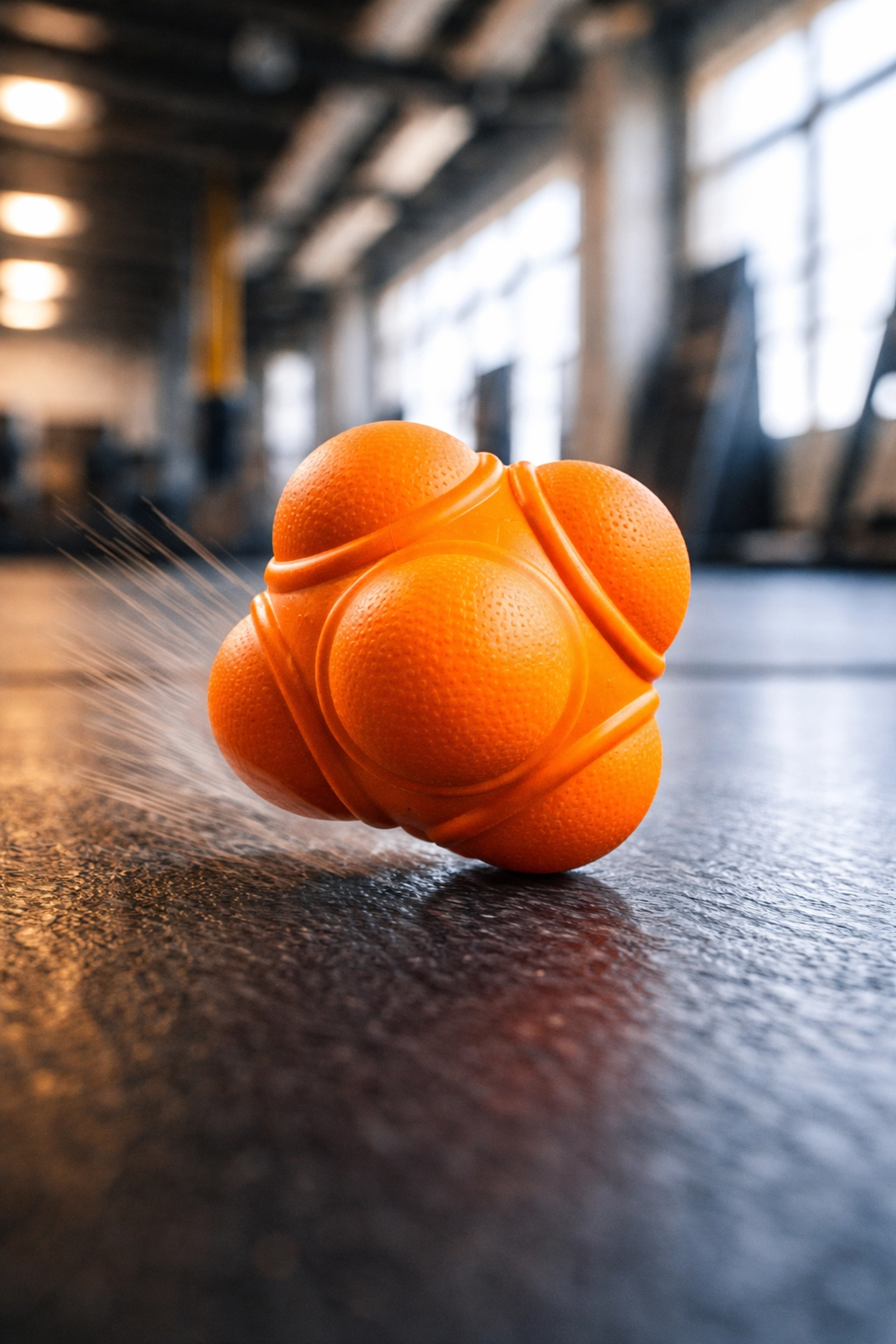
If you're new to reaction ball training, you're in for a treat. This funky-looking, six-sided rubber ball bounces in completely unpredictable directions. That randomness is exactly what makes it brilliant for sharpening your reflexes, improving hand-eye coordination, and training your body to respond to the unexpected.
Let's break down everything you need to know to get started with reaction ball drills: whether you're training solo or with a partner.
1. What Is a Reaction Ball and Why Should You Use One?
A reaction ball is a small, multi-sided ball (usually with six knobs) made from rubber. Unlike a regular ball that bounces predictably, the reaction ball takes wild, random bounces that force you to react instantly.
Why does this matter?
- Unpredictable movement mimics real-game situations where you can't predict what's coming next
- Develops fast-twitch muscle response so your body moves before your brain fully processes
- Improves hand-eye coordination essential for catching, blocking, and intercepting
- Works anywhere – all you need is a wall or a training partner
Athletes across football, tennis, cricket, basketball, boxing, and martial arts use reaction balls regularly. But honestly? Anyone looking to sharpen their reflexes and have a bit of fun can benefit.
2. Benefits of Reaction Ball Training
Before we dive into the drills, here's why reaction ball work deserves a spot in your training routine:
- ✅ Faster reflexes – Train your nervous system to respond quicker
- ✅ Better hand-eye coordination – Essential for catching, striking, and defending
- ✅ Improved agility – Quick directional changes become second nature
- ✅ Mental sharpness – Forces focus and concentration under pressure
- ✅ Low cost, high reward – Affordable equipment with big results
- ✅ Versatile – Works for warm-ups, skill sessions, or standalone training
The best part? You don't need a lot of space or fancy equipment. A reaction ball and a bit of determination are all it takes.
3. Beginner Drills: Building Your Foundation
If you're just starting out, don't worry: these drills are straightforward and effective. Focus on getting comfortable with the ball's unpredictable bounce before ramping up the intensity.
Drill 1: Solo Drop and Catch
This is the perfect starting point.
How to do it:
- Hold the reaction ball at chest height
- Drop it straight down and let it bounce once
- React and catch it with one or both hands
- Repeat for 10-15 reps
Pro tip: As you get comfortable, try catching with your non-dominant hand only. This builds coordination on both sides.
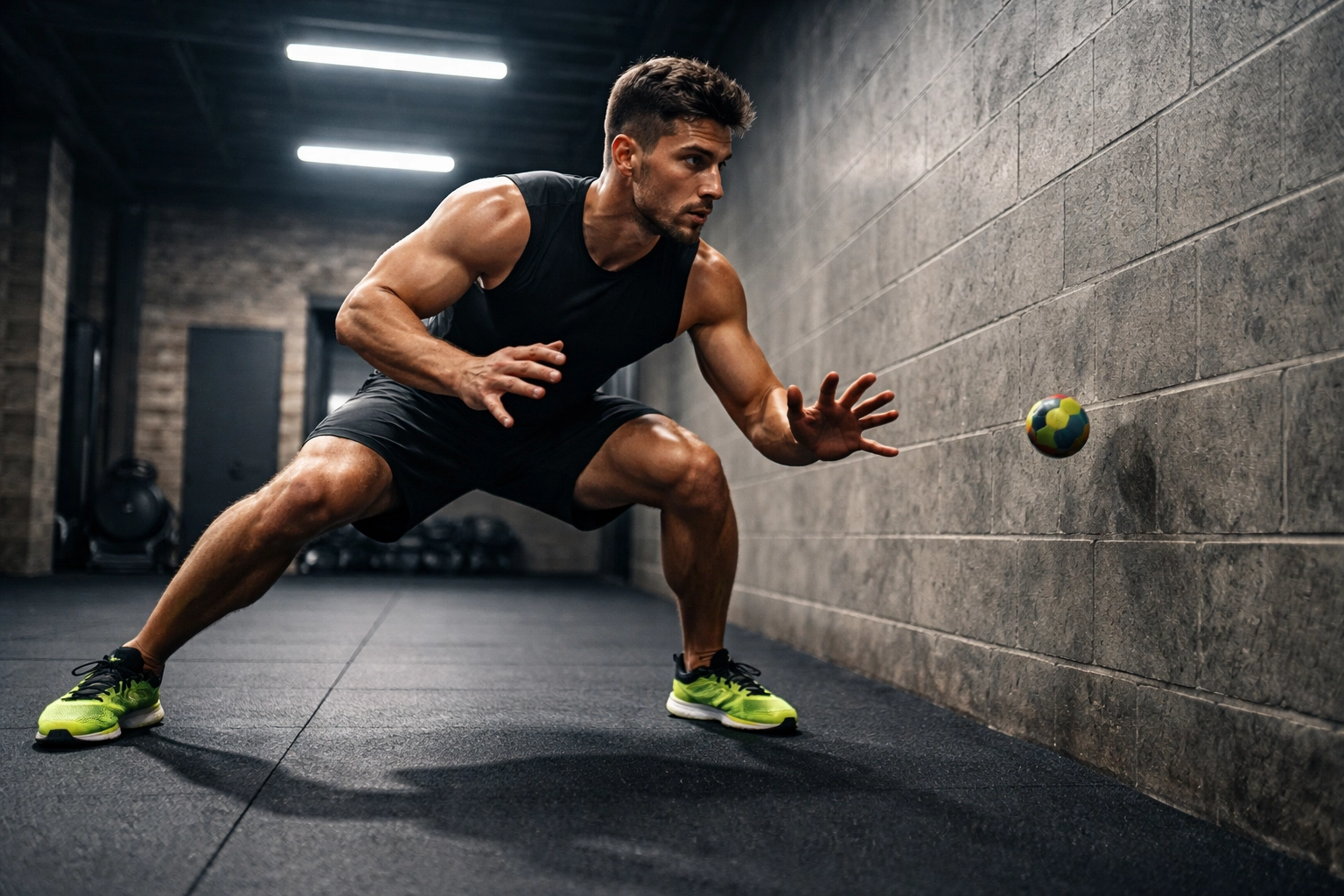
Drill 2: Wall Throw and React
A classic drill you can do anywhere with a solid wall.
How to do it:
- Stand about 2-3 metres from a wall
- Throw the reaction ball against the wall at moderate speed
- Perform a small split step as the ball hits the wall
- React to the random bounce and catch it
- Aim for 10-15 reps per set
Why it works: The split step puts you in an athletic ready position, training your body to explode in any direction.
Drill 3: Partner Drop and Catch
Got a mate to train with? This one's brilliant.
How to do it:
- Your partner holds the reaction ball at shoulder height
- They drop it randomly (no warning!)
- React with a quick first step and catch it before the second bounce
- Swap roles after 10 reps
Make it harder: Have your partner vary the drop height or add a slight toss forward.

4. Intermediate Drills: Stepping Up the Challenge
Once the basics feel comfortable, it's time to push your reflexes further. These drills add movement, speed, and decision-making into the mix.
Drill 4: Shuffle Reaction Drill
This one combines lateral movement with reaction speed.
How to do it:
- Set up two cones about 5 yards apart
- Stand in the middle in an athletic stance
- Your partner throws the reaction ball toward one cone
- Shuffle sideways to catch it before the second bounce
- Toss it back and reset
Progression: Increase the distance between cones or have your partner throw faster as you improve.
Drill 5: Acceleration Catch
Perfect for building explosive speed alongside reaction time.
How to do it:
- Your partner holds the ball at peak height, about 3 metres away
- When they release it, sprint forward and catch it before it hits the ground
- Start from different positions: standing, athletic stance, or even on one knee
Why it works: This drill trains your acceleration and teaches you to read the drop quickly.
Drill 6: Two-Ball Chaos
Ready for a real challenge? Grab two reaction balls.
How to do it:
- Drop or throw both balls against the wall in quick succession
- Catch them one after the other
- Alternate which hand catches first
Pro tip: This drill seriously ramps up cognitive load. Don't be surprised if you fumble at first: that's the point!
5. Advanced Drills: For the Reflex Pros
These drills are for athletes who've mastered the basics and want to push their limits.
Drill 7: Colour Call-Out
If you have access to different coloured reaction balls, this drill adds a decision-making layer.
How to do it:
- Your partner holds two different coloured balls
- They drop both simultaneously and call out a colour
- You must catch only the called colour
- Repeat for 10 reps, then swap
Why it works: Forces you to process information while reacting physically: just like in a real game.
Drill 8: Random Start Positions
Vary your starting position to simulate game scenarios.
Starting position options:
- Three-point stance (like a sprinter)
- Lying face down
- Sitting cross-legged
- Back turned to the partner
How to do it:
- Your partner drops or throws the ball
- React from your starting position and catch before the second bounce
This drill trains your body to respond from any situation: not just when you're perfectly ready.
6. Tips for Getting the Most Out of Your Training
To really see results, keep these pointers in mind:
- Stay in an athletic stance – Knees slightly bent, weight on the balls of your feet, ready to move
- Focus on first-step quickness – The faster you initiate movement, the better your catch rate
- Train both sides – Don't just rely on your dominant hand; build coordination across your body
- Keep sessions short and intense – 10-15 minutes of focused work beats a sloppy hour
- Track your progress – Count successful catches and aim to improve over time
7. Common Mistakes to Avoid
Even simple drills can go wrong if you're not careful. Watch out for these:
- ❌ Standing too upright – Stay low and athletic
- ❌ Reaching instead of moving – Use your feet, not just your arms
- ❌ Going too fast too soon – Master the basics before adding complexity
- ❌ Skipping warm-ups – Cold muscles react slower and are more prone to injury
- ❌ Training only one hand – Balance is key for overall coordination
8. Ready to Get Started?
Reaction ball training is one of those rare things in fitness: simple, affordable, and genuinely effective. Whether you're a coach looking for new drills, an athlete chasing faster reflexes, or just someone who wants to sharpen their coordination, these drills deliver.
Start with the basics, stay consistent, and you'll notice improvements in your reaction time within just a few weeks. Pair your reaction ball work with other agility tools like a speed training ladder or resistance bands, and you've got a complete speed and agility programme.
Now grab a reaction ball, find a wall, and get to work. Your reflexes will thank you.


